Rising fuel prices lead to increase in taxi and marshrutka fares in northern Tajikistan

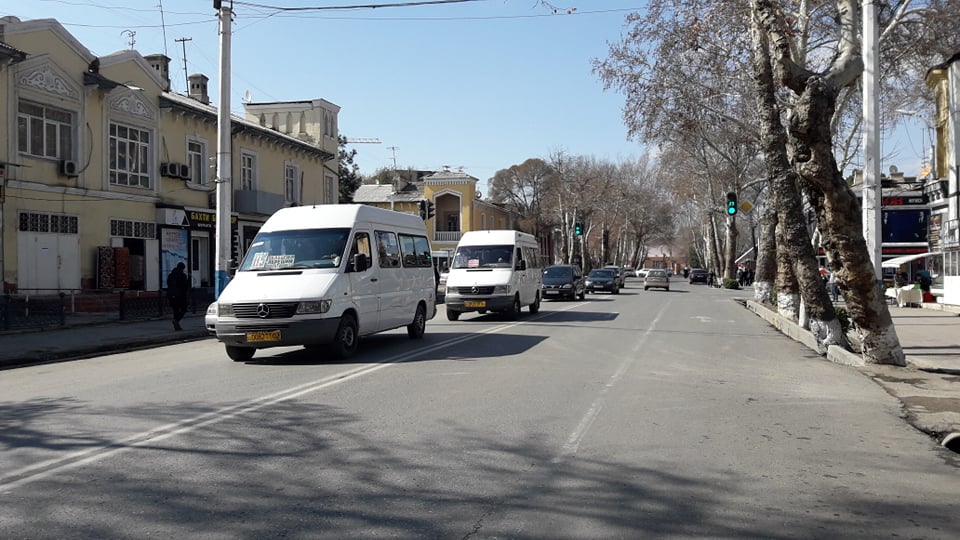
A spike in fuel prices has led to increase in taxi and marshrutka fares in the northern Sughd province.   Thus, the fuel price hike has led to increase in fare for marshrutka (a form of public transportation such as share taxi, which originated in the Soviet Union and is still present in the CIS nations) […]

A spike in fuel prices has led to increase in taxi and marshrutka fares in the northern Sughd province.  

Thus, the fuel price hike has led to increase in fare for marshrutka (a form of public transportation such as share taxi, which originated in the Soviet Union and is still present in the CIS nations) in Khujand, the capital of the Sughd province, from 1.30 somonis to 1.50 somonis.  

Murod Qodirov, an official with the Sughd State Unitary Enterprise (SUE) Road Transport and Logistics Services, says a sudden spike in fuel prices has had ripple effect on work of local drivers.  

According to him, 90 percent of the province’s share taxi minibuses use diesel oil as fuel and 10 other percent of them use liquefied natural gas (LNG) as fuel that ultimately affected the work of public transportation companies in the area.

“The price of one liter of LNG in the province has risen from 3.00 somonis to 4.50 somonis (50-percent increase – Asia-Plus) and the price of one liter of diesel oil in Sughd has risen from 5.80 somonis to 8.00 somonis (about 35-percent increase – Asia-Plus), and therefore, we were forced to raise marshrutka fare for 1.30 somonis to 1.50 somonis,” Qodirov said.  

The fuel price hike has also led to increase in tax fares in northern Tajikistan.  

Buses in the Sughd province use diesel oil as fuel, and therefore, a sudden spike in diesel oil prices will lead to increase in bus fares in the area. 

Join us on social media!

Article translations:

Related Article

Оби зулол
Tenisi
Оби зулол

Most Read

Коммерсбонк Точикистон

Recent Articles

RZD announces the restoration of passenger services between Moscow and Dushanbe

Direct rail services between the capitals of Russia and Tajikistan were suspended in March 2020 due to the COVID-19 pandemic.

#AP30/Stories. “Selam! Heller nichek?” How Tatars live today in Sughd province

On the 30th anniversary of "Asia-Plus," we continue to publish reports that remain relevant even after years. This story was told in 2021, and since then, little has changed in the life of the Tatar community in Tajikistan.

15,000 cameras, drones, and robots: how technology monitors pilgrims in Mecca and Medina

During Hajj 2026, Mecca and Medina were under unprecedented digital control.

Another child in Dushanbe removed from family and sent to boarding school

The Ministry of Internal Affairs reports that the parents did not pay adequate attention to the child.

Emomali Rahmon instructs to address issues in seed production following criticism of the industry

Issues have been noted with certification, seed quality, and the material and technical base of the industry.

Water, climate, and a $130 billion deficit: seven key outcomes of the Water Conference in Dushanbe

At the forum, countries and international organizations discussed new mechanisms for cooperation, investments, and technologies that are essential for addressing the global water crisis.

Eskhata Bank introduces a new generation children’s wallet

"Eshkata Bank" has created a full-fledged digital platform that helps children aged 7 to 16 learn how to manage money.