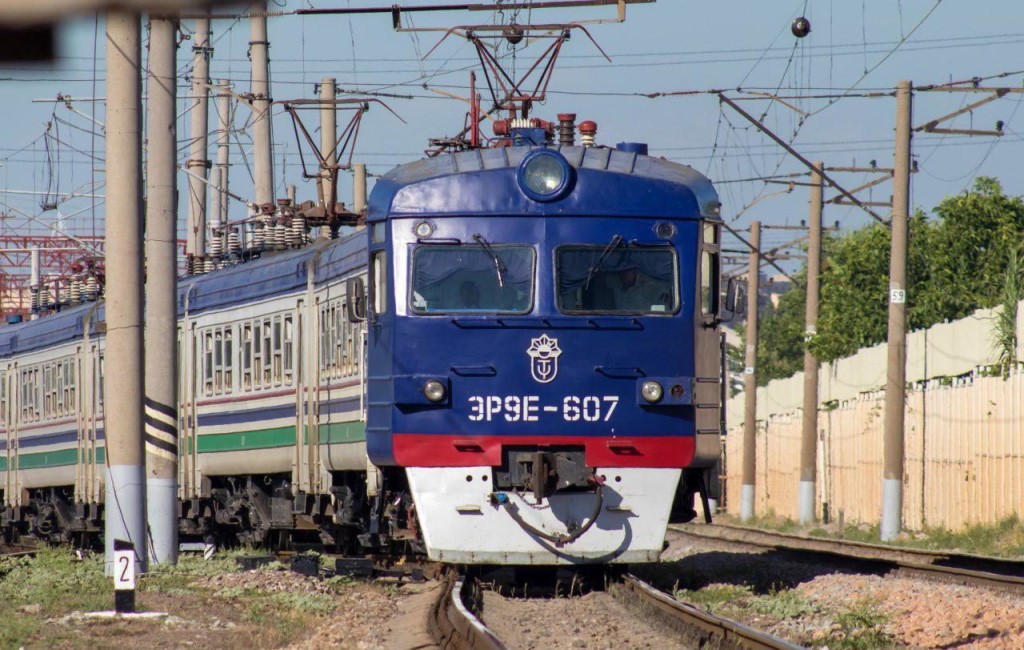
Tajikistan and Uzbekistan are expected to electrify a rail link connecting the Uzbek cities of Bekobod and Kokand though the Tajik city of Konibodom.
A source within the State Unitary Enterprise (SUE) Tajik Railways (Tajik national railway company) says Tajik and Uzbek state-run railway companies plan sign an agreement on constructing the power transmission line along the Bekobod-Konibodom-Kokand railway.
The negotiations process is nearing completion and the agreement will be signed in the near future,” the source noted.
According to him, the preliminary work on implementation of this project began last year and “specialists of both countries considered the possibilities of implementing these intentions.”
The transition to electric power for locomotive trains is in interests of both parties as carrier costs are reduced, no emissions of harmful substances into the atmosphere from coal combustion, and train traffic frequency increases that contributes to the growth in incomes of the parties, the source added.
Meanwhile, Sputnik Tajikistan, citing its source, says the parties have already signed a contract, under which Tashkent fully undertakes the construction of the power transmission line in the territory of the Sughd province.
A railway electrification system supplies electric power to railway trains and trams without an on-board prime mover or local fuel supply. Electric railways use either electric locomotives (hauling passengers or freight in separate cars), electric multiple units (passenger cars with their own motors) or both. Electricity is typically generated in large and relatively efficient generating stations, transmitted to the railway network and distributed to the trains. Some electric railways have their own dedicated generating stations and transmission lines, but most purchase power from an electric utility. The railway usually provides its own distribution lines, switches, and transformers.