The World Bank-financed Rural Water Supply and Sanitation Project is being implemented in the southern Khatlon province.
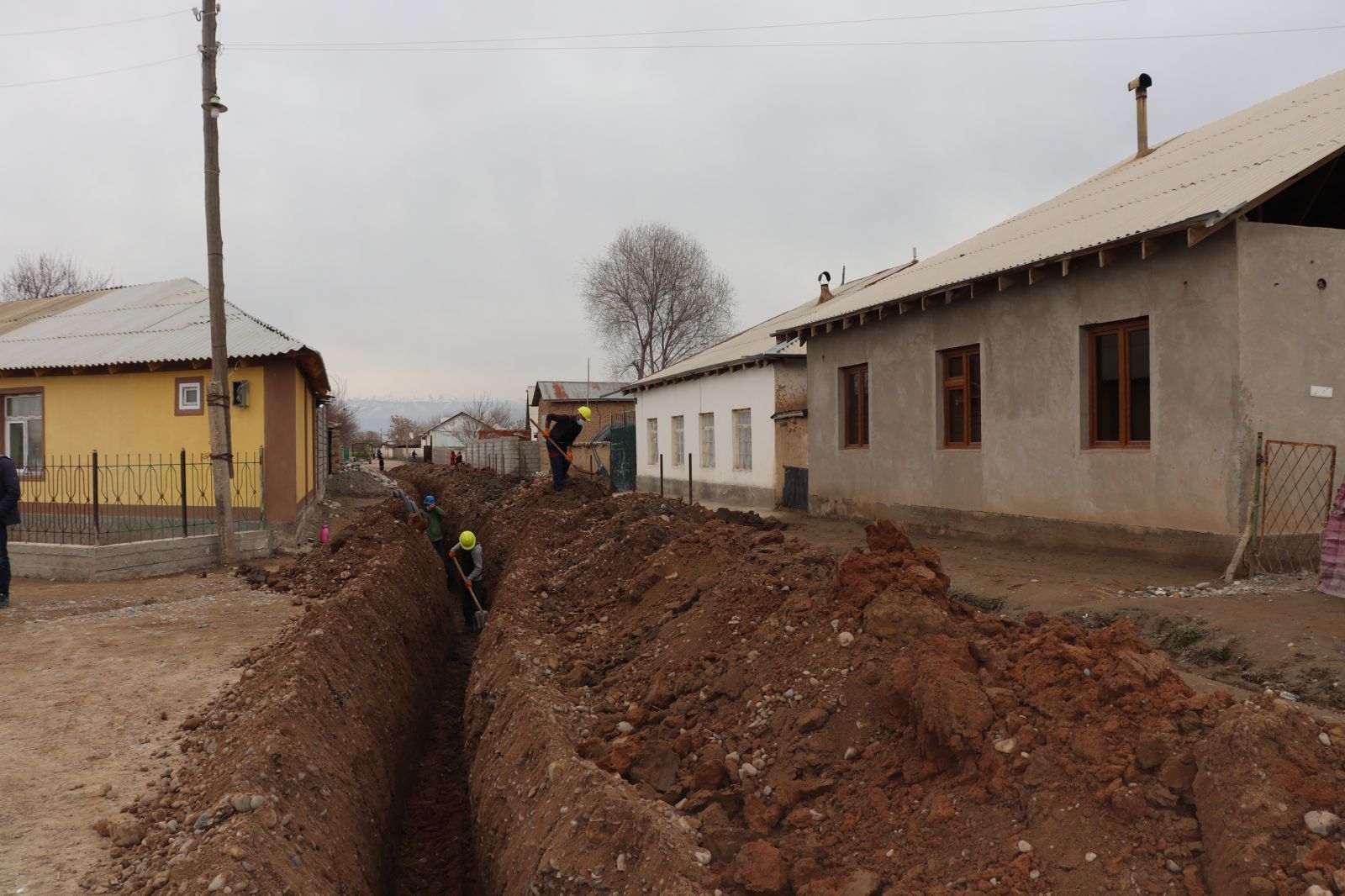
“Currently we are constructing a water supply system for villages in the Vose district, where more than 184,000 people need access to safe drinking water, Bakhtiyor Tukhtayev, an engineer-in-chief at the Local Infrastructure Development Project Management Unit (PMU) under the Government of Tajikistan, told Asia-Plus in an interview.
According to him, they have completed 56% of construction and installation work to date. The work is being carried exclusively by local construction companies, which were competitively selected on a tender basis in 2020. In Vose, the water supply system is expected to be completed by the end of 2021.
Currently, the design and survey work is being carried out on the Vakhsh inter-district water supply system, which covers the Vakhsh group of districts in the Khatlon province.
Recall, the World Bank-financed Rural Water Supply and Sanitation Project, launched in Bokhtar on September 25, 2019 and more than 400,000 people in rural Tajikistan will gain access to clean drinking water and around 100,000 people, mostly children, will benefit from better sanitation facilities and hygiene training, thanks to the.
The project, implemented with a US$58 million grant, focuses on helping communities in the southern Khatlon province with the highest levels of poverty and inadequate access to clean water, sanitation, and hygiene (WASH) conditions, specifically Vakhsh, Levakand (formerly Sarband), Kushoniyon (Bokhtar), Dusti (Jilikul), Balkhi (Rumi), Jayhun (Qumsangir) and Vose.
Designed for five years, the project is being implemented by the State Unitary Enterprise "Khojagii Manziliyu Kommunali" (KMK – the state holding company for public utilities) and the Ministry of Energy and Water Resources, through the Local Infrastructure Development Project Management Unit under the Government of Tajikistan.
The KMK branches will be restructured and strengthened to improve the quality of its service delivery. To increase access to water and sanitation services countrywide, the project will support the development of the State Program on Drinking Water Supply and Wastewater for the period 2021–30.
In partnership with UNICEF and the Ministry of Education and Science of the Republic of Tajikistan, the project will promote the adoption of improved hygiene practices. Sanitation facilities in about 200 schools and health clinics will also be constructed or rehabilitated. Grants will be provided to about 1,000 of the poorest households to help improve sanitation conditions in their homes.