A power transmission line of the of the 1000 Electricity Transmission and Trade Project for Central Asia and South Asia (CASA 1000) Project that provides for supplying electricity from Kyrgyzstan and Tajikistan to Afghanistan and Pakistan can be introduced into operation only by 2025, the head of the Open Joint-Stock Company (OJSC) Kyrgyzstan National Power Grid Ulan Abdyrasulov told Kabar YouTube Channel.
“We are unable to provide exact launch dates. But if we finish all the work on schedule, we can start commercial operation of power transmission line by 2024-2025,” he said.
Abdyrasulov noted that all the project participating countries have necessary funds, contractors were selected and the work began.
He emphasized that after the launch of the power transmission line, Tajikistan and Kyrgyzstan undertake to supply electricity to Afghanistan and Pakistan on schedule during the summer period (from May through September).
According to him, the project will fully pay for itself 15 years after the power transmission line is put into operation.
Meanwhile, the First Deputy Minister of Energy and Water Resources of Tajikistan, Jamshed Shoimzoda, told reporters in Dushanbe in July last year that the construction of the Tajik section of the CASA 1000 Project will be completed in time.
According to him, the coronavirus pandemic has not affected the construction process in the framework of the CASA 1000 Project and the Tajik section of CASA100 Project is expected to be completed before the end of 2021.
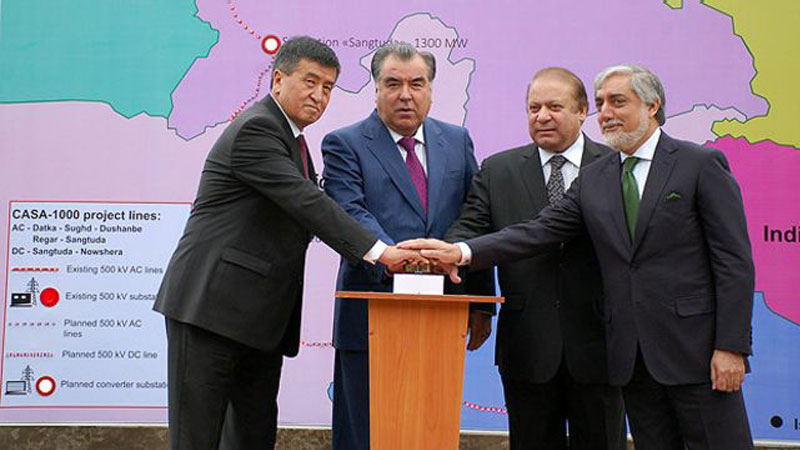
The CASA-1000 project aims at developing energy corridor and land connectivity between Tajikistan, Afghanistan and Pakistan.
The Central Asia South Asia Electricity Transmission and Trade (Casa-1000) Project demonstrates landmark cooperation among Kyrgyzstan, Tajikistan, Pakistan, and Afghanistan. The modern and efficient CASA-1000 electricity transmission system will help transform the region and signify an important step toward realizing the planned Central Asia-South Asia Regional Electricity Market (CASAREM). The CASAREM initiative will help not only these four countries, but also improve the electricity systems and develop inter-regional cooperation between Central Asia and South Asia.
A total cost of the project is more than 1 billion U.S. dollars. 314 million U.S. dollars are needed for construction of the Tajik section of the regional power transmission line which will bring electricity from Tajikistan and Kyrgyzstan to Afghanistan and Pakistan.
The Project is expected to develop the necessary physical infrastructure and create the institutional and legal framework to transmit surplus power available from existing generation facilities in Tajikistan and Kyrgyzstan to Afghanistan and Pakistan. The physical infrastructure for CASA 1000 includes: a 500 kV high voltage direct current (HVDC) transmission system between Tajikistan and Pakistan through Afghanistan; an AC transmission link from Kyrgyzstan and Tajikistan to connect to the HVDC line from Tajikistan to South Asia; and the necessary electricity sub-stations in Kabul (Afghanistan), Peshawar (Pakistan) and Sangtuda (Tajikistan).