Members of the Association of Suppliers of Petroleum Products and Liquefied Natural Gas of Tajikistan has sent a letter to President Emomali Rahmon, which, in particular, notes that amendments offered to the country’s law on the national budget for 2021 violate the norms of the country’s law on protection of competition.
Recall, Tajikistan’s lower chamber (Majlisi Namoyandagon) of parliament on March 31 enhanced the bill on amendments proposed to the country’s laws on the national budget for 2021. The amendments provide for exempting the Agency on State Material Reserves from paying value added tax (VAT), excise tax and customs duties on food and fuel deliveries.
The tax benefits are reportedly granted to the Agency for the purpose of curbing prices for gasoline and basic food products in the country.
Meanwhile, the letter signed by the Association director Yorahmad Begahmadov and top managers of 18 fuel supply companies, noted that the Association members control 80 percent of the country’s fuel market, while the share of the Agency on State Material Reserves in the country’s fuel market over the past two years has been only 3.0 percent.
Despite the growth in the retail cost of fuel in the country, due to the depreciation of the somoni the fuel suppliers' net profit remains at the last year's level – 5%, the letter reads.
The letter notes that due to the devaluation of the national currency, the somoni, the price for one liter of 92-octane gasoline has risen this year so far from 7.45 somonis to 8.50 somonis and the price for one liter of diesel fuel has risen this year so far from 8.10 somonis to 8.70 somonis.
Authors of the letter note that benefits provided by the government to the Agency on State Material Reserves significantly reduce its fuel import costs and they ask the president for the same benefits.
Otherwise, the Association members will not be able to compete and will be forced to leave the market, the letter says.
It is to be noted that the growth in fuel prices at gas stations in the country has been observed since the beginning of the year, but over the past week, the price increase has become more noticeable.
The price for one liter of 92-octane gasoline in Dushanbe rose from 6.50 somonis on January 1 to 8.10 somonis on March 10 (24.6-percent increase), with similar price rises in other regions of the country.
Over the reporting period, the price for one liter of 95-octane gasoline rose in the Tajik capital 21.7 percent (from 6.90 somonis to 8.40 somonis), and the price for one liter of liquefied natural gas (LNG) in Dushanbe rose from 4.25 somonis on January 1 to 4.50 somonis on March 10 (7.0-percent increase). Current price of liquefied natural in Tajikistan is 4.85 somonis
Compared to Dushanbe, fuel prices in Khalton and Sughd provinces are 2.0-3.0 percent more expensive subject to additional costs. In the Gorno Badakhshan Autonomous Region (GBAO), fuel prices are 8.0-10 percent more expensive compared to Dushanbe.
Officials at fuel supply companies say the price hike has resulted from the rising cost of petroleum products in Russia, which provides the bulk of Tajikistan’s fuel and imports and the rising international prices of oil.
Besides, the gasoline price hike has reportedly resulted from the decrease in the volume of oil refining in Russia against the backcloth of the coronavirus pandemic.
More than 50 companies in Tajikistan are engaged in delivering petroleum products to the country.
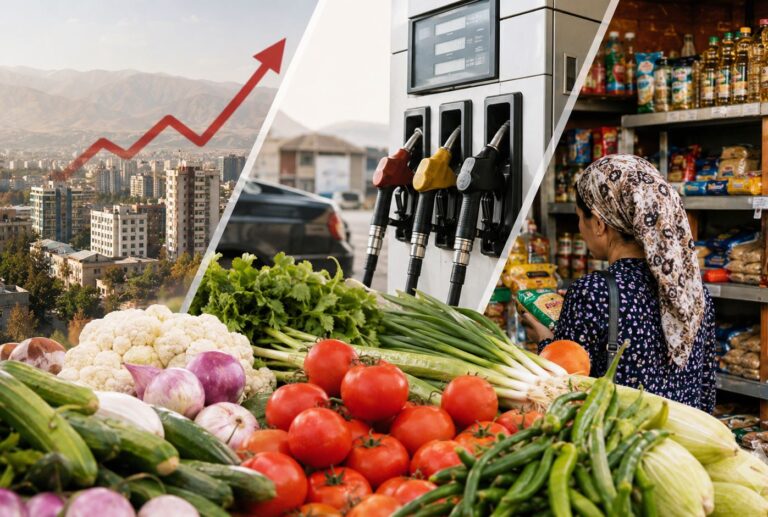
A spike in fuel prices that was reported in Tajikistan in early March has led to increase in prices for basic food products in the country.
Last year, Tajikistan imported 234,000 tons of gasoline, which was nearly 37 percent more than in 2019. 35 companies were engaged in delivering petroleum products to Tajikistan last year.