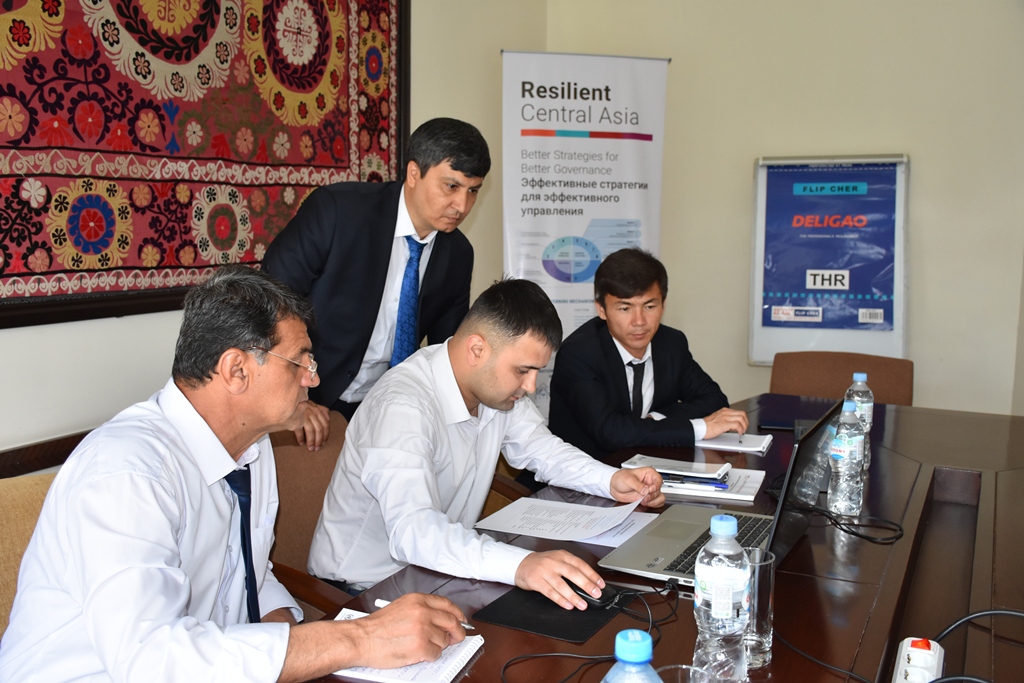
On May 20-21, experts from Tajikistan stepped up action on disaster resilience through the training on the “DesInventar-Sendai” – a disaster information management software.
The workshop was organized by the United Nations Office for Disaster Risk Reduction (UNDRR), in collaboration with CIMA Research Foundation and the Asian Disaster Preparedness Center (ADPC), with the support of the European Union. The event takes place within the framework of the Strengthening Disaster Resilience and Accelerating Implementation of the Sendai Framework for Disaster Risk Reduction in Central Asia initiative, funded by the European Union.
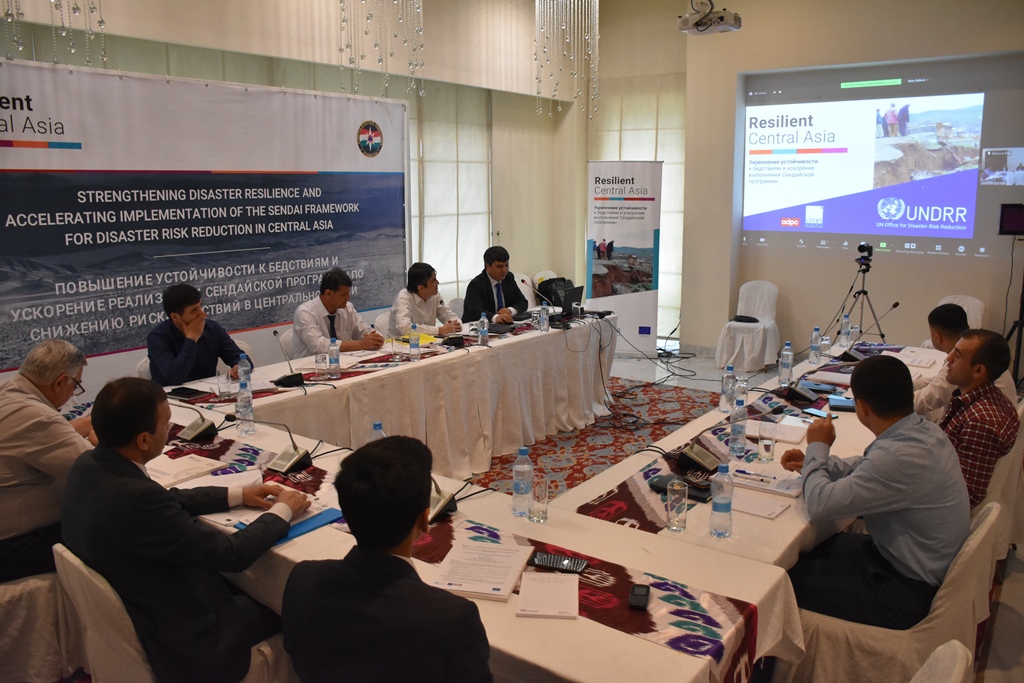
Measuring disaster losses is an important element in managing disaster risk. The availability of current and historical information on losses caused by disasters, analysis of tendencies, scale, and impact will help in long-term development and investment planning, in adaptation to the climate change, preparing for new emerging hazards and risks. The system is adapted to the country’s hazard profile and is based on the existing national mechanisms of disaster information.
As a main benefit, the “DesInventar Sendai” system supports a dialogue on risk management and disaster risk reduction planning between all stakeholders from the local to the regional level. This is especially important in the context of the COVID-19 pandemic which has demonstrated the need to accelerate action on disaster risk reduction and to strengthen information management and exchange.
The implementation of the “DesInventar Sendai” system software has helped more than 90 countries worldwide to develop sustainable disaster information management systems aligned with the Sendai Framework monitoring process. The system allows to analyze disaster trends and impacts through a large range of sectoral and socio-economical dimensions.
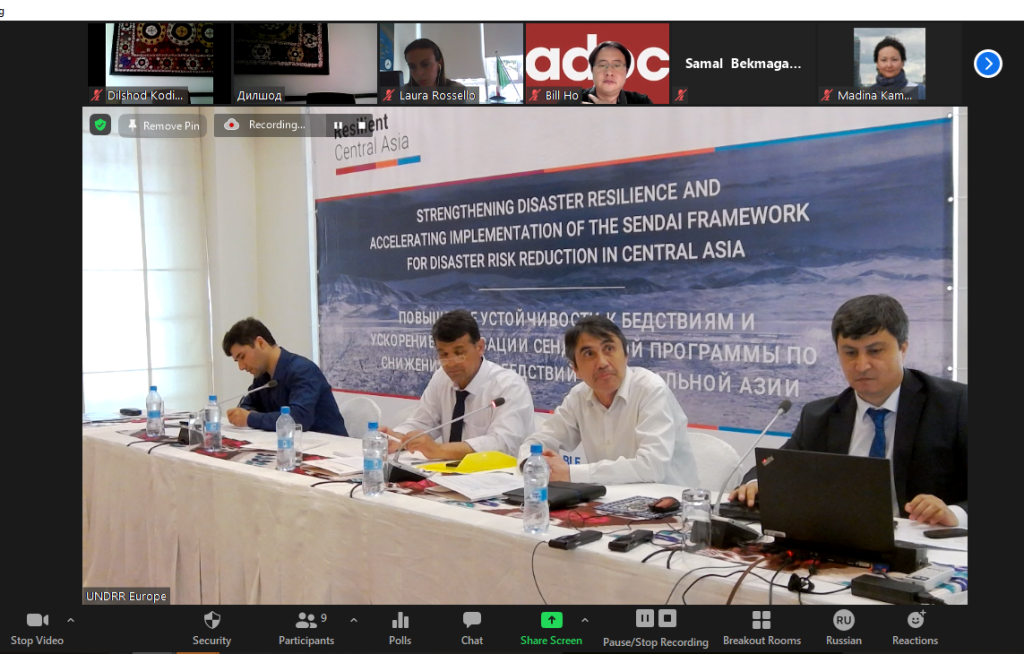
The two-day training included theoretical and practical exercises on the “DesInventar-Sendai” modules, and brought together specialists in data and information processing and analysis from different departments of the Committee for Emergency Situations and Civil Defense, Ministry of Economic Development and Trade, Ministry of Agriculture, Committee for Environmental Protection, Agency on Statistics, and Agency for Hydrometeorology.
The EU-funded project, Strengthening Disaster Resilience and Accelerating Implementation of Sendai Framework for Disaster Risk Reduction in Central Asia, implemented by the United Nations Office for Disaster Risk Reduction (UNDRR), aims to support countries of the region in implementing the Sendai Framework priorities. The project supports strengthening regional coordination, development of regional DRR strategy, national disaster loss accounting systems, and community level disaster risk reduction. On the local level, the project supports development of disaster resilience strategies of capital cities. For this project, the EU committed EUR 3,750,000 for the three year implementation.