Unstable political situation in Afghanistan has not become an obstacle in the way of Tajikistan’s international road cargo transportation, the Minister of Transport Azim Ibrohim told reporters in Dushanbe on July 14.
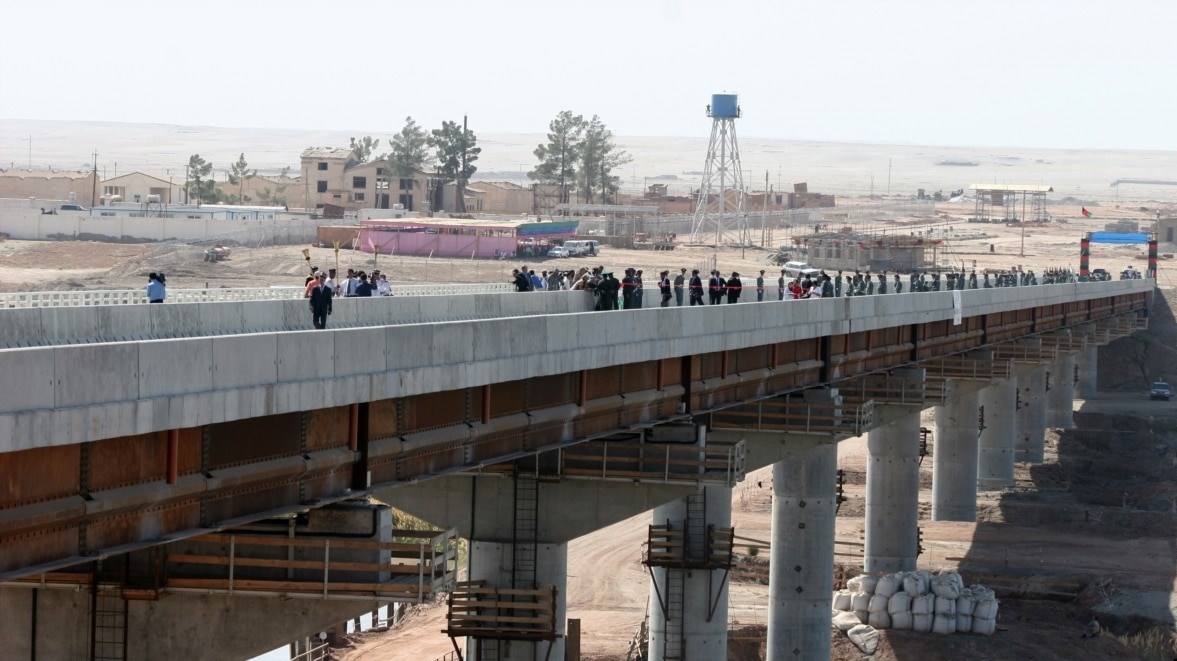
“For example, 123 trucks proceeded through the Panji Poyon – Sher Khan Bandar crossing on July 13; 51 of them entered the territory of Tajikistan and 72 trucks entered the territory of Afghanistan,” the minister said.
“In terms of throughput indicators, this border crossing point is second only to the Fotehobod-Oibek border crossing point on the Tajik-Uzbek border in Mastchoh district, Sughd province,” Ibrohim noted.
The minister further added that long-distance truckers pay certain obligatory fees while crossing the Tajik-Afghan border.
“It used to be rumored that Afghan border guards illegally collected money from drivers. They say that now this problem has been solved, but we do not have any official documents about this. It is only at the level of rumors,” Ibrohim said.
The minister recommends freight carriers refrain from entering the territory of Afghanistan in case of any threats to their safety.
Recall, Taliban militants seized the Sher Khan Bandar bridge, built in 2007 with United States funding, on June 22, when 134 Afghan soldiers fled across and into Tajikistan. The Taliban have facilitated trade across the Sher Khan Bandar bridge customs revenues are now accruing to them.
Meanwhile, Eurasianet says Tajik truckers are mostly only going as far as Sher Khan Bandar, to drop off or pick up goods, although nobody is explicitly forbidding them from going further.
Adjmal Kokar, a journalist from the Afghan city of Kunduz, told Eurasianet that there are Tajik drivers going deep into the country without trouble.
A Tajik long-distance trucker told Asia-Plus on July 13 on the basis of anonymity that the Sher Khan Bandar crossing is open for passing and the Taliban do not create problems for traffic.
“The Taliban have waived visa requirements for us,” said he. “In the past, when we entered Afghan territory, Afghan border guards took a bribe of about US$200.00. Now it is gone. Currently, we only pay 60.00 somonis (equivalent to US$5.26 – Asia-Plus) for the carriage of goods”
He noted that he had returned from Sher Khan Bandar crossing ten days ago.