Kyrgyzstan’s border with Tajikistan will reopen as border issues are resolved.
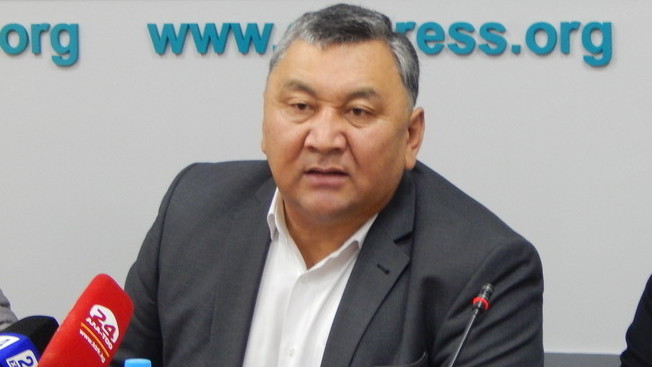
Kyrgyzstan’s Security Council Secretary Marat Imankulov has remarked this at a roundtable meeting in Bishkek, 24.kg news agency reported yesterday. At the same time, he noted that Kyrgyzstan had not closed its borders first, but only retaliated.
“It is also known that the presidents of our countries held a meeting and discussed border problems. As border issues are resolved, the borders should open,” Imankulov noted.
Recall, a regular meeting of the topographic working groups of the Tajik and Kyrgyz governmental delegations on the delimitation and demarcation of the mutual border took place in Dushanbe on August 4-9. The meeting resulted in signing of a corresponding protocol. The parties reportedly agreed to hold the next meeting in Kyrgyzstan.
Tajikistan and Kyrgyzstan have not yet resolved the border delineation problem. Many border areas in Central Asia have been disputed since the collapse of the Soviet Union in 1991. The situation is particularly complicated near the numerous exclaves in the Fergana Valley, where the borders of Tajikistan, Uzbekistan, and Kyrgyzstan meet.
The border of Kyrgyzstan and Tajikistan has been the scene of unrest repeatedly since the collapse of the former Soviet Union.
Border talks between Tajikistan and Kyrgyzstan began in 2002. The countries share 976 kilometers of border – of which some 520 kilometers has reportedly been properly delineated, leading to tensions for the past 30 years.
The latest clash along Tajikistan’s common border with Kyrgyzstan that took place in late April was the bloodiest one in the region over the past 20 years. The countries have agreed a complete ceasefire after the worst violence in decades along the Tajik-Kyrgyz border that killed 55 people and wounded more than 300 other people.
The clash has reportedly brought mutual hostility from the previous local level to a national scale in both countries.
Thus, in a recent study by the International Republican Institute, Kyrgyz society cited neighboring Tajikistan as the country with which they have the worst relations.
In May this year, Kyrgyzstan unilaterally banned passage of Tajik nationals and transport through its territory.