Public transport fares in Dushanbe expected to rise on average 50 percent next month

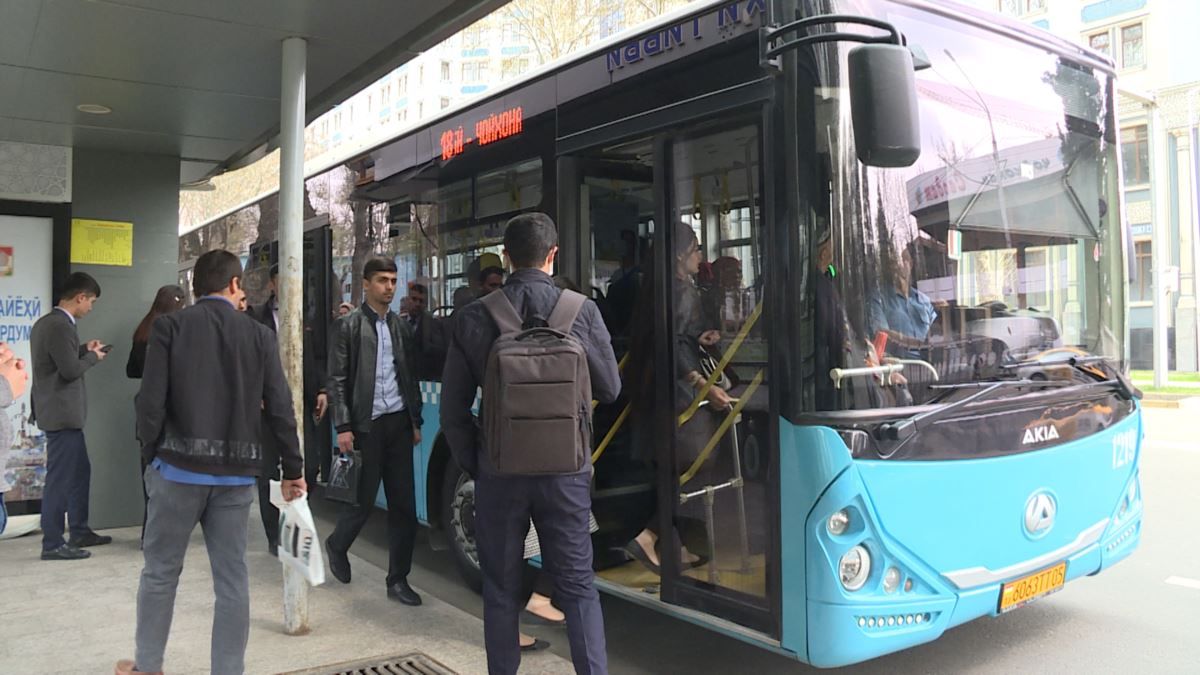
Beginning on November 10, public transport fares in Dushanbe will rise on average 50 percent. A source within the Dushanbe mayor’s office says the Antimonopoly Agency has allowed State Unitary Enterprise Dushanbenaqliyotkhadamotrason (Dushanbe Public Transport Services) to raise public transport fares. Beginning on November 10, bus ride by CITY Card will cost 1.80 somonis (50-percent […]

Beginning on November 10, public transport fares in Dushanbe will rise on average 50 percent.

A source within the Dushanbe mayor’s office says the Antimonopoly Agency has allowed State Unitary Enterprise Dushanbenaqliyotkhadamotrason (Dushanbe Public Transport Services) to raise public transport fares.

Beginning on November 10, bus ride by CITY Card will cost 1.80 somonis (50-percent increase; current bus fare costs 1.20 somonis), trolleybus ride by City CARD will cost 1.50 somonis (50-percent increase; current trolleybus fare costs 1.00 somonis), 

Meanwhile, the bus ride for cash will cost 2.50 somonis and the trolleybus ride for cash will cost 2.00 somonis.  

Shared fixed-route minibus fare will be raised from 1.60 somonis to 2.50 somonis (more than 56-percent increase). 

Taxi fare will be raised from 2.50 somonis per kilometer to 3.00 somonis (20-percent increase).

The last time the public transport fares in Dushanbe were revised in 2011.

Dushanbenaqliyotkhadamotrason has justified its decision to raise public transport fares as based on domestic fuel market trends.

“Over the past decade, prices for fuels and lubricants have risen 110 percent, spare parts prices has risen 110, prices for vehicle spare parts have risen 90-110 percent, and energy rates have risen 300 percent.  Besides, taxes, fees and average wages have grown exponentially and transport companies are unable to cover their expenses and are indebted to them,” says a statement released by Dushanbenaqliyotkhadamotrason. 
Join us on social media!

Article translations:

Related Article

Tenisi
Оби зулол
Оби зулол

Most Read

Коммерсбонк Точикистон

Recent Articles

President of Tajikistan instructed to develop measures for stabilizing the cement market within a week

Despite the increase in the production of this building material in the country, the domestic market faced a shortage, supply disruptions, and a sharp rise in the price of the building material.

Gusty winds and mudslides damage houses, roads, and cars in Dushanbe and some other regions

At least 9 vehicles were damaged, including three in Dushanbe and six in Vahdat.

The US struck military facilities in Iran. Trump expressed dissatisfaction with Tehran’s proposals and threatened Oman.

Earlier, Iran's state TV reported receiving a draft unofficial framework agreement between Tehran and Washington to settle the conflict.

How much did Tajikistan’s budget earn from the “Google tax”?

The law is already 5 years old, but the Tax Committee provided data only for the last 2 years.

The bilateral trade between Tajikistan and Iran increased by 8% in Q1 2026

Another meeting of the joint intergovernmental commission of the two countries took place in Dushanbe.

Russia and Taliban government sign military-technical cooperation agreement

The document may open up opportunities for the exchange of weapons, military technologies, and other types of defense cooperation.

“Hit with fists on the lower back and abdomen.” A teacher from Nurobod, claiming he was beaten by a student’s brother, details the attack

According to him, he is being threatened with murder, and law enforcement agencies have not yet detained the attacker.

International internet starts coming back in Iran after long shutdown 

Western media reports says Iranians ​isolated by a long...

Tajikistan listed among countries with low generative AI usage

Among the Central Asian countries, Kazakhstan has the highest rate.

Prices in Tajikistan rise almost 2% in January-April: apples, fuel, and utilities become particularly more expensive

In April, inflation was 0.6%: food products became more expensive, non-food products increased in price comparatively less, and tariffs for paid services remained unchanged.