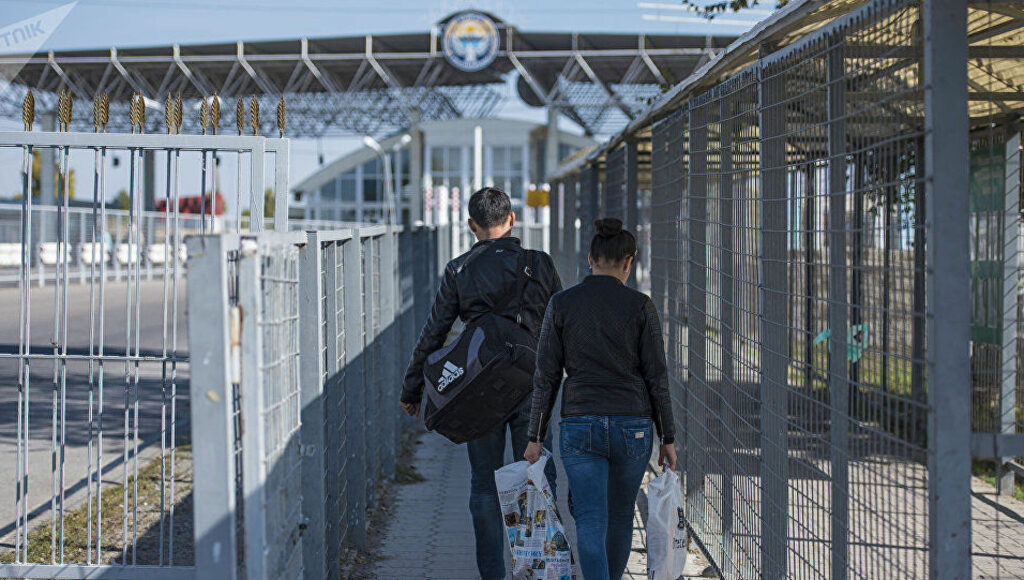
Kyrgyzstan has reopened its border for Tajik students studying at universities in Kyrgyzstan.
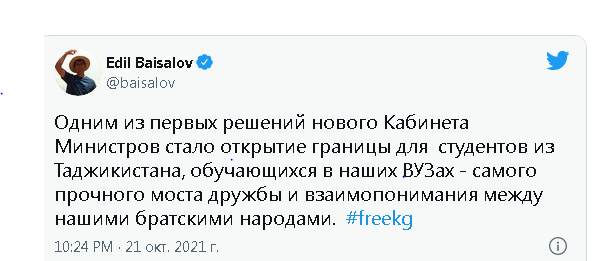
The Cabinet of Ministers of Kyrgyzstan today took a decision to reopen the country’s border for Tajik students studying at higher educational institutions in Kyrgyzstan, the Deputy Chairman of the Cabinet of Ministers of Kyrgyzstan, Edil Baisalov, tweeted on October 21.
Reopening the border for Tajik students studying at universities in Kyrgyzstan has reportedly become one of the first decisions taken by the country’s new Cabinet of Ministers.
The Kyrgyz authorities have not yet officially announced the decision made public by Edil Baisalov.
Radio Liberty’s Kyrgyz Service, known locally as Radio Azarttyk, says that according to data from Kyrgyzstan Ministry of Education, 1,932 students from Tajikistan studied at universities in Kyrgyzstan in 2020-2021.
Around 450 kilometers of the 970 kilometers of border shared by the two countries remains unresolved, despite decades of attempts to bring the matter to a close.
The uncertainty has often caused tension among communities in contested sections. The latest clash along Tajikistan’s common border with Kyrgyzstan that took place in late April was the bloodiest one in the region over the past 20 years. The countries have agreed a complete ceasefire after the worst violence in decades along the Tajik-Kyrgyz border that killed 55 people and wounded more than 300 other people.
In May this year, Kyrgyzstan unilaterally banned passage of Tajik nationals and transport through its territory.
The Kyrgyz government imposed its temporary restriction on Tajik citizens entering, leaving and transiting its territory on May 21. Authorities also halted the passage and transportation of goods across multiple land crossings. Diplomatic officials and government representatives are exempt from the rules.
The then Prime Minister Ulukbek Maripov said two days later that the restrictions would remain in effect “until problematic issues are resolved.”
Bishkek’s Manas international airport said 177 travelers arriving on May 25 from Dushanbe on a chartered Somon Air flight were made to return within the day. Nine other foreign individuals were permitted to enter Kyrgyzstan.