A meeting of Kyrgyzstan’s Republican Council of Heads of Local Government Bodies and Local State Administrations was held in Bishkek on October 21-22, according to 24.kg.
The event reportedly took place in the run-up to the Day of Local Communities of Kyrgyzstan, which is marked on October 25.
The meeting was attended by President Sadyr Japarov, the Cabinet of Ministers headed by the Chairman Akylbek Japarov, Plenipotentiary Representatives of the President in the regions, mayors, heads of districts, heads of rural administrations, representatives of state bodies.
The meeting participants discussed key issues of development of regions and the country as a whole, increasing the efficiency of local government bodies, as well as the quality and professionalism of local government bodies.
Addressing the meeting, President Sadyr Japarov noted on October 21 that an energy crisis is one of the most pressing problems today, according to Radio Liberty’s Kyrgyz Service, known locally as Azatyk.
The president noted that Kyrgyzstan has been importing electricity since 2010.
Since 2014 we had bought electricity at the rate of 5.00 soms per kWh and sold it the population at the rate of 77 tyiyn (1 som is equal to 100 tyiyn – Asia-Plus)…Now we buy electricity at the rate of 2.00 soms. On my instruction, the Minister of Energy called on the population to save energy. It is necessary to carry out explanatory work among the population,” the president said.
Japarov further added that that it is planned to bring the country out of the energy crisis in 2024-2025, but he did not specify exactly how the authorities intend to do this.
Meanwhile Radio Liberty reported on October 12 that with temperatures dropping below freezing in Kyrgyzstan officials are turning to coal as the answer to meet people's heating and electricity needs this winter.
In Kyrgyzstan, the warning signs of energy problems this coming winter reportedly appeared in the spring and summer.
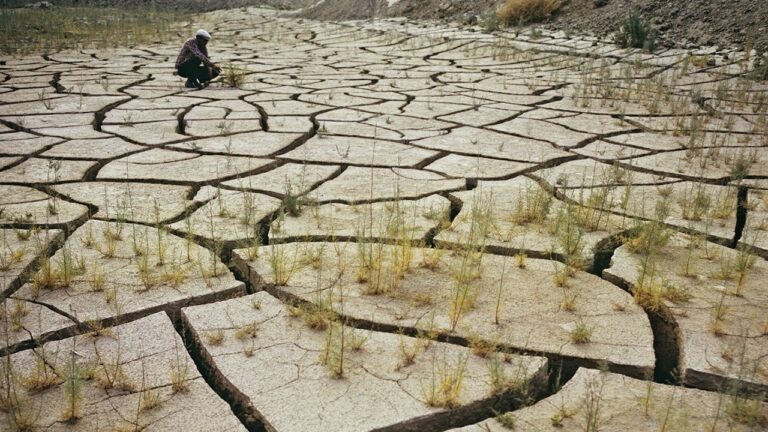
Most of Kyrgyzstan's domestically generated electricity comes from hydropower and because of a severe drought this year, some are predicting the biggest energy crisis in years, say an article by Bruce Pannier posted on RFE/RL’s website.
National Energy Holding Company chief Talaybek Baygziyev announced at the end of September that there would be restrictions on the lighting of secondary streets, advertisements, and the facades of shops, cafes, and other nonresidential customers in cities and towns around the country.
But those cuts won't be enough to keep homes and businesses well-lit and heated for the next several months.
The reservoir powering the Toktogul hydropower plant (HPP), which supplies some 40 percent of Kyrgyzstan's electricity, currently has a water level of some 12.5 billion cubic meters (bcm).
One year ago, the level was 15.2 bcm and the desirable level by winter's end to ensure the HPP's smooth operation is 16 to 17 bcm of water.
The deputy chairman of Kyrgyzstan's cabinet of ministers, Aziz Aaliyev, said that in normal years during the autumn-winter period "some 6 to 7 bcm is released" from the reservoir to power the turbines at the Toktogul HPP to generate the electricity needed.
But with only 12.5 bcm currently in the reservoir, he said "there is a risk of a shutdown in April" if the water level reaches the "dead zone," when the level of water is lower than the turbines, rendering the HPP powerless.
The dead zone is 5.5 bcm of water and is the minimum amount needed for the HPP to operate.
Kyrgyz officials are therefore facing the choice of reducing the amount of water released this winter to maintain the necessary levels for the spring and summer — when the water is needed for agricultural purposes in downstream countries Uzbekistan and Kazakhstan — or to use the water as usual this autumn and winter with the understanding that less water might be available during the growing season next year and risking a shutdown of the Toktogul HPP.
Kyrgyz authorities plan to increase the cost of electricity starting next year, a necessary move but one that is likely to be unpopular among consumers.