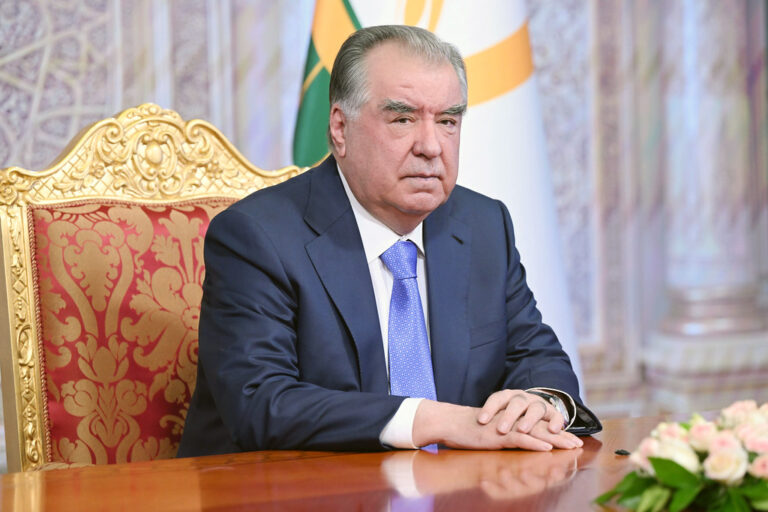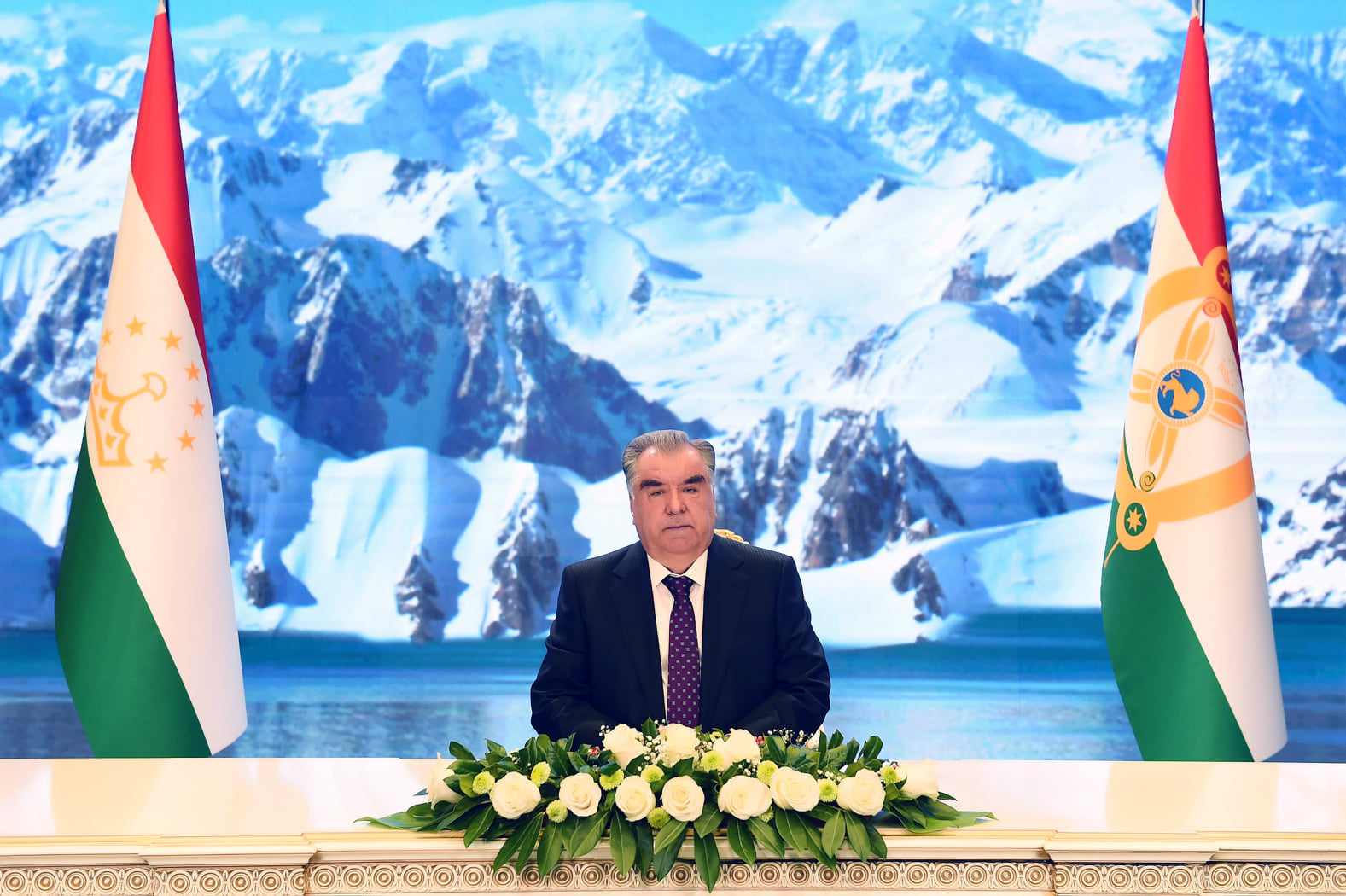
President Emomali Rahmon on November 2 virtually joined the High-Level Panel Meeting on Water and Climate.
Speaking at the meeting, Tajik leader noted that Tajikistan’s glaciers were melting rapidly. To date, more than 1,000 of Tajikistan's 14,000 glaciers have completely melted, Rahmon noted.
“Over the past few decades, the total volume of glaciers in our country, which make up more than 60% of the water resources of the Central Asian region, has decreased by almost a third,” said Tajik president. “…Given the serious consequences of continuing this process, we previously proposed proclaiming 2025 as the International Year for Glaciers Preservation and setting a date for World Glaciers Day. I have also previously called for the creation of the International Fund for Glaciers Preservation.”
He further noted that Tajikistan was actively promoting these initiatives at different levels, and expressed hope that the members of the Water and Climate Coalition would also give their support.
“Next year, under Dushanbe Water Process, we intend to host the International Conference on Water Decade in cooperation with the UN and other partner countries,” said Rahmon. “This time, the Conference will review the issues of the link between water resources and climate.”
According to him, the Dushanbe Conference will be pivotal in the preparatory process for the United Nations Conference on the Mid-Term Review of the Implementation of the Water Decade in 2023 in New York, co-chaired by Tajikistan and the Netherlands.
Rahmon noted that in recent decades, they have more often seen a significant change in the climate cycle in the Central Asian region.
“Our winters have become colder and longer, and our summers have become hotter and drier. In this regard, the region is experiencing a significant increase in the demand for electricity and water resources,” said Tajik leader. “In addition, the hydrological cycle is changing, which leads to changes in river flow in the region, both in volume and in time.”
At the same time, the existing capacities in the region, both in terms of generating electricity and regulating water resources are not able to address the growing needs of the population and the economy, Rahmon noted.
For example, last summer, Tajikistan was forced to temporarily suspend electricity export to neighboring countries. At the same time, countries in the region experienced water shortages at the height of the irrigation season.
The early, cold and long winter of that year brought new challenges to the region and it has faced a severe drought that year, which has caused massive livestock deaths and crop losses in some countries in the region, Tajik leader added.