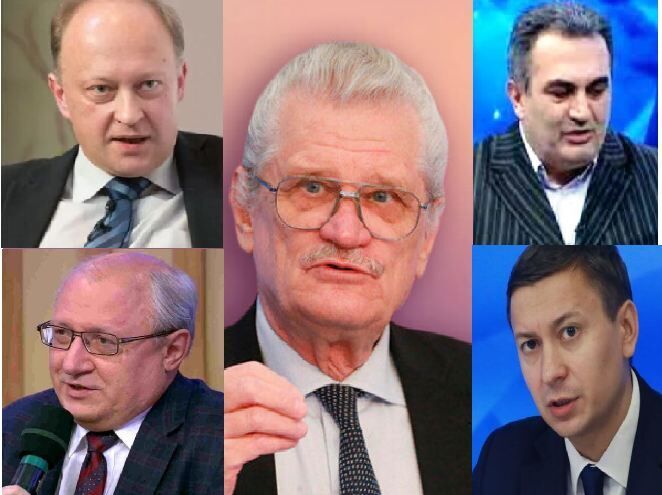
Russian experts interviewed by IRNA believe that the Islamic Republic of Iran can be a hub of supplying energy in Shanghai Cooperation Organization (SCO) after accession to full membership.
The SCO recently accepted Iran’s accession to full membership in a leaders summit in Dushanbe, Tajikistan. Iran had been an observer in the organization since 2005.
IRNA correspondent in Moscow has reportedly reached several Russian experts to ask what it means for the SCO to have Iran as a full member.
Director of Russian Center for Energy and Security Studies (CENESS) Anton Khlopkov referred to China and India as the two major world energy consumers that are also members of the SCO, saying that Iran could expand its ties on energy sector with such energy consumers in the SCO.
Iran can multiply its oil and gas exports without disturbance from sanctions, Khlopkov said, adding that Iran can turn into the hub of energy in the region using capacities of the SCO.
Russian Middle East expert Mais Kurbanov said that Iran has been under sanctions for over 42 years and has joined a big international organization for the first time that could help it stand against illegal sanctions by the West.
He also noted that the SCO charters have banned membership of the countries supporting terrorism and Iran’s accession would foil Western plots to introduce Iran as a state sponsor of terrorism.
Iran can also work for solving important regional issues like Iraq, Yemen, and Syria in the framework of the SCO, which is a heavy weight organization in international relations, Kurbanov opined.
Russian International Affairs Council Director-General Andrey Kortunov said that Iran’s membership in the SCO would add to the organization’s energy capacity and drive large infrastructure projects in member states, adding that developing north-south transit corridors would be difficult without Iran’s participation.
Iran is a part of the solution to a number of issues in the region that has no alternative, the expert said, adding that Iran’s accession would expand the SCO westward.
Andrei A. Sidorov, the dean of School of World Politics at Moscow State University, underlined that Iran’s accession to the SCO would decrease pressures from the West and positively impact Iran’s foreign economic cooperation structure.
Iran, Russia, and China are under severe pressure by the West led by the United States and Iran is being hurt more than the two others because of its economical characteristics, Sidorov said, adding that the accession would provide Iran’s with new opportunities to counter unilateral sanctions.
The SCO is strengthening and Iran’s accession further reinforces its global credit, paving the way for many other countries to join the organization in the coming years, Sidorov noted.
Expert of the Iranian Sector of the Institute for Oriental Studies of the Russian Academy of Sciences Vladimir Sajin pointed to Iran’s historical influence in Afghanistan, underlining that the SCO understands that it cannot solve Afghanistan issues without Iran.
Iran’s accession is a significant event, Sajin underlined, noting that it is because regional issues, including the situation in Afghanistan, cannot be settled without Tehran.
He also highlighted Iran’s role in expanding economic ties along the north-south and east-west corridors.