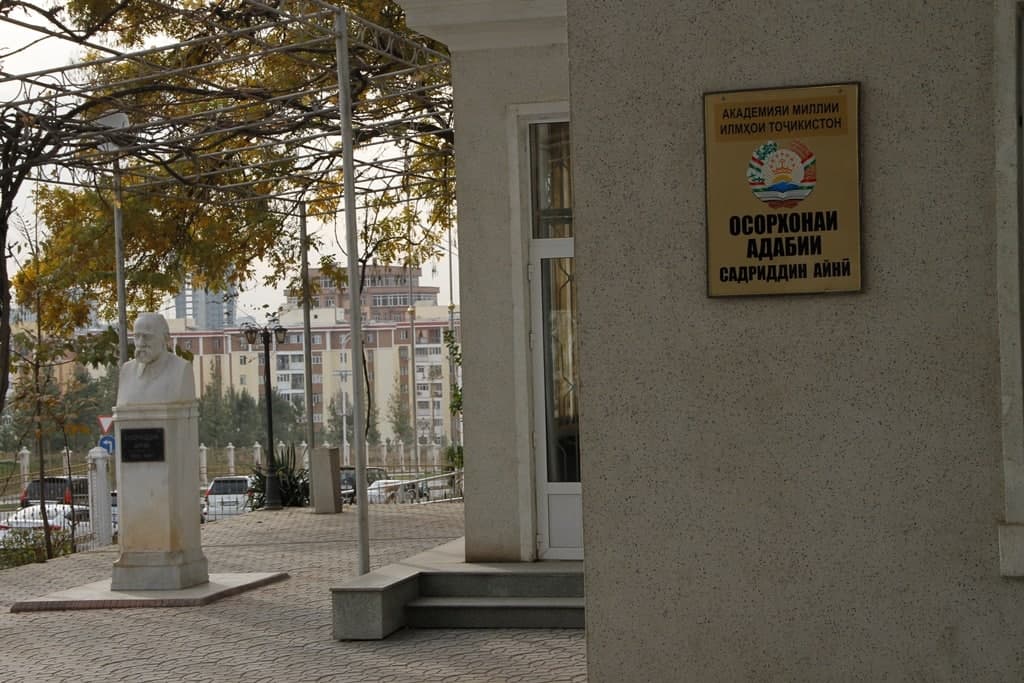
Dushanbe Mayor Rustam Emomali has ordered not to demolish the House-Museum of Sadriddin Ayni. He has also instructed to ensure its further safety and maintain the home improvement.
According to information posted on an official website of the Dushanbe administration, the mayor has studied letters by a number of scientists and writers regarding the House-Museum of Sadriddin Ayni and ordered not to demolish the house. Moreover, the mayor has reportedly instructed to ensure its further safety and maintain the home improvement.
Recall, the decision to demolish the House-Museum of Sadriddin Ayni have sparked outrage and city residents, including scientists and researchers have sent petitions to the Dushanbe mayor.
Thus, Munavar Mamadnazarov, who has PhD degree in Architecture, notes that the idea of the Tajik authorities to demolish the House-Museum of the founder of the modern Tajik literature Sadriddin Ayni is puzzling.
“The explanation is standard; they say “the building does not meet modern requirements.” With the same wording, a significant part of the architectural heritage, without which it is difficult to imagine a harmonious line of development in Dushanbe from a small village to metropolis, has already been demolished in the center of the city in recent year.
“Now the turn of the “liquidators” has reached a small mansion, which has an official status of the national museum.
“The very name “house-museum” unambiguously means that Ustod Sadriddin Ayni lived and worked within these walls.
“And if instead of this elegant mansion, you will build even the Louvre or the Hermitage in some other territory, this building itself will never be directly associated with the memory of the person who glorified the Tajik language and literature.
“It will be a fake that has nothing to do with real history and hardly be able to find a response in the hearts and souls of subsequent generations.”
Sadriddin Ayni (April 15, 1878 – July 15, 1954) was a Tajik intellectual who wrote poetry, fiction, journalism, history and lexicography. He is regarded as Tajikistan's national poet and one of the most important writers in the country's history.
The Sadriddin Ayni house was transformed into a house-museum in 1979 on the occasion of the 100th anniversary of the writer.