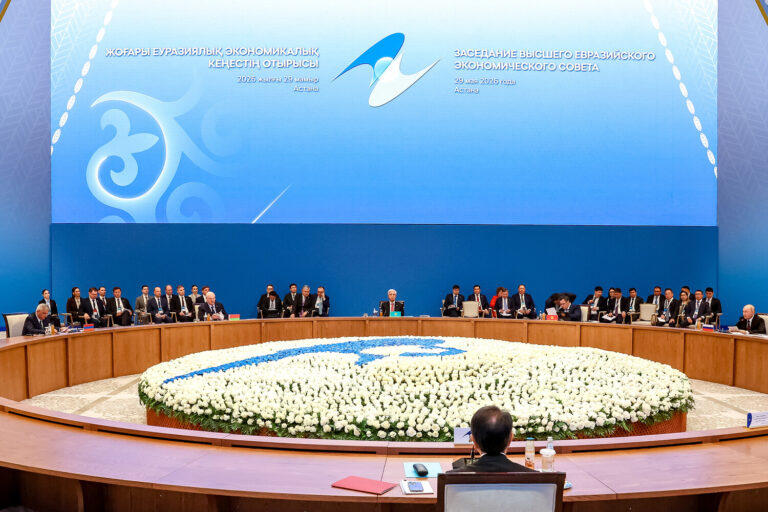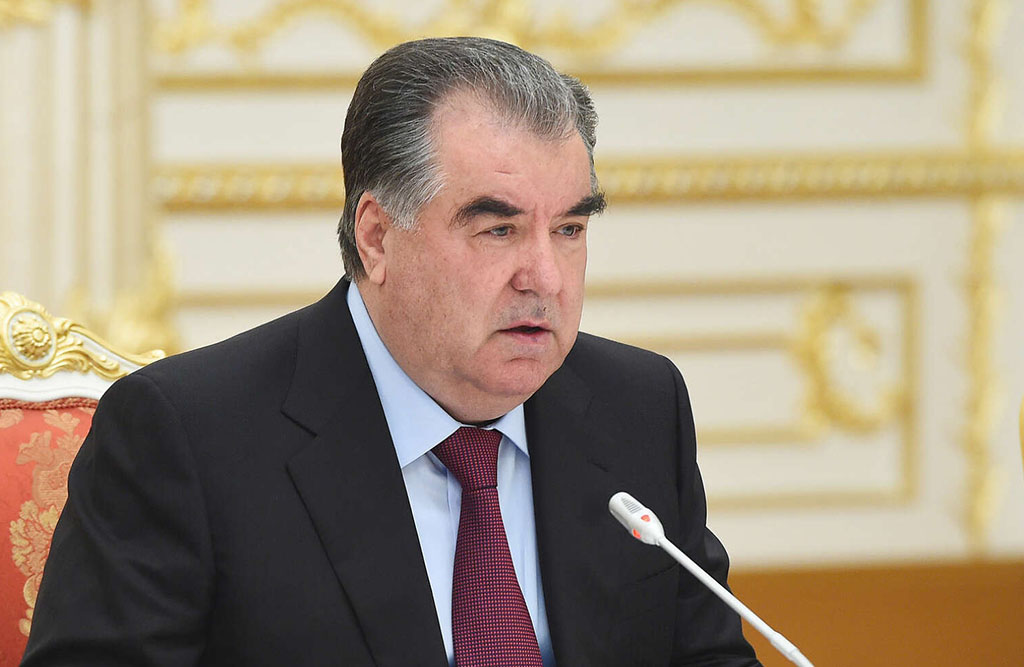
Speaking at an extraordinary session of the Collective Security Council of the Collective Security Treaty Organization (CSTO), Tajik President Emomali Rahmon on January 10 drew attention of CSTO leaders to the existence of sleeper international terrorist cells in the CSTO member nations.
“The head of state drew attention of members of the CSTO Collective Security Council to the existing sleeper cells of international terrorism, extremism and radicalism in the CSTO member nations as well as their efforts to win over nationals of these countries,” the Tajik president’s official website says.
In this context, Emomali Rahmon reportedly called on the CSTO Collective Security Council members to expand collaboration between the competent agencies of the CSTO member nations to address these challenges and threats.
In his statement released at the CSTO summit, Tajik leader also expressed his views on a number of initiatives, including the necessity of developing the system of protection of the information space, the Tajik president’s official website added.
Recall, an extraordinary online meeting of the CST, presided over by Armenian Prime Minister Nikol Pashinyan, discussed the situation in Kazakhstan and measures to stabilize it.
In accordance with Article 13 of the CSTO Charter, the Collective Security Council is the highest body of the Organization. The Council considers the fundamental issues of the Organization’s activities and makes decisions aimed at the realization of its goals and objectives, as well as ensures the coordination and joint activities of the Member States to achieve these goals. The Council includes heads of member states. Ministers of Foreign Affairs, Ministers of Defense, Secretaries of Security Councils of Member States, the Secretary General of the Organization, Plenipotentiary Representatives of Member States to the Organization and invited persons can take part in meetings of the Council. The Council has the right to establish, on a permanent or temporary basis, the working and subsidiary bodies of the Organization. The Chairman of the Council (hereinafter – the Chairman) is the head of state on whose territory the regular session of the Council is held, unless the Council decides otherwise. His rights and obligations remain with him until the next regular session of the Council.
Created in 1992, the Collective Security Treaty Organization is a Russia-led military alliance grouping the six former Soviet republics of Armenia, Belarus, Kazakhstan, Kyrgyzstan, Russia and Tajikistan.