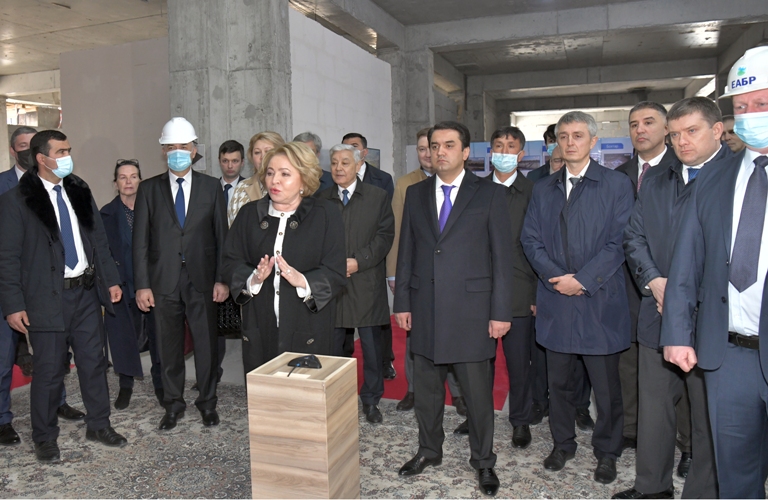
Tajik, Russian parliament speakers visit the site for construction of Russian-language school in Dushanbe

On Friday February 25, Majlisi Milli (Tajikistan’s upper chamber of parliament) Speaker Rustam Emomali and visiting Speaker of the Federation Council (Russia’s upper chamber of parliament) Valentina Matviyenko visited the site for construction of Russian-language school in Dushanbe, which is being built under financial support of the Russian Federation. A government-to-government agreement between Tajikistan and […]

On Friday February 25, Majlisi Milli (Tajikistan’s upper chamber of parliament) Speaker Rustam Emomali and visiting Speaker of the Federation Council (Russia’s upper chamber of parliament) Valentina Matviyenko visited the site for construction of Russian-language school in Dushanbe, which is being built under financial support of the Russian Federation.

A government-to-government agreement between Tajikistan and Russia on construction of five Russian-language schools in Tajikistan was signed in Moscow on April 17, 2019.  Each of these schools will accommodate up to 1,224 pupils.
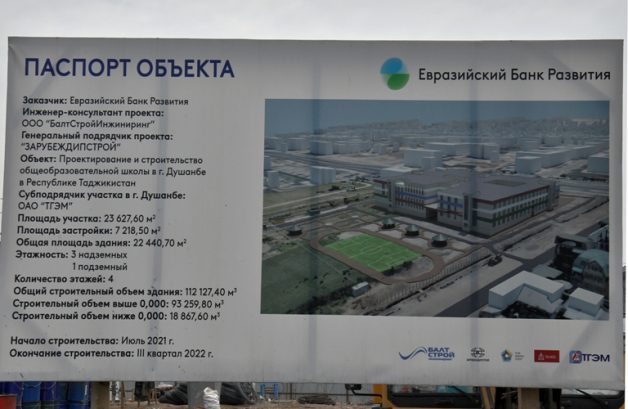
The schools are being built in Dushanbe, Kulob, Khujand, Bokhtar and Tursunzoda. 

Tajikistan’s lower house (Majlisi Namoyandagon) of parliament on January 15, 2020 ratified the agreement with Russia on construction of five Russian-language schools in Tajikistan.

Recall, Russia has begun sending teachers to secondary schools in Tajikistan since the academic year 2019-2020.  They teach subjects such as mathematics, physics, biology, chemistry, computer science, Russian, and others at secondary schools where teaching is conducted in Russian.

The education sector in Tajikistan has been in decline after collapse of the Soviet Union in 1991 and many Tajik nationals described the effort to bring over Russian teachers as a much-needed remedy. 
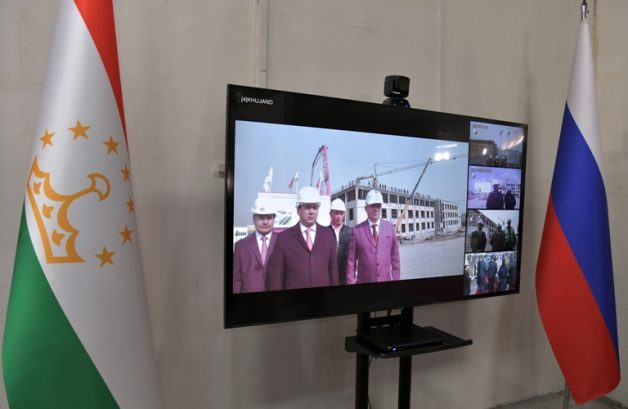
Meanwhile, Tajik national news agency Khovar says Emomali and Matviyenko on February 25 also get acquainted with progress of construction another Russian-language being built under the mentions agreement through video conferencing.  

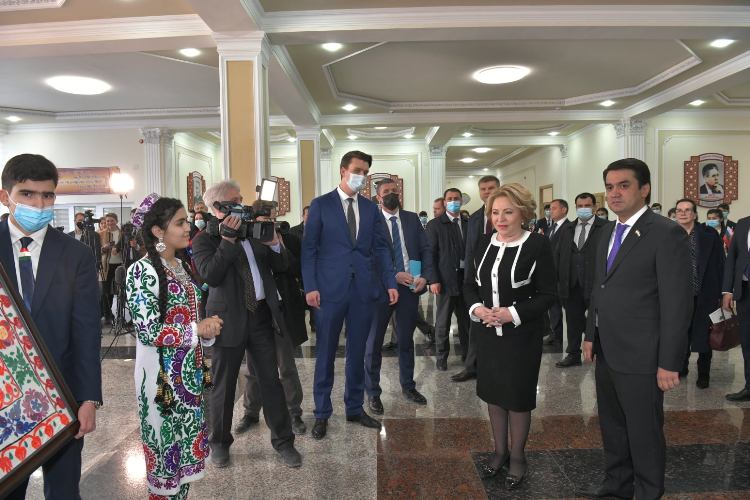
The same day, they reportedly visited the Presidential Lyceum in Dushanbe’s Sino district, which accommodates 1,880 pupils.  106 skilled teachers, including five teachers from the Russian Federation, work in this lyceum.  Russian teachers work in this lyceum as part of the project, Russian Teachers Abroad. 
Join us on social media!

Article translations:

Related Article

Tenisi
Оби зулол
Оби зулол

Most Read

Коммерсбонк Точикистон

Recent Articles

Eskhata Bank receives a certificate of registration for the information resource “Eskhata Business”

The resource is designed for remote servicing of corporate clients and entrepreneurs.

Why do taxis in Dushanbe operate like buses?

And, by the way, the traffic police do not stop them.

Winter pastures begin to be restored in southern Tajikistan

In the Khatlon region, the productivity of winter pastures has increased by 40% due to pasture rotation.

The U.S. launches new strikes against Iran, Tehran announces an attack on the U.S. airbase

Washington and Tehran have exchanged blows again despite the ceasefire.

Antimonopoly Agency: cement prices stabilize in Tajikistan

The department claims that the situation normalized within a day after the president's directive.

The first Afghan woman on Everest advocates for girls’ rights

She launched a campaign to support education for girls.

Female Founders Forum Tajikistan 2026 (3F Forum)

Investment, Technology, and Entrepreneurship Leaders to Converge in Dushanbe TechXhub...

A School with no room for error. Why is it difficult for Tajik children to be creative?

How the fear of making mistakes, the cult of the "right answer," and an overloaded school system affect children's initiative, creativity, and decision-making skills in adulthood.