



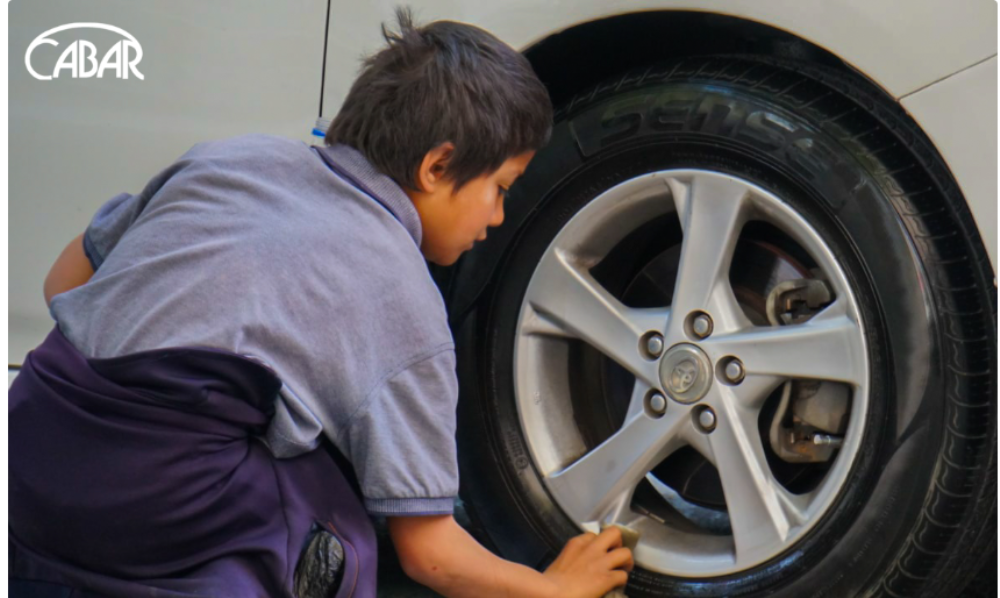
In Dushanbe, children can be seen washing cars, selling small items, behind the counters of stores and other retail outlets where they help and sometimes even replace adults. They offer their help to carry bags and heavy bags near large shopping malls, and some of them even offer to shine shoes, a report issued by CABAR.asia on June 6 says.
It is to be noted that there are no regular statistics on child labor in Tajikistan
CABAR.asia says the only study of child labor in Tajikistan was conducted in 2012 by the Agency for Statistics with the International Labor Organization’s International Program on the Elimination of Child Labor (ILO-IPEC).
According to this study, about 120,000 children, aged 5 to 11, in Tajikistan are forced to work. At the time, there were 2.2 million children under the age of 17 in the country and 23.4% or 522,000 of them were working.
Child labor is more common in rural areas. In villages, children are used to helping their elders with household chores from a young age. During the cotton harvest season, if a district falls behind schedule, even schoolchildren go out to the fields.
According to experts, in the early 2010s, international organizations, together with governmental and non-governmental organizations, stepped up efforts to eradicate child labor in Tajikistan.
For a long time, Tajikistan was on a “black list” of countries that made no effort to eliminate the worst forms of child labor. It was only a few years ago that the country was removed from it. In 2014, the government adopted a decree “On the National Program to Eliminate the Worst Forms of Child Labor in the Republic of Tajikistan for 2015-2020.”
The new Labor Code, approved in July 2016, establishes a minimum hiring age of 15. A separate section (articles 207-214) is devoted to protecting the rights of workers under the age of 18.
According to the Ministry of Labor, Migration and Employment of the Population of Tajikistan, in 2018 more than a thousand children were “shielded” from child labor as a result of various measures.
According to the strategy of the Sustainable Development Goals (SDGs), Tajikistan intends to completely eliminate child labor by 2025 and, by 2030, forced labor, modern slavery, and human trafficking worldwide. However, Tajikistan’s children are still forced to earn a living for themselves and their families.







