Tajikistan has almost tripled the export of agricultural products, and consumers see this as the reason for the rise in prices for fruits and vegetables in the domestic market. Producers, however, deny this.
According to data from the Agency for Statistics under the President of Tajikistan, more than US$20.7 million worth of agricultural products have been exported over the first four months this year, which is US$13.2 million more than in the same period last year.
Over the reporting period, Tajikistan has reportedly exported US1.4 million worth of livestock products (dairy and meat products, eggs, and others), which is 10 times more than in January-April last year.
Over the same four-month period, Tajikistan has exported US$17.5 million worth of fruits and vegetables, which is three times more than in the same period last year.
The export of prepared food products (meat, confectionery and bakery products, juices, soft drinks and others) has risen 28 percent in four months to April 30, 2022, reaching US$1.8 million, which is US$500,000 more than in January-April last year.
Tajikistan mostly exports onions, dried fruits, grapes, and fresh fruits (apricots, sweet cherries, peaches, apples and others).
According to statistical data from the Ministry of Agriculture, Tajikistan last year exported 208,000 tons of agricultural goods worth US$36 million, according to data from other agencies, US$40 million.
Meanwhile, the Agency for Statistics says Tajikistan last year produced 216,170 tons of fruits, 151,794 tons of grapes, 1,219,019 tons of vegetables, and 552,955 tons of melons and gourds.
Prices rise despite season
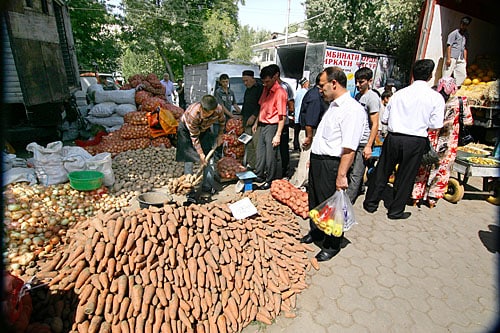
In Tajikistan, during the high season of vegetables and fruits, their prices do not decrease. Current average prices per kilogram are 4.00 somonis for cabbages, beets and onions, 3.00 somonis for carrots, 10.00 somonis for tomatoes and bell peppers, 6.00 somonis for cucumbers and eggplants.
All these prices are about twice as high as in June 2021ю
Current average prices are 5.00 somonis for plums, 8.00 somonis for apricots and sweet cherries, and more than 10 somonis for peaches.
Compared to last summer, all fruits and berries have risen in price by an average of 1.5-2 times.
Consumers say price hike has resulted from increasing agricultural exports. For example, onions and watermelons are loaded into trucks and sent abroad directly from the fields.
“As a result, all the best products go abroad, and we are left with low-quality vegetables and fruits, and their prices are too high,” social media users complain in their comments.
Meanwhile, producers say high prices for agricultural products in the country result from high cost of fertilizers, pesticides and technical services (due to high fuel prices).
Current price for one kilogram of fertilizers in Tajikistan 10-12 somnis, while, last year, it was only 4-5 somonis.