As of July 1, 2022, Tajikistan’s international reserves have amounted to 8.1 months of import cover, the deputy head of the National Bank of Tajikistan (NBT), Firdavs Tolibzoda, told reporters in Dushanbe on July 18.
International reserves are funds central banks exchange with each other on an international level. The reserves can either be in gold or in an internationally-accepted commodity, like the dollar or the euro.
Tolibzoda, in particular, noted that over the first six months of this year, they have conducted currency interventions in a total amount of 64.8 million U.S. dollars to maintain a stable value for the national currency, the somoni.
Recall, the then-first deputy head of Tajikistan’s regulator, Jamoliddin Nouraliyev, told reporters on July 22, 2021 that as of July 1, 2021, Tajikistan’s international reserves have amounted to 7½ months of import cover. According to him, foreign currencies have accounted for 92 percent of the country’s international reserves and gold has accounted for 5.0 percent.
Countries hold foreign-exchange reserves partly to protect themselves against external crises. One common rule of thumb is that reserves that can cover three months' worth of imports are adequate.
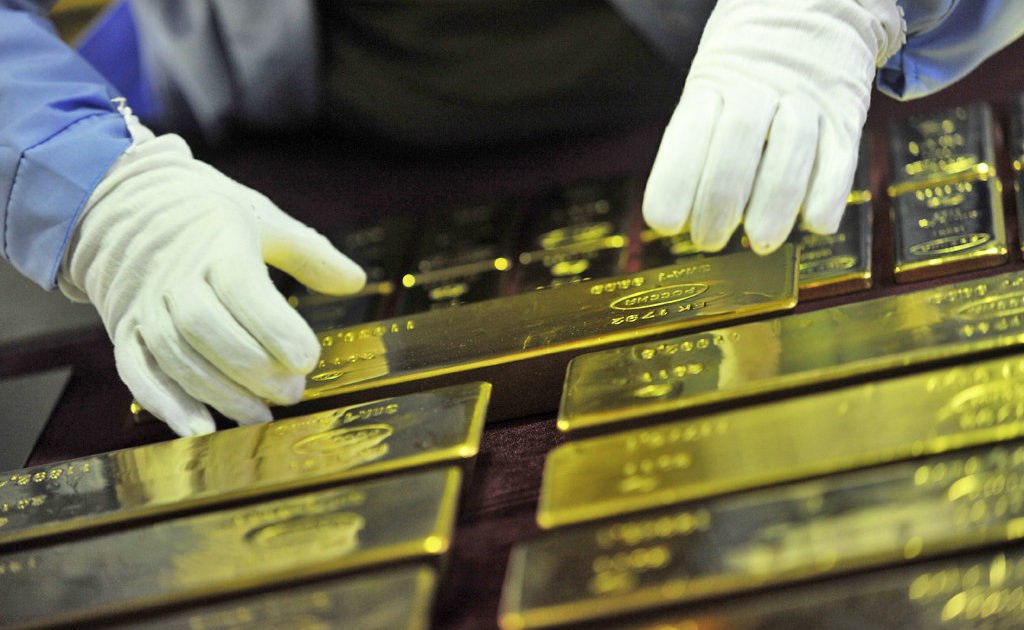
Tajikistan has sold gold abroad to maintain a stable value for the national currency. Over the first six months of the last year, precious and semi-precious metals and stones accounted for more than 68 percent of the country’s exports.
According to information posted on Goldmania.ru’s website, Tajikistan has reportedly lost 65 percent of its gold reserves over the past three years
Goldmania.ru, citing the World Gold Council (WGC), notes that Tajikistan’s gold reserves decreased from 22.3 tons in 2019 to 8 tons in 2021.
It is to be noted that Tajikistan dramatically increased the sale of precious metals during the pandemic years.
Thus, according to official statistics, Tajikistan exported about US$690 million worth of precious metals in 2020, which was about 50 percent of the country’s exports.
Over the first eleven months of last year, Tajikistan reportedly exported almost US$710 million worth of precious metals, which was about 40 percent of the country’s exports.
Monetary gold is gold held by a monetary authority principally as an element of its foreign exchange reserves (also sometimes called international reserves). Gold bullion can take the form of coins, ingots, or bars with a purity of at least 995 parts per 1000, including such gold held in allocated gold accounts.
WGC says Tajikistan’s gold reserves remained unchanged at 17.19 tons in the first quarter of 2022 from 17.19 tons in the fourth quarter of 2021. A total cost of those 17.19 tons of gold was reportedly 1.1 billion U.S. dollars.