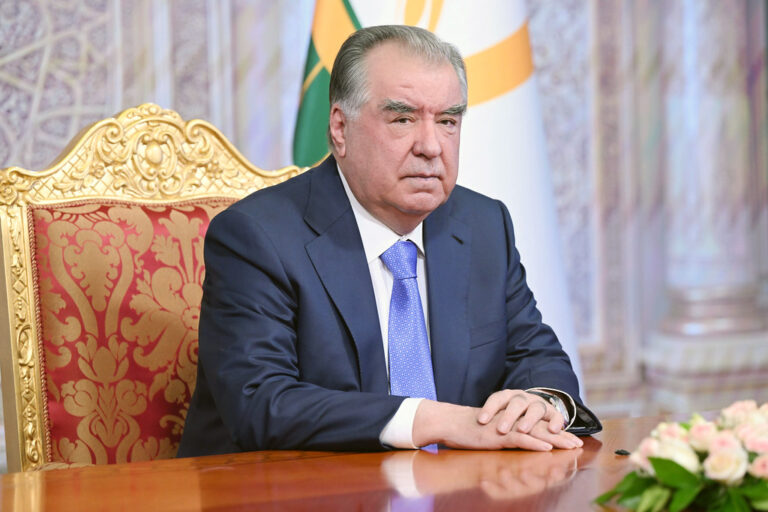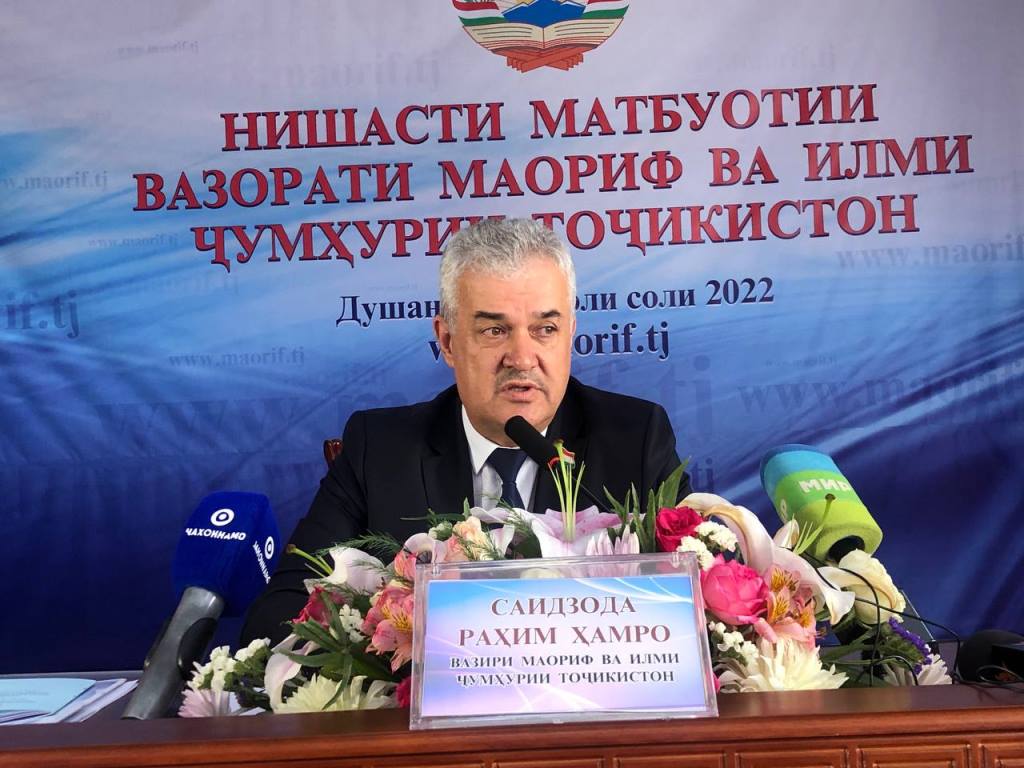
In a report released at a news conference in Dushanbe, the Minister of Education and Science Rahim Saidzoda revealed on July 19 that schools in Tajikistan are continuing to experience an acute shortage of teachers.
According to him, Tajikistan now has 3,400 teaching vacancies.
He noted that more than 2000 teachers in the country teach in schools not in their specialties due to acute shortage of teachers (for example, history teacher teaches Russian language and vice versa).
“This year, 14 students will graduate from teacher’s training institutes, 7,000 of them studied at the expense of the . Besides, 700 students studied under the presidential quota. All of them will go to work in schools,” the minister said.
Asked about the reason for shortage of teachers in the country, Saidzoda said that it is a global problem.
“This problem exists all over the world, not only in Tajikistan. To solve the problem, we have a permanent commission under the Ministry that who reports to management on problems facing teachers, and these problems are studied and solved,” Saidzoda added.
Meanwhile, experts say the main reason for the sharp rise in the teacher shortage in the country is the fact that many teachers have left the country seeking better employment opportunities and many specialists do not want to work with schools because of low monthly wages in the education sector.
Recall, the top education official in the southern province of Khatlon, Ashourali Olimi, told reporters in Bokhtar, the capital of Khatlon province, on January 31 this year that 1,900 teachers in the province quit their jobs last year.
Commenting on the current situation in the province’s education sector, Ashourali Olimi pointed teachers’ difficult financial position as the cause for quitting their jobs.
“Some of teachers have three of four children each. They cannot feed their families on a teacher's salary, and therefore, they are forced to go abroad seeking better employment opportunities,” Olimi noted.
He further noted that 1,957 young teachers were hired last year. “But young teachers will not be able to replace experienced teachers,” the Khatlon top educational official added.
Meanwhile, the deputy head of the Khatlon education directorate, Saifullo Lutfulloyev, noted that 2,067 teachers left the province last year seeking better employment opportunities.
Situation in high school sector has become critical across Tajikistan. High schools, which were already straining to deliver an acceptable education, are being decimated by the teacher exodus.
Many teachers in Tajikistan reportedly quit over the summer to search for work in Russia, and Tajik schools are currently experiencing an acute shortage of teachers.
Teachers’ salaries were always horribly low in Tajikistan but living costs have soared since the pandemic began.
Tajik teachers leaving for Russia seeking better employment opportunities mainly work as street cleaners or delivery workers.