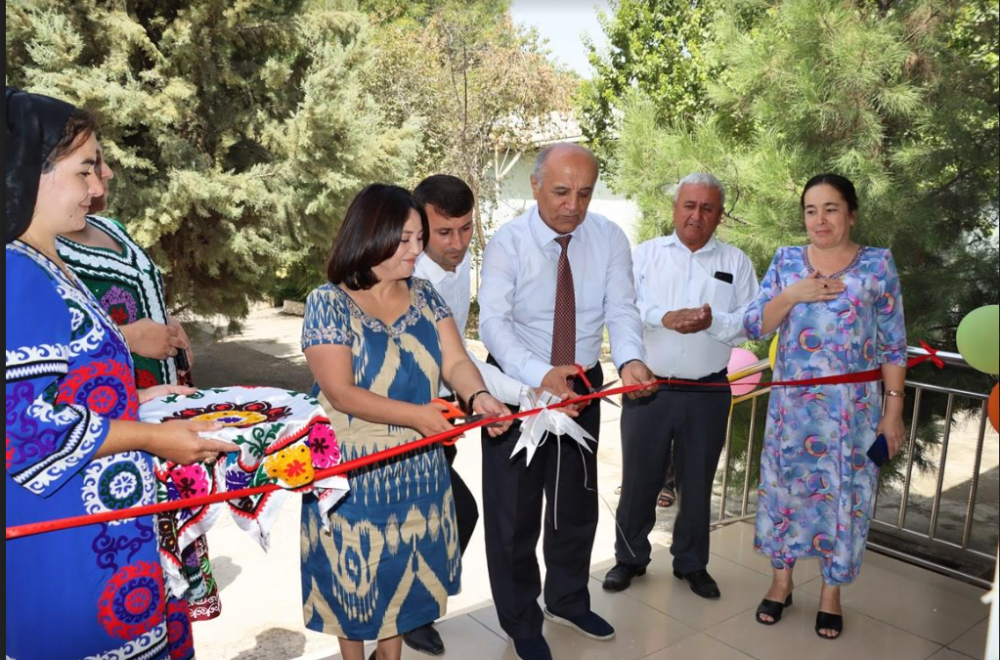
Fashion and clothing design students in Kulob city and the Danghara district of Khatlon province will start the new academic season with two new Garment Training Centers developed under the support of the International Trade Center (ITC) and in partnership with the Kulob Institute of Technology and Innovation Management (KITIM) and the Danghara State University (DSU).
According to ITC Office in Tajikistan, the Garment Training Centers opened this summer and they are already hosting students and professionals interested to learn modern dressmaking. Supporting the Tajik apparel sector and related universities are crucial parts of the work implemented by the ITC’s Global Textile and Clothing Program(GTEX), funded by the Government of Switzerland.
Khatlon province is the most populated region of Tajikistan, with a third of the country’s population living there. The region is known for its intensive agricultural and cotton production, while industrial development is still recent. The textile and clothing industry can offfer better income and new work opportunities to local women and youth.
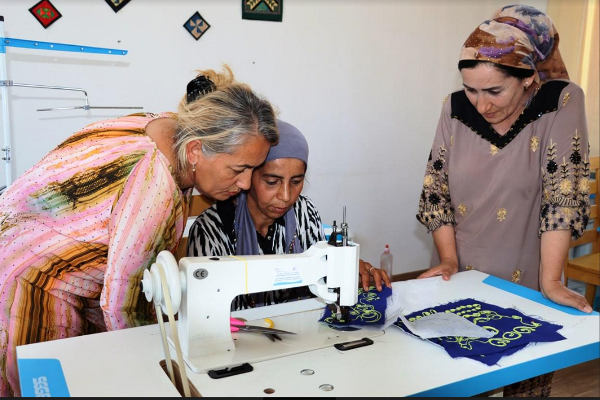
The Garment Training Centers in the Khatlon province are the third and fourth centers of this kind ITC opened in Tajikistan. They will enhance and develop core skills required by the country’s garment industry, as well as fill the gap between the private sector and academia. Through the latest training and technology, the centers will cultivate qualified workforce. Moreover, the centers enable vital collaboration between the industry and other educational institutions the country.
Saidmumin Kamolov, GTEX National Project Coordinator in Tajikistan, says: “ITC is committed to supporting students to have access to the latest equipment and technologies, such as modern sewing machines, computer-aided clothing design technologies, and more. The GTEX project made all appliances and software available. The project will play a major role in improving the centers’ capacities, updating training curricula and adapting the equipment according to the sector’s need.”
Currently, around 900 students in DSU and 300 students in KITIM study textile machinery and equipment, natural fibers spinning, primary processing and spinning, artistic weaving, modelling and designing clothes, among other relevant topics to the sector.
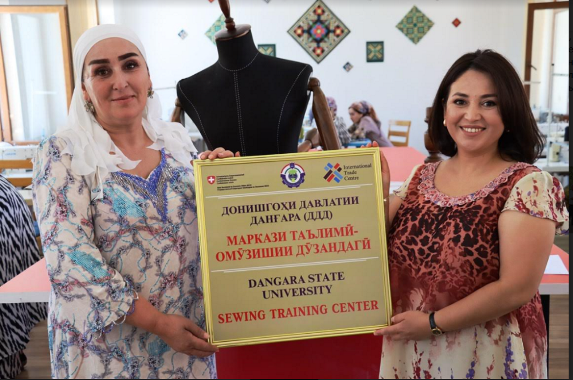
Nurali Shohiyon, Rector, Danghara State University: “The availability of qualified professionals is the key to the successful development of any industry in an increasingly competitive environment. The Garment Training Centre will further contribute to the development of the textile and clothing industry in Tajikistan. Strengthening the linkages between the apparel industry and the academy will help the national production to enter new markets and find new opportunities”.
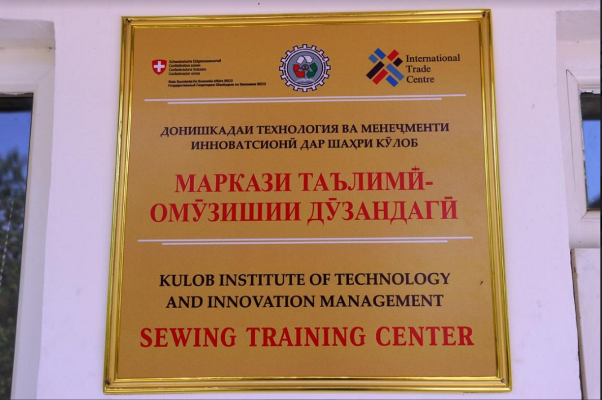
Almossho Shoyev, Rector, Kulob Institute of Technology and Innovation Management: “With the training and technology provided, the Garment Training Centre aims to better qualify the textiles and clothing workforce. Besides that, the center will play an essential role in enabling more vital collaboration between the industry and our university”.
The universities intend to develop new training materials in line with industry and market needs and adapt existing ones for various skill and knowledge levels with the technical support from ITC GTEX project, national enterprises, and the sector related business support organizations.
The GTEX MENATEX program is funded by the State Secretariat for Economic Affairs (SECO) of the Swiss Confederation focusing on five priority countries (Egypt, Morocco, Kyrgyzstan Tajikistan and Tunisia). The program aims to encourage exports of textiles and clothing from developing countries to promote employment and income generation throughout the value chain.
This year the Swiss Cooperation Office in Tajikistan marks 30th year of the establishment of diplomatic relations between Switzerland and Tajikistan. Over the last 30 years, around 500 million USD have been allocated in the form of grants to the Government of Tajikistan and the Tajik population. Within its Cooperation program for Central Asia (2022-2025), Switzerland will focus on supporting economic, social and democratic development, promoting an integrated and regional approach in the complex field of transboundary water management, strengthening economic ties and promoting good governance.