Gasoline and liquefied natural gas (LNG) prices have fallen slightly in Dushanbe and in Khujand over the past week.
In Dushanbe, the price of one liter of the liquefied natural gas fell from 6.60 somonis on September 22 to 6.20 somonis on September 29 (6.1-percent decrease).
In Khujand, which is the second-largest city of Tajikistan also the capital of the northern Sughd province, the price of one liter of the liquefied natural gas over the reporting period has fallen from 6.00 somonis to 5.80 somonis (1.0-percent decrease).
It is to be noted that more than 60 percent of the country's motor vehicles use liquefied natural gas as fuel.
Over the reporting the price for one liter of 92-octane gasoline, which is the most sought-after grade of automobile gas in the country, has fallen 10-20 dirams in Dushanbe and Khujand.
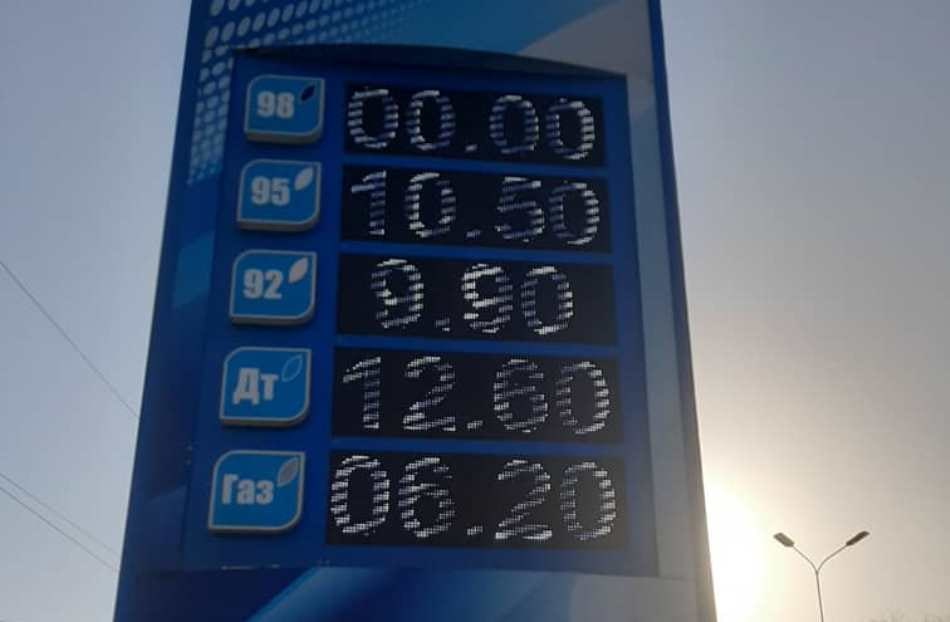
Current price for one liter of the 92-octane gasoline is 9.90 somonis in Dushanbe and 10.00 somonis in Khujand.
Meanwhile, current prices for on liter of the 92-octane gasoline and liquefied natural gas in Khorog, the capital of the Gorno-Badakhshan Autonomous Region (GBAO), are 11.80 somonis and 8.40 somonis, respectively.
Current price for one liter of diesel fuel is 12.00 somonis in Dushanbe and 12.50 somonis in Khujand.
According to data from the Agency for Statistics under the President of Tajikistan, prices for fuels and lubricants have fallen on average 3.1 percent over the first eight months of this year.
Over the reporting period, diesel fuel prices have reportedly risen 18.2 percent, while liquefied natural gas and gasoline have fallen 19 percent and 1.8 percent, respectively.
Over the first eight months of this year, Tajikistan has reportedly imported more than 496,000 tons of petroleum products (27.7 percent increase compared to January-August 2021) for more than 421 million U.S. dollars (80-percent increase compared to January-August 2021).
Over the same eight month period, the share of petroleum products in Tajikistan’s imports has reportedly amounted to 12.8 percent.
In January-August this year, Russia has provided the bulk of Tajikistan’s fuel imports – about 90 percent, while Kazakhstan has provided the bulk of Tajikistan’s LNG imports – more than 90 percent.