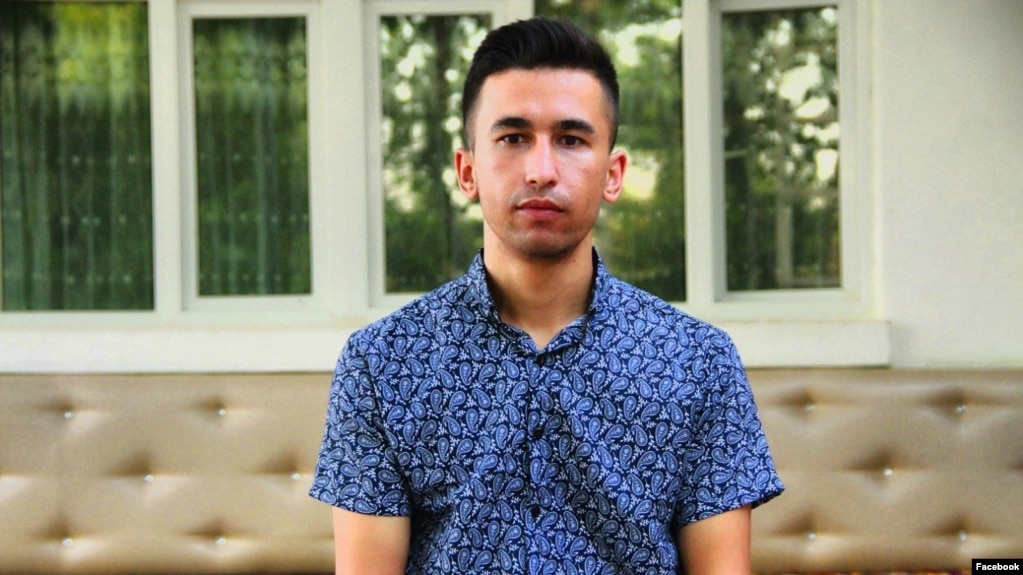
A prosecutor in the trial of Tajik popular blogger Abdullo Ghurbati asked a court in Dushanbe’s Shohmansour district on September 29 to sentence Ghurbati to an eight-year prison term with serving the jail term in a high-security penal colony.
The trail is being held behind closed doors at the pretrial detention facility and only Ghurbati’s defense lawyer Abdurahmon Sharipov and one witness were reportedly admitted to the court hearing on September 29.
Abdullo Ghurbati, who faces charges of publicly insulting an authority, minor assault of an authority, and participation in an extremist group's activities, maintains his innocence.
His defense lawyer says a verdict is expected next week.
A case of Avazmat Ghurbatov, who is better known by the pseudonym of Abdullo Ghurbati, moved to a court last month.
His wife Muborak Qosimi told Asia-Plus on August 17 that his case has moved to a court in Dushanbe’s Shohmansour district.
Recall, two Tajik popular bloggers Abdullo Ghurbati and Daler Imomali were arrested on June 15 after investigating the arbitrary demolition of homes in Dushanbe.
Ghurbati was charged with “violence against a representative of the authorities” while Imomali was accused of “illegal business activities” with his YouTube channel and "false denunciation.”
After a long silence about the grounds for Ghurbati’s detention, the authorities finally announced on July 19 that he was accused of membership in an extremist group and collaborating with it – charges punishable by up to eight years in prison.
Ghurbati is charged with membership in the Islamic Renaissance Party of Tajikistan (IRPT), which has been banned in Tajikistan since 2015, when it was designated a terrorist organization.
The same charges – along with others – had been brought against Imomali a few weeks earlier, but the case was classified as confidential, blocking the release of information about his detention.
International media watchdogs have released statement urging Tajik authorities to release independent journalists who have been critical of the government.
Ranked 152nd out of 180 countries in Reporters without Borders (RSF)'s 2022 World Press Freedom Index, Tajikistan has fallen 36 places in the index since 2015.