ADB expects a sharp drop in Tajik migrant workers’ remittances from Russia

A report released by the Asian Development Bank (ADB) in September this year notes that Tajikistan is experiencing significant adverse economic and social impacts from the Russian invasion of Ukraine.  Rising global food and oil prices, disrupted trade and revenue shortfalls, stressed financial sector, returning migrants, and diminishing remittances are reportedly causing economic growth to […]

Asia-Plus

A report released by the Asian Development Bank (ADB) in September this year notes that Tajikistan is experiencing significant adverse economic and social impacts from the Russian invasion of Ukraine.  Rising global food and oil prices, disrupted trade and revenue shortfalls, stressed financial sector, returning migrants, and diminishing remittances are reportedly causing economic growth to decelerate sharply, and unemployment and poverty to increase.  

The report, in particular, notes that Tajikistan is heavily dependent on remittance income, 80% of which comes from about 1 million migrant workers in the Russian Federation.

But migrant workers now struggle to find jobs in sectors that have traditionally absorbed them, such as services and construction, because the Russian economy began contracting this year, according to the report.  Consequently, remittances are expected to decline by 25% from US$2.25 billion reported in 2021 to US$1.69 billion in 2022.
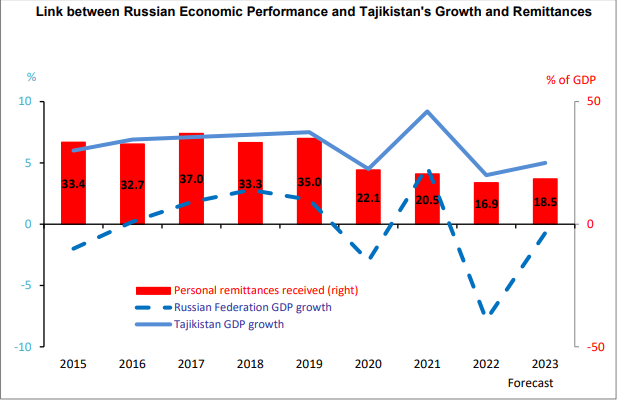
The report says this will have a significant social impact since more than 50% of households (about 735,000) rely primarily on remittances for the consumption of food and basic necessities, and are mostly located in the poorest regions and districts of the country.

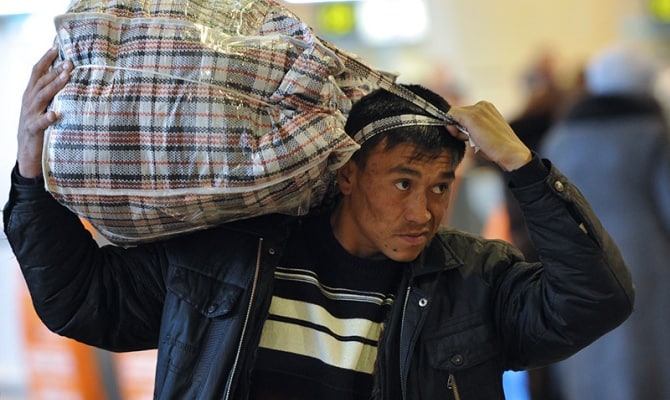
Labor migrants are still a critical component in the economy of Tajikistan and remittances keep many struggling families at home above the poverty line.  

According to official data from the Tajik authorities, an estimated 600,000 Tajik seasonal workers travel abroad each year, primarily to Russia but also to neighboring Kazakhstan, Kyrgyzstan and Uzbekistan. 

Tajikistan still has the lowest per capita income of all the former Soviet republics.  Migrant workers are thus of key importance in the country of 10 million.
Join us on social media!

Article translations:

Related Article

Оби зулол
Tenisi
Оби зулол

Most Read

Коммерсбонк Точикистон

Recent Articles

Ensuring Safe and Clean Air: A Global Priority

In recent years, the importance of safe and clean air has become a focal point for governments, environmental agencies, and health organizations worldwide. With...

“Hit with fists on the lower back and abdomen.” A teacher from Nurobod, claiming he was beaten by a student’s brother, details the attack

According to him, he is being threatened with murder, and law enforcement agencies have not yet detained the attacker.

International internet starts coming back in Iran after long shutdown 

Western media reports says Iranians ​isolated by a long...

Tajikistan listed among countries with low generative AI usage

Among the Central Asian countries, Kazakhstan has the highest rate.

Prices in Tajikistan rise almost 2% in January-April: apples, fuel, and utilities become particularly more expensive

In April, inflation was 0.6%: food products became more expensive, non-food products increased in price comparatively less, and tariffs for paid services remained unchanged.

Drought in Central Asia becoming a chronic threat, IWMI expert warns

The temperature in the region is rising faster than the global average.

Emomali Rahmon congratulates Tajikistanis on Eid al-Adha and calls for thrift

The President reminded that Idi Qurbon is not a wedding but a religious ceremony that should take place without ostentatious luxury.

Gazpromneft – Tajikistan launches the “Welcome Skidka” program for corporate customers

New clients - legal entities and individual entrepreneurs - can take advantage of special conditions until the end of the current year.

In Dushanbe, 28 sellers fined for unjustified price increases

On the eve of Idi Qurbon, inspections are being conducted at the capital's retail outlets.