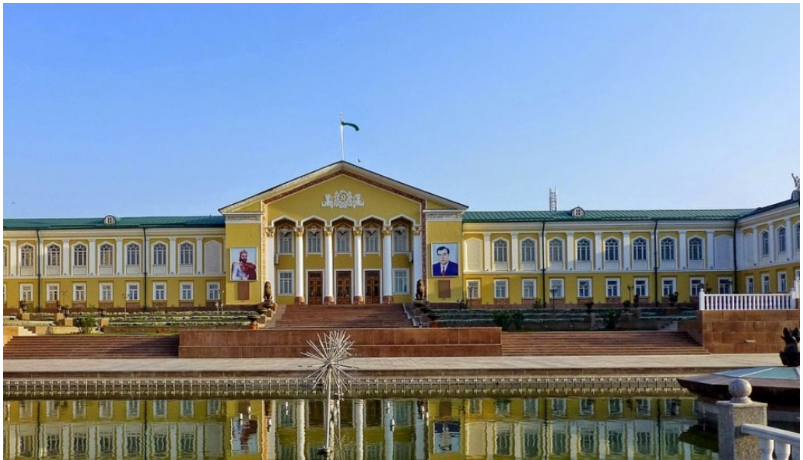
The Arbob Culture Palace (Qasri Arbob) is hosting a solemn meeting and a concert dedicated to the 30th anniversary of the 16th session of Tajikistan’s Shuroi Oli (Supreme Court — 1937–1994 legislature of the Tajik SSR and Tajikistan) of the 12th convocation.
The Shuroi Oli 16th session is considered an important landmark in restoration of constitutional order in the country.
Members of the government and the parliament, public figures as well as representatives of the intelligentsia are participating in the meeting.
Among the guests of the meeting are Mr. Mahmadsaid Ubaidulloyev, the former Mayor of Dushanbe also ex-Chairman of the Majlisi Milli (Tajikistan’s upper chamber of parliament), and Mr. Shukurjon Zuhurov, ex-Chairman of the Majlisi Namoyandagon (Tajikistan’s lower chamber of parliament).
Recall, the 16th session of the Supreme Council that opened in the northern city of Khujand on November 16, 1992 three days later elected Emomali Rahmon as the Supreme Council's chairman. This gave him the status of Tajikistan’s leader.
The Arbob Cultural Palace that had previously been property of Open Joint-Stock Company (OJSC) named after Saidkhoja Urunkhojayev was handed over to the Sughd culture directorate in April 2011. Sughd governor passed an appropriate resolution on this subject on January 20, 2011. According to local authorities, such a decision was made because the Urunkhojayev OJSC reportedly did not have enough funds to maintain the facility and pay wages to 40 people working with the Arbob Cultural Place.
The Arbob Cultural Palace is a building in the Bobojon-Ghafourov district, the former headquarters of a Soviet collective farm, built in the 1950s and modeled on the winter gardens of Peterhof, St. Petersburg. The main building consists of three wings – with an ornate theatre seating 800 people in the main wing. The South wing currently houses a museum which tells the history of Arbob and of collectivization in Tajikistan. Outside the building is a procession of fountains and rose gardens. The center was built under the leadership of Saidkhoja Urunkhojayev, the head of the collective farm.