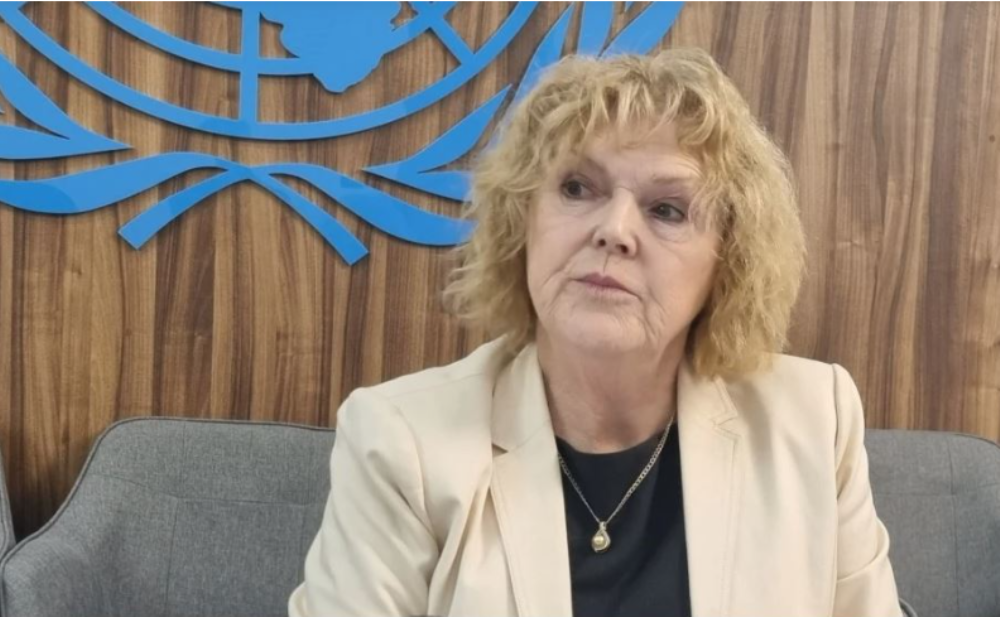
The authorities in Tajikistan must radically improve the situation of its human rights defenders, and dispel an intensifying climate of fear, the United Nations Special Rapporteur on the situation of human rights defenders, Ms. Mary Lawlor, said on December 9 after a twelve-day official visit to the country.
“Some officials in the Tajik government are trying to engage positively with human rights defenders, and there has been some legislative progress. However, many of those who peacefully defend the rights of others are under increasing pressure,” the Special Rapporteur on the situation of human rights defenders, Mary Lawlor said in a statement, according to the UN Human Rights Council.
“The situation of human rights defenders is deteriorating. Lawyers, journalists and others are being targeted for their human rights work. They have been confronted with a range of difficulties ranging from onerous administrative burdens, to harassment, threats, criminalization, closed unfair trials and imprisonment,” said Ms. Lawlor. “A climate of corruption, the fear of persecution and a stranglehold on human rights defenders working on difficult issues have forced some to leave the country.”
She noted that the Tajik government should live up to its international obligations and commitments, and work with human rights defenders to build peaceful, fair and just societies.
“The Tajik Government must realize that it is in its self-interest to promote and protect human rights defenders working to build just and fair societies,” said Ms. Lawlor. “I urge the Government to treat human rights defenders as allies, not adversaries.”
UN Special Rapporteur Mary Lawlor paid an official visit to Tajikistan from November 28 to December 9 to assess the situation of human rights defenders in the country.
During her visit, the Special Rapporteur held meetings with government authorities in Dushanbe, and also traveled to Khujand, the capital of the Tajik northern provinces of Sughd.
Ms. Lawlor held discussions with the Ombudsman, members of Parliament, prosecutors, the Supreme Court and representatives of the international community.
She also visited a pre-trial detention center and met human rights defenders there. Her request to visit the Gorno-Badakhshan Autonomous Region (GBAO) was denied.
The Special Rapporteur will present a full report on her visit to the Human Rights Council in March 2024.
Ms. Mary Lawlor is the Special Rapporteur on the situation of human rights defenders. She is currently Associate Professor of Business and Human Rights at the Centre for Social Innovation (CSI) at Trinity College Dublin Business School. In 2001 she founded Front Line Defenders – the International Foundation for the Protection of Human Rights Defenders to focus on human rights defenders at risk. As Executive Director between 2001 and 2016, Ms. Lawlor represented Front Line Defenders and played a key role in its development. Ms. Lawlor was previously Director of the Irish Office of Amnesty International from 1988 to 2000, after becoming a member of the Board of Directors in 1975 and being elected its President from 1983 to 1987.