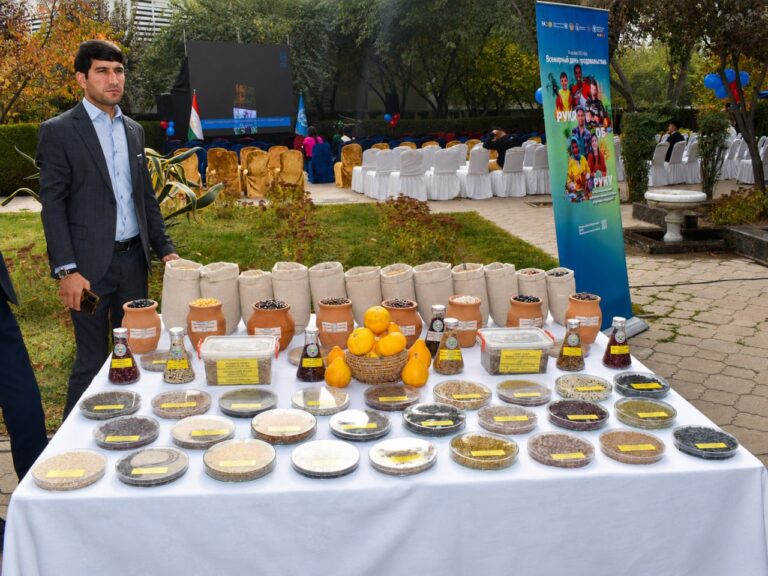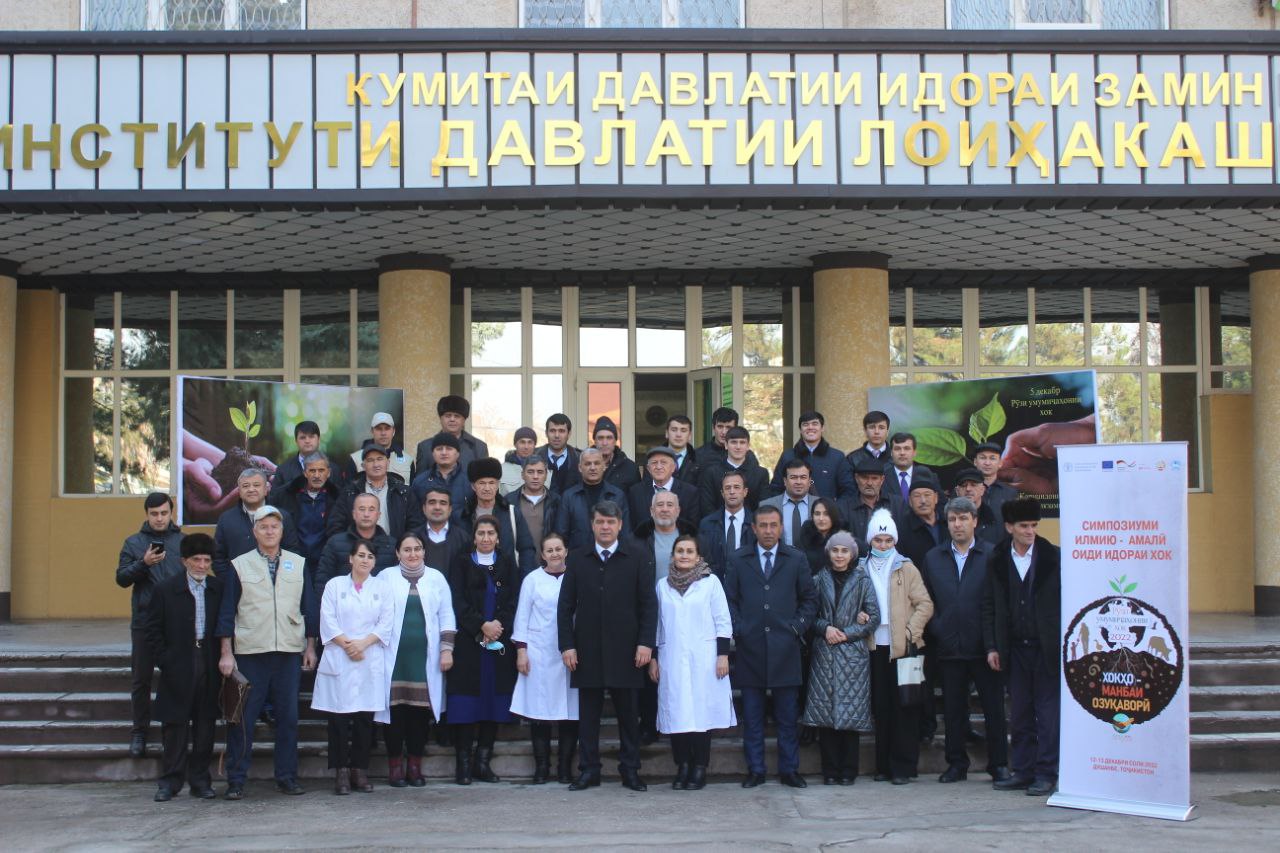
The European Union Integrated Rural Development Project/ TRIGGER in cooperation with Food and Agriculture
The Symposium gathered 50 participants including local authorities, public and international organizations, scientists, academics and international experts in soil management and farmers.
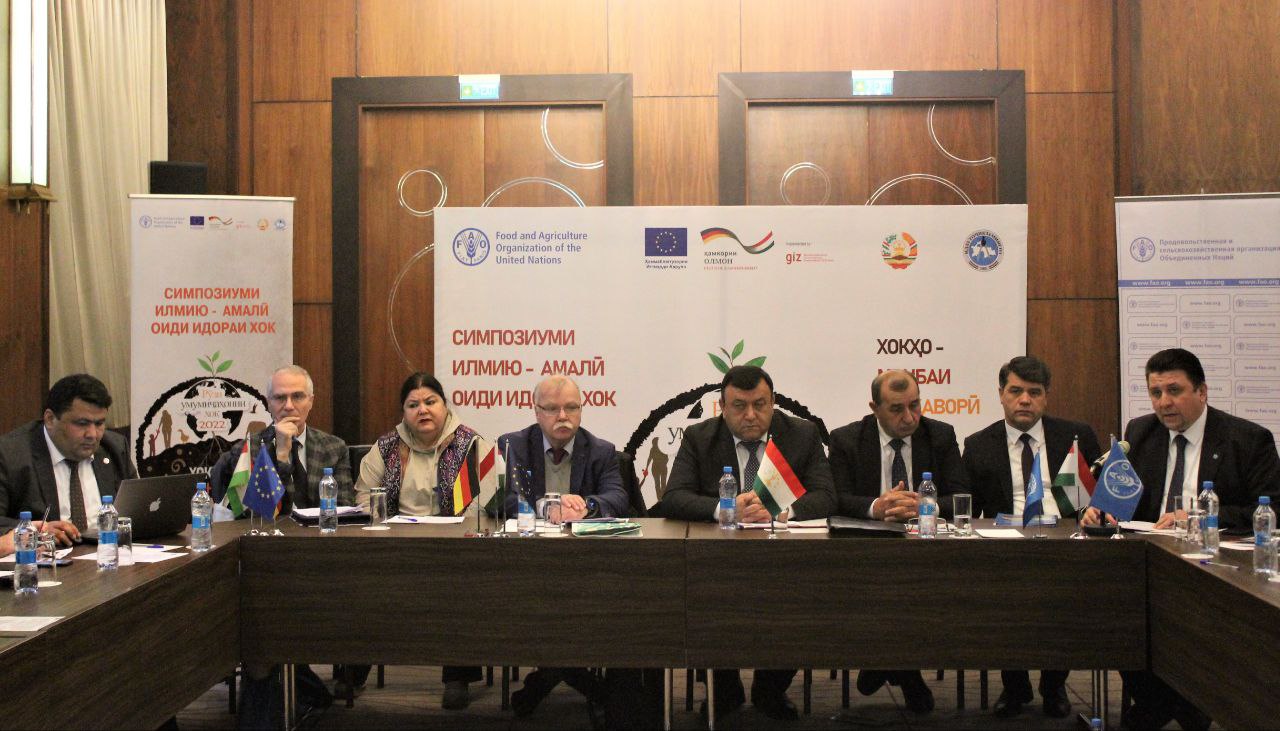
The Deputy Minister of Agriculture of Tajikistan, Mr. Jabbor Nosirzoda, noted that soil degradation and salinization as well as inefficient use of soil are a common problem of all humanity.
World Soil Day 2022 (#WorldSoilDay) campaign "Soils: Where Food Begins" aims to raise awareness of the importance of soil nutrient and fertility loss, which have drastically decreased over the last 70 years. Soil is a crucial living resource that needs to be preserved. Its fertility is the most important factor in crop production. Soil contains more than 25% of our planet's biodiversity and provides humanity with 95% of food. As a matter of fact, healthy soil is the foundation for healthy food, help against the climate change, as well as store and filter water.
“As we all know healthy soils and healthy seeds are the basis for producting healthy food. However, the facts and figures show that land and soil degradation already effect over 20 percent of the world’s population”, stated Mr. Wulf-Hendrik Goretzky, Project Director of the Integrated Rural Development Project/ TRIGGER, “income of farmers and food security are at high risk of being affected by the continuous of degradation of soil resources.”
The Project and its partners presented activities on soil management and conservation, including the results of 2 demo-plots on: 1) Production of potato by the method of giving organic fertilizers through the root and the method of leaf feeding and 2) Pest control in potato fields using pesticides and organic solutions in Rasht Valley by PO DCBR in Lakhsh district.
The Project partner – MSDSP shared successful experience on increasing soil fertility through production and use of bio-humus in Zarafshon Valley.
“Life on Earth depends on healthy soil and soil is put under the pressure for many human activities and human activities that are also economic activities.”, as noted by Mr. Giuseppe Aristei, Head of Water Component, EU, “Not protecting the soil will have huge economic costs and the cost of prevention is much lower than the costs of remediation.”
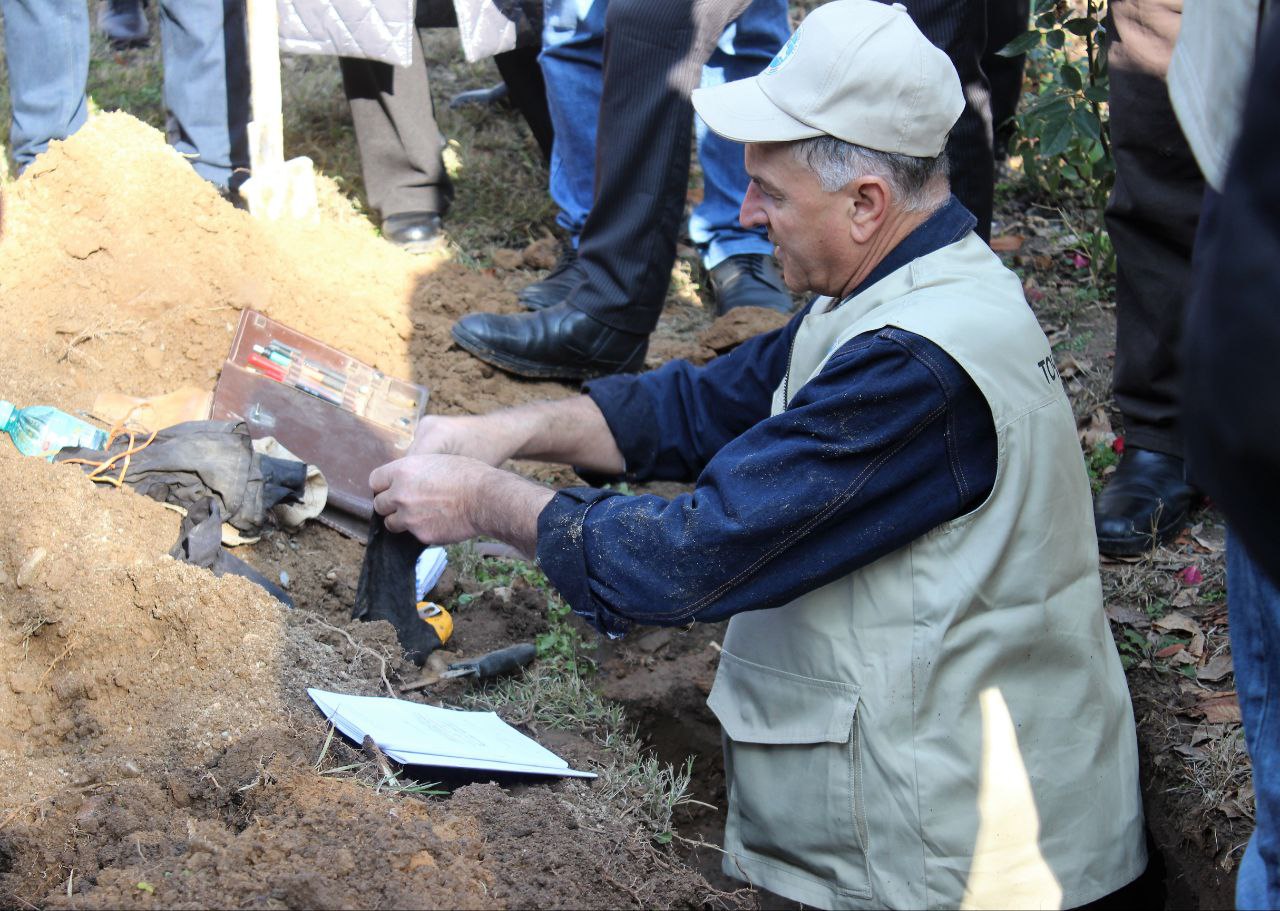
On the second day, the State Design Institute for Land Management "Tojikzaminsoz" presented its services for comprehensive soil analysis through a practical demonstration of soil analysis in the laboratory.
The demonstration followed by a practical training on soil sample conducted by the specialists of "Tojikzaminsoz".