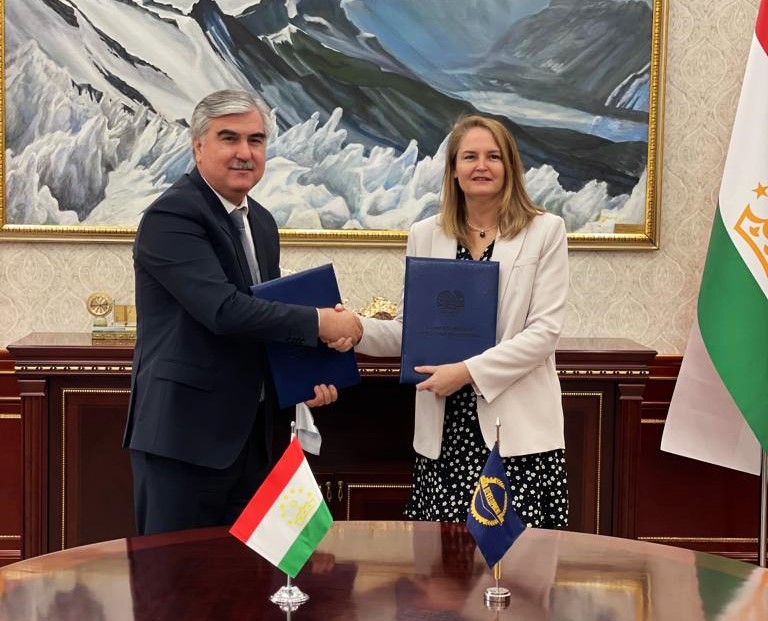
The Government of Tajikistan and the Asian Development Bank (ADB) have signed a US$50 million grant to help the Government of Tajikistan enhance banking sector stability, boost the nonbanking finance sector, and strengthen fiscal management.
According to the ADB Tajikistan Resident Mission (TJRM), the document was inked on December 15 in Dushanbe by Tajikistan Minister of Finance Fayziddin Qahhorzoda and ADB Country Director in Tajikistan Shanny Campbell.
This policy-based grant is the second phase of the Finance Sector and Fiscal Management Improvement Program.
The Program aims to support the Government of Tajikistan with reforms to create a more stable financial system, enhance access to financial services, and improve fiscal management to accelerate sustainable private sector growth.
Key reforms include increasing banking sector stability and public confidence in the financial system via strengthening the Individuals Deposit Insurance Fund, enhancing the ability of the National Bank of Tajikistan to monitor and manage financial stability, and strengthening banking supervision. The reforms also include improving the insurance industry and developing the domestic securities market and Islamic finance.
To improve the business and investment environment, the program has reportedly introduced new electronic taxpayer services and climate-responsive taxation and enhanced the status of women in the finance sector and women’s entrepreneurship.
To strengthen fiscal management, the program has helped the Ministry of Finance to improve the budget process and transparency, strengthen oversight and accountability of state-owned enterprises, and implement a medium-term debt management strategy.
Since Tajikistan joined ADB in 1998, the bank has provided over US$2.5 billion in assistance to the country, including over US$1.9 billion in grants. ADB’s 2021–2025 country partnership strategy for Tajikistan focuses on three strategic priorities: structural reforms to enhance resource allocation and mobilization, improving labor productivity through human capital development, and fostering better livelihoods by investing in the land-linked economy.
Established in 1966, the Asian Development Bank is owned by 68 members—49 from the region.