Tajikistan has reportedly imposed temporary ban on coal exports in order to fully provide domestic consumers. In October, some companies engaged in coal exporting told Asia-Plus that the authorities have put ban on coal exports.
On October 31, Asia-Plus applied to the Ministry of Industry and New Technologies (MoINT) with a request to clarify the situation. However, we received response to our letter just recently.
The ministry notes in its letter that the temporary ban on coal exports has been imposed in order to fully provide domestic consumers, including the coal-powered Dushanbe-2 combined heat and power (CHP) plant
The ban has reportedly been imposed on the basis of instruction from the prime minister. The ministry notes that the date of lifting the ban is determined by the government.
According to data from a MoINT, Tajikistan has exported 328,000 tons of coal over the first nine months of this year, which is 294,200 tons more than in the same period last year. Coal has reportedly been exported to Afghanistan, Pakistan and Uzbekistan.
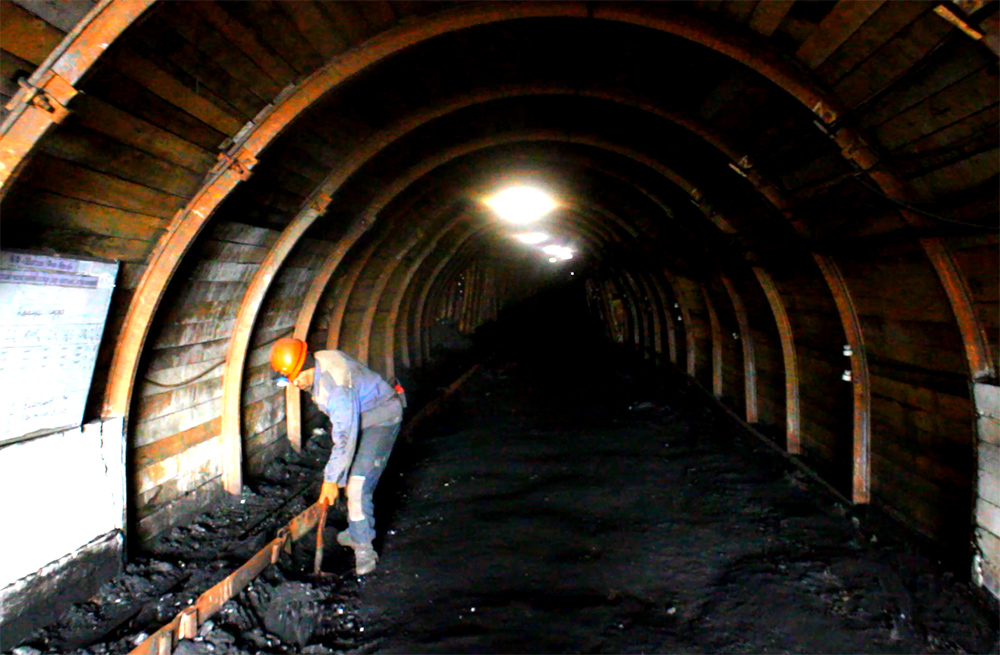
Over the first eleven months of this year, Tajikistan has reportedly produced more than 2 million tons of hard coal (15.5-percent increase compared to January-November last year) and about 130,000 tons of brown coal (50-percent increase).
Currently, fourteen companies are engaged in producing coal in Tajikistan.
It is to be noted that more than 160 industrial enterprises in Tajikistan have been shifted to coal since 2007 and exploration and development of coal fields has been intensified in Tajikistan since 2012 when Uzbekistan stopped gas shipments to Tajikistan.
Experts say coal deposits of Tajikistan are concentrated in two coal basins: Tajik (Gissar-Darvaz) and Fergana. The first of them covers the absolute majority of deposits and occurrences concentrated in central and southern Tajikistan. Deposits and occurrences of northern Tajikistan belong to the South Fergana coal basin.
The coal deposits of the Tajik coal basin in the vast majority of cases are exposed in the mountain ranges of the Tien Shan and Pamir-Alay, framing the Afghan-Tajik basin.
In the territory of Tajikistan there are four regions of development of carbonaceous deposits, each one has a number of characteristic features according to geological zoning: 1) Zarafshan-Gissar; 2) South-Gissar; 3) the Pamir Darvaz; and 4) south-Fergana
The biggest region, largest in acreage coal-bearing area that has the maximum number of coal veins, is Zarafshan-Gissar. The coal-bearing strata extend in almost uninterrupted strip from Panjakent to the river head of the Zarafshan River.
Meanwhile, Tajik ecologists express concern about increase in production of coal in the country.