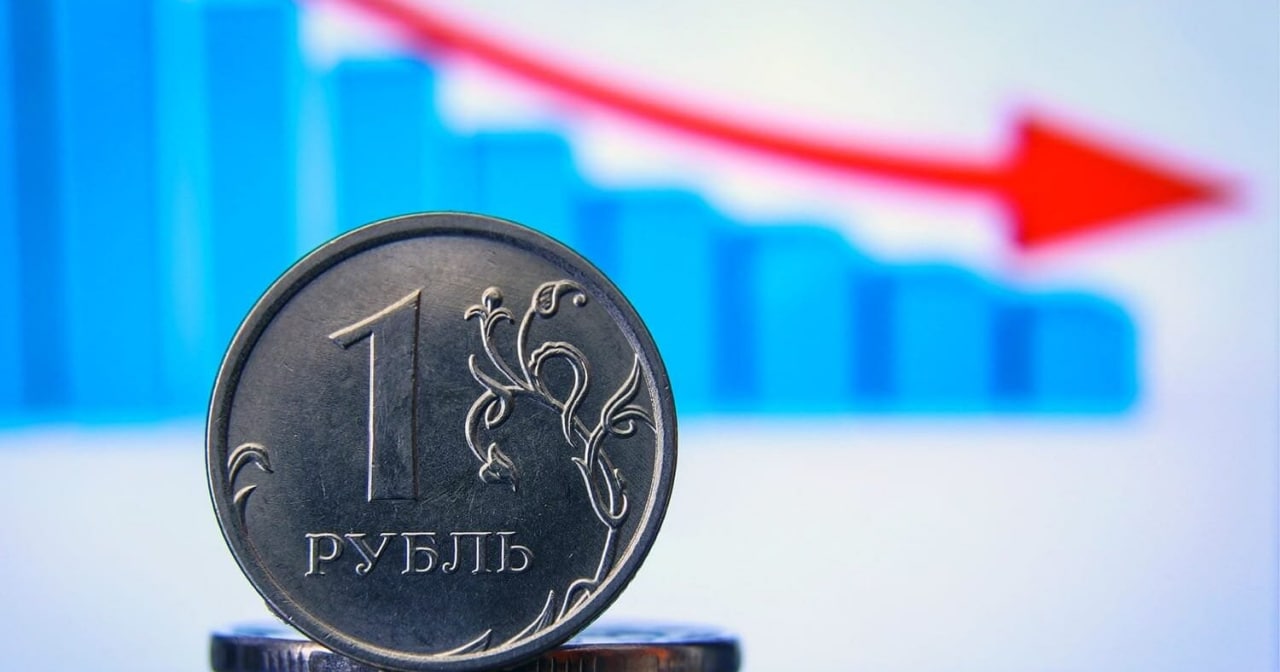
The Russian ruble (RR) is continuing to drop in Tajikistan. RR lost 2.4 percent of its value against the Tajik national currency, the somoni (TJS) in a day alone, falling from 1:0.1475 on December 21 to 1:0.144 on December 22.
It is to be noted that RR has weakened sharply during this week, losing almost 8.0 percent of its value against TJS.
Since the beginning of this year, RR has lost 11.7 percent of its value against TJS. An official exchange rate of RR against TJS set by the National Bank of Tajikistan (NBT) fell from 1:0.156.5 on December 19 to 1:0.144 on December 22.
Meanwhile, the exchange rates of the dollar and the euro against the somoni have remained unchanged over the reporting period – 1:10.21 and 1:10.59, respectively.
The current devaluation of the Russian ruble against the somoni has taken place against the backcloth devaluation of the Russian national currency against the major global currencies.
According to data from the Moscow Exchange, the exchange rates of the Russian ruble against the dollar and the euro on December 22 were 71.00:1 and 76.00:1, respectively.
Meanwhile, Forbes Advisor notes that the exchange rates of the Russian ruble against the dollar and the euro on December 22 were 72.21005:1 and 76.686436:1, respectively.
Russian experts say the devaluation of RR has been caused by sanctions, reduction in foreign currency earnings from exports and recovery in imports.
Some experts consider that the ruble is weakening against the backdrop of waiting reduction in foreign currency earnings from sale of oil in connection with setting the price ceiling.
The price cap on Russian oil limits price surges driven by extraordinary market conditions and drastically reduces the revenues Russia has earned from oil after it launched the so-called “special military operation” in Ukraine in February.
Local experts note that the Tajik national currency is pegged to the ruble due to Tajikistan’s strong socio-economic dependence on Russia. The dependency has increased even more this year in connection with transfer to the use of national currencies in the bilateral trade.
It is to be noted that Russia accounts for more than 30 percent of Tajikistan’s imports. Besides, remittances sent by Tajik labor migrants from Russia to banks in Tajikistan are equal to a third of the country’s gross domestic product (GDP).
Weakening of the Russian ruble has negative impact on incomes of families of Tajik labor migrants working in the Russian Federation. Remittances sent to banks in Tajikistan in rubles are issued to recipients in somonis.