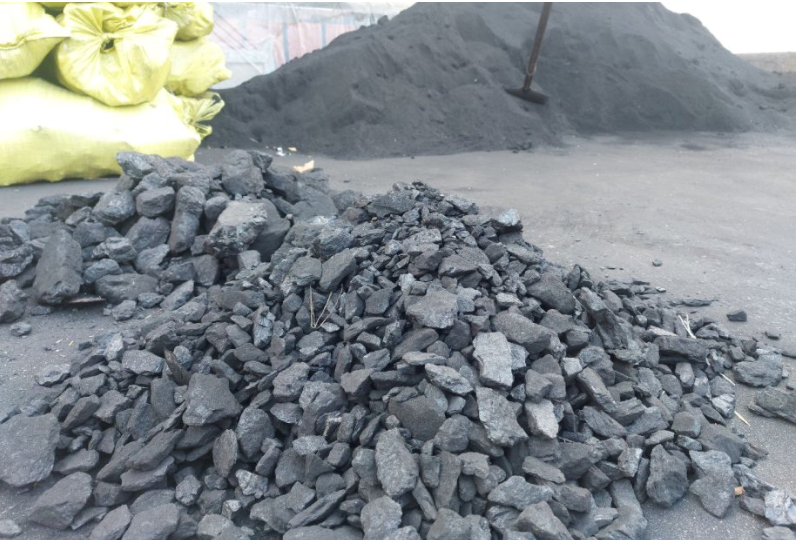
Residents of the northern province of Sughd complain that the price of coal has risen, while its quality is low.
Currently, coal is sold in the province mainly in two areas: Khujand’s Guliston neighborhood unit and Unji and Yova jamoats in Bobojon-Ghafourov district.
Local coal sellers say coal prices have risen in the province due to the closure of the Tajik-Kyrgyz border. According to them, they sell local coal and coal delivered from neighboring Kyrgyzstan.
After the closure of the Kyrgyz border, coal prices have risen in the province significantly. Now, Kyrgyz coal is delivered to Tajikistan via Uzbek territory, and therefore, the price for one kilogram of Kyrgyz coal has risen in the province from 1.50 somonis to 2.80 somonis.
It is to be noted that Kyrgyzstan has unilaterally closed its common border with Tajikistan after further border clashes that occurred on September 14-17 this year.
Meanwhile, local coal sellers say the quality of coal extracted in the province is low and people prefer to buy the Kyrgyz coal despite its high price.
Local coal sellers also complain that sales of coal have decreased in the province.
As it had been reported earlier, Tajikistan imposed temporary ban on coal exports in October in order to fully provide domestic consumers. The ban was imposed on the basis of instruction from the prime minister. According to some sources, the ban has been lifted recently.
In Tajikistan, coal deposits are reportedly concentrated in two coal basins: Tajik (Gissar-Darvaz) and Fergana. The first of them covers the absolute majority of deposits and occurrences concentrated in central and southern Tajikistan. Deposits and occurrences of northern Tajikistan belong to the South Fergana coal basin.
The coal deposits of the Tajik coal basin in the vast majority of cases are exposed in the mountain ranges of the Tien Shan and Pamir-Alay, framing the Afghan-Tajik basin.
In the territory of Tajikistan there are four regions of development of carbonaceous deposits, each one has a number of characteristic features according to geological zoning: 1) Zarafshan-Gissar; 2) South-Gissar; 3) the Pamir Darvaz; and 4) south-Fergana
The biggest region, largest in acreage coal-bearing area that has the maximum number of coal veins, is Zarafshan-Gissar. The coal-bearing strata extend in almost