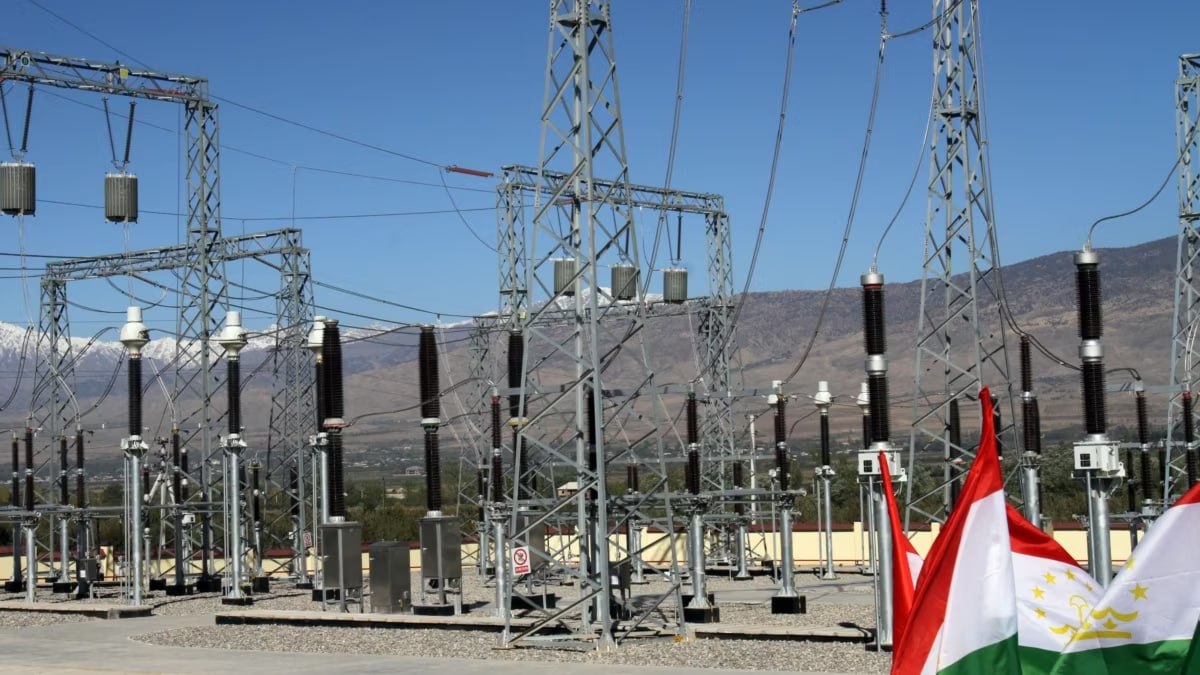
A report by the Asian Development Bank (ADB) says cross-Border Infrastructure Tajikistan plays an important role in the Central Asian energy trade, as it is interconnected with all neighboring countries.
CAREC Energy Outlook 2030, which comprehensively analyzes options for future energy market development in CAREC countries and is one of the flagship projects under the CAREC Energy Strategy 2030, in particular, notes that by targeting an increase in hydropower generation, Tajikistan is planning to expand its export capabilities via the Central Asian Power System (CAPS), as well as to Afghanistan and Pakistan via the Central Asia–South Asia Electricity Transmission and Trade Project (CASA-1000). At the same time, the report says that the uncertain political situation in Afghanistan, through which Tajikistan will transfer its electricity, has rendered difficult any predictions as to when and if the CASA-1000 project can be successfully commissioned.
Tajikistan reportedly started to export power to Uzbekistan through a 500 kV line on an islanded mode in 2018.
Tajikistan has received financial support from the ADB for the reconnection to CAPS to synchronize the systems and expand regional trade in the energy sector.
Recall, Tajikistan has access to Uzbekistan’s power system through four power transmission lines, to Kyrgyzstan’s power system through three lines, and to Afghanistan’s power system through two lines.
According to Barqi Tojik (Tajikistan’s state-run power utility), Tajikistan supplies electric power to the northern provinces of Afghanistan (all year round) and neighboring Uzbekistan (only during the spring-summer period).
Meanwhile, the press center of the Surkhandarya regional power grids said on January 20 that in conditions with abnormally cold weather, Tajikistan has begun supplying electricity to provide regular energy supply of residential customers and social facilities in Uzbekistan’s Surkhandarya region.
According to the press center, electricity supplied from Tajikistan through Regar-500 substation 220kV power transmission lines Regar-Zarchop and Regar-Sherabad since February 18 has provided 70 percent of electricity supply in Shurchin, Altyncai, Kumkurgan and Jarkurgan districts and 90 percent of electricity supply in Bandikhan, Kyzyryk, Sherabad, Baisoun, Sariasiay, Uzun and Denau districts.
It is noted that since April 2018, Uzbekistan has purchased Tajik electricity depending on the demand for it.
Tajikistan has sufficient summer-time (defined as May 1 to September 30) hydropower surpluses to export to the neighboring countries.
According to data from the Agency for Statistics, Tajikistan last year generated about 21.4 billion kWh of electricity, which is 3.8 percent more than in 2021. In 2022, Tajikistan reportedly earned 106 million U.S. dollars exporting electricity to neighboring countries, which is 10.6 percent more than in 2021