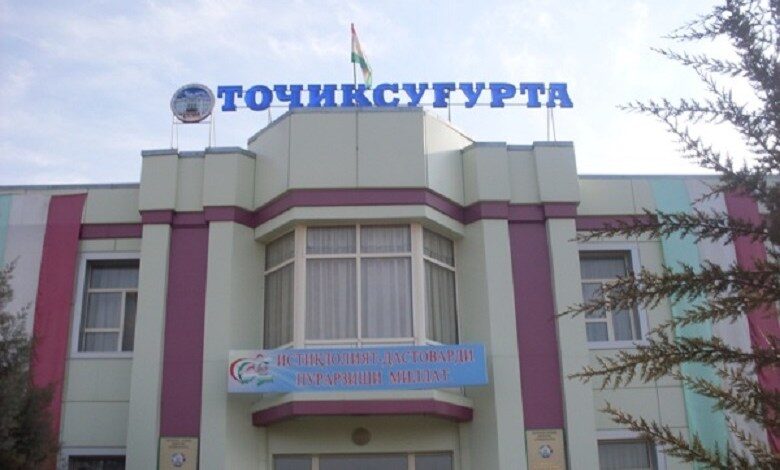
The National Bank of Tajikistan (NBT) has extended the operating license of the state-run insurance company Tojiksughurta for the next five years
Tajik financial regulator says Tojiksughurta’s operating license was extended for another five-year period on March 7, 2023.
Tojiksughurta is one of the top five insurers of the country. Its authorized capital amounts to 5.2 million somonis (equivalent to about 480,000 US dollars).
In terms of this indicator, Tojiksughurta stands behind only Closed Joint-Stock Company (CJSC) Sughurtai Avvalaini Milli with authorized capital amounting to 127.2 million somonis, Spitamen Insurance LLC (90.3 million somonis), CJSC Paymon Insurance (12 million somonis), and DS Strakhovaniye LLC (10 million somonis) among eighteen insurers operating in Tajikistan.
Recall, the Tajik government in late March 2020 revised minimum capital requirements for insurance companies upwards to 2 million somonis and 50 million somonis, depending on the forms of property.
The insurance and reinsurance companies were given a year to comply with the revised minimum capital requirements, until April 1, 2021.
Reinsurance is insurance that an insurance company purchases from another insurance company to insulate itself (at least in part) from the risk of a major claims event. With reinsurance, the company passes on ("cedes") some part of its own insurance liabilities to the other insurance company. The company that purchases the reinsurance policy is called a "ceding company" or "cedent" or "cedant" under most arrangements. The company issuing the reinsurance policy is referred to as the "reinsurer". In the classic case, reinsurance allows insurance companies to remain solvent after major claims events, such as major disasters like hurricanes and wildfires.
The previous minimum capital requirements for insurance companies were 5 million somonis for state-run insurance companies and 500,000 somonis for private insurers.
The new minimum capital requirements for the insurance companies are: not less than 10 million somonis for state-run insurance companies; 2 million somonis for private insurance companies dealing only with “general insurance category; not less than 10 million somonis for private insurance companies dealing with compulsory insurance along with other categories of insurance; not less than 5 million somonis for private insurance companies dealing only with “general insurance” category; and not less than 50 million somonis for state-run and private reinsurance companies.
The authorities justified their decision to revise the minimum capital requirements for insurance companies by saying that “the share of insurance penetration into the economy is equal to only 0.7 percent of the country’s gross domestic product (GDP), which is one of the lowest rates in the world, and this indicator directly depends on the low requirements for the authorized capital.”
Of eighteen insurers currently operating in the country, only Tojiksughurta is run by the state, while others are private insurance companies.
According to data from the NBT, total assets of the country’s insurance companies rose 16 percent, or 84.4 million somonis, in a year to October 1, 2022, reaching 612 million somonis (equivalent to about 60 million US dollars).