Two powerful earthquakes hit Tajikistan on March 21 and 23. The March 23 damaged hundreds of houses and killed more than 100 sheep and cattle, according to the emergencies Committee under the Government of Tajikistan.
The United States Geological Survey reports that an earthquake measuring 6.5 on the Richter occurred in northern Afghanistan Tuesday evening.
According to USGS, at least 13 people have been confirmed dead so far.
Meanwhile, Umeda Yusufi a spokeswoman for the Emergencies Committee of Tajikistan, told Asia-Plus that the 6.0 magnitude quake could be felt in some districts of the Gorno Badakhshan Autonomous Region (GBAO) on March 21 at 9:07 pm local time. The tremor reportedly could also be felt in other regions of Tajikistan. There were no reports of casualties or damage.
Another quite a powerful earthquake jolted Tajikistan on March 23 at 1.07 am local time.
According to data from USGS, an earthquake of 5.9-magnitude at a depth of 6 kilometers occurred in northern Tajikistan, close to the border with western Kyrgyzstan. The epicenter was located approximately 4 kilometers north of Paldarok village in Kuhistoni Mastchoh district of Sughd province.
USGS PAGER estimates that up to 5,000 people were exposed to very strong shaking and 4,000 to strong shaking.
Umeda Yusufi, a spokeswoman for the Emergencies Committee, said in a statement that the quake had a magnitude of 5.0 or 6.0 at its epicenter. It was also felt at lower magnitudes in Dushanbe, the Rasht region (eastern Tajikistan) and GBAO.
According to her, three residents of Paldorak village, two men and one woman, sustained minor injuries.
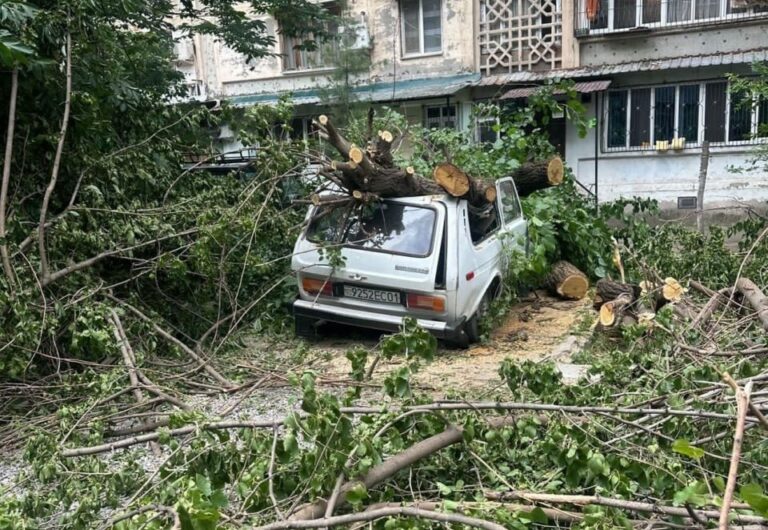
The quake reportedly damaged 144 houses in Paldorak, Yarm and Pakshif villages in Kuhistoni Mastchoh district (Sughd province) and 53 houses in Porvog, Duoba, Saridasht and Takoba villages in Rasht district (eastern Tajikistan).
The Emergencies Committee spokeswoman said the March 23 quake killed 14 heads of cattle, 52 heads of sheep and two horses in Kuhistoni Mastchoh district.
Meanwhile, an official of the Paldorak village, Rajabmahmad Badalov, told Radio Liberty’s Tajik Service, known locally as Radio Ozodi, that some 300 houses were damaged by the earthquake and more than 100 heads of livestock perished.
Badalov also said many residents of the village preferred to stay outside, fearing aftershocks, and will spend the next night in their cars.
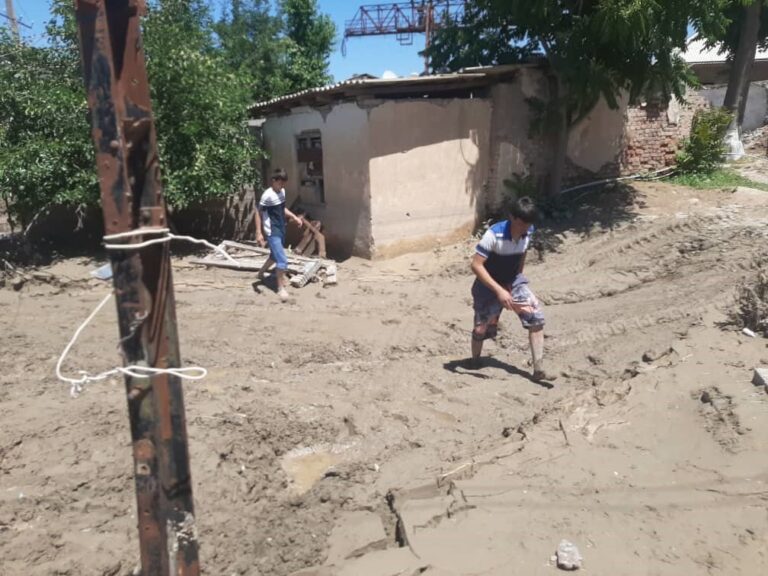
Tajikistan is located in one of the most seismically dangerous areas in Asia. Each year hundreds of earthquakes are registered in the mostly mountainous country, which often cause deadly mudslides or snow avalanches.