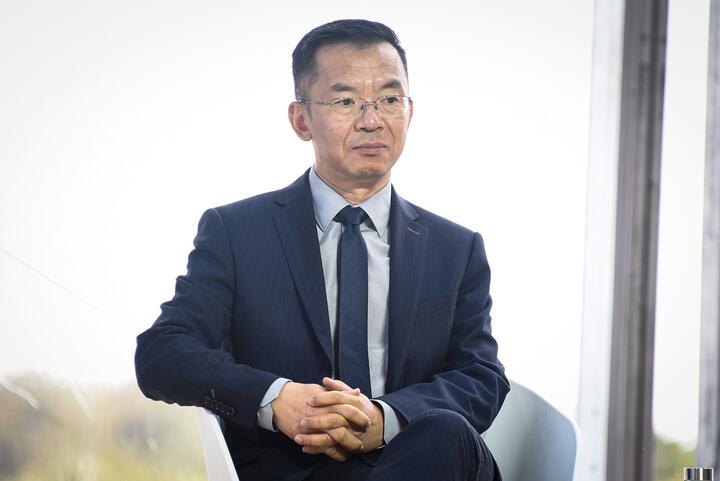
Speaking on April 21 on the LCI news channel, China’s Ambassador to France Lu Shaye suggested countries that emerged after the fall of the Soviet Union “don’t have effective status under international law because there is not an international agreement confirming their status as sovereign nations.”
His statement has sparked anger in Eastern Europe and Ukraine while drawing a rebuke in Paris after questioning the sovereignty of post-Soviet countries.
AFP says the comments cast doubt not just on Ukraine, but all former Soviet republics which emerged as independent nations after the fall of the Soviet Union in 1991, including members of the European Union.
Ukrainian presidential aide Mykhaylo Podolyak reportedly said on Sunday that the status of post-Soviet countries was “enshrined in international law”, while he also took issue with Lu’s comments on Crimea.
Asked if Crimea was Ukrainian during his interview on LCI, Lu replied, “it depends on how you look at the problem. There’s history. Crimea was Russian at the start.”
“It is strange to hear an absurd version of the ‘history of Crimea’ from a representative of a country that is scrupulous about its thousand-year history,” Podolyak said, referring to China.
The foreign ministers of Baltic countries Estonia, Lithuania and Latvia, all former Soviet republics which joined the EU after independence, reportedly condemned the comments from Lu.
On April 22, the French foreign ministry said it had “learned with consternation about the statements from the Chinese ambassador in France about the borders of countries that became independent after the fall of the Soviet Union”.
“It remains up to China to say whether these statements reflect its position which we hope not to be the case,” it added, according to AFP.
AFP notes that Lu has previously acknowledged being part of the so-called “wolf warrior” class of Chinese diplomats, a nickname given to those who respond vehemently to critics they perceive as hostile to China.