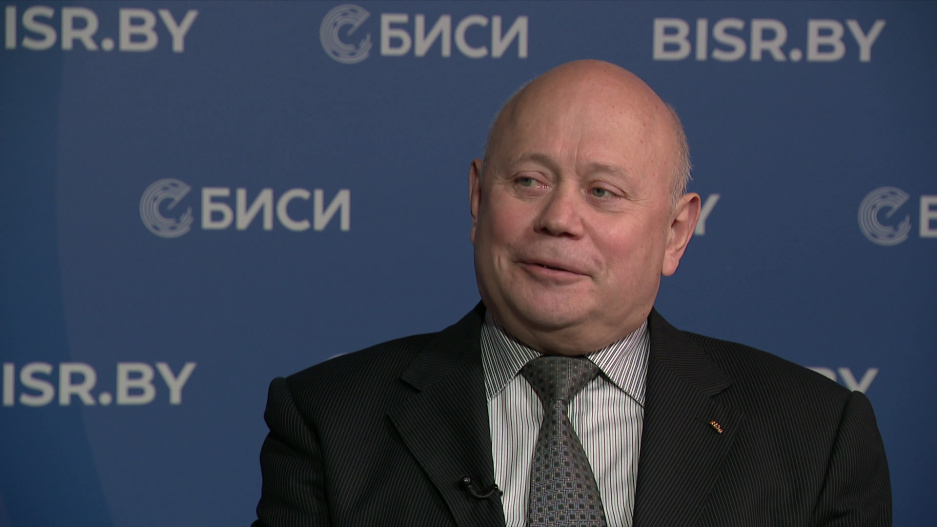
The Shanghai Cooperation Organization (SCO) Deputy Secretary-General Grigory Logvinov told Bealrus-1 TV Channel in an interview on April 24 that the SCO is developing a roadmap to abandon the dollar completely.
“A roadmap is being developed for switching to settlements in national currencies. The process is far from easy because unfortunately the dollar is too deep embedded in the national currency systems as the world's reserve currency,” the SCO deputy secretary-general said.
“To abandon the dollar completely there is still a lot to be done and a long way to go,” said Logvinov. “As for the introduction of a single currency for the Organization, this question is still not on the agenda, no such target has yet been set. Well, then we will see.”
Recall, at their summit that took place in the Uzbek city of Samarkand in September last year, the SCO leaders agreed to take steps to increase the use of national currencies in trade between their countries, according to a joint declaration adopted on Friday. They agreed on a road map to expanding trade in local currencies. A road map for using local currencies in trade and developing alternative payment and settlement systems has been part of the SCO’s economic plan for years.
It is to be noted that US economist Nouriel Roubini, who predicted the financial crisis of 2008, did not rule out the eventual demise of the dollar as a reserve currency within a decade. He tweeted on February 7 that China's yuan will end US dollar dominance and create a bipolar currency system in the next decade.
The Shanghai Cooperation Organization was founded at a Summit in Shanghai in 2001 by the presidents of Russia, China, Kyrgyzstan, Kazakhstan, Tajikistan and Uzbekistan. It was preceded by the Shanghai Five mechanism.
The Shanghai Cooperation Organization currently has eight full members — China, Kyrgyzstan, Pakistan, Russia, Tajikistan, India, Kazakhstan and Uzbekistan.
Iran (September 17, 2021) and Belarus (September 16, 2022) are acceding members.
Besides, Afghanistan, Belarus, Iran and Mongolia are four observer states.
SCO’s dialogue partners include Armenia, Azerbaijan, Cambodia, Egypt, Nepal, Qatar, Saudi Arabia, Sri Lanka and Turkiye.
Bahrain, Kuwait, Maldives, Myanmar and the United Arab Emirates (UAE) are upcoming dialogue partners.
ACEAN, CIS, Turkmenistan and the United Nations are guest attendances.
Initially focused on regional security, including border conflicts, terrorism and militant Islam, its activities have expanded to cover economics and trade, transport and law enforcement. Security and economic cooperation remain priorities. China and Russia are the dominant members. Russia regards Central Asia as its sphere of influence but Chinese economic sway is growing. At an informal level, the SCO is a diplomatic platform that helps address and contain potential friction.