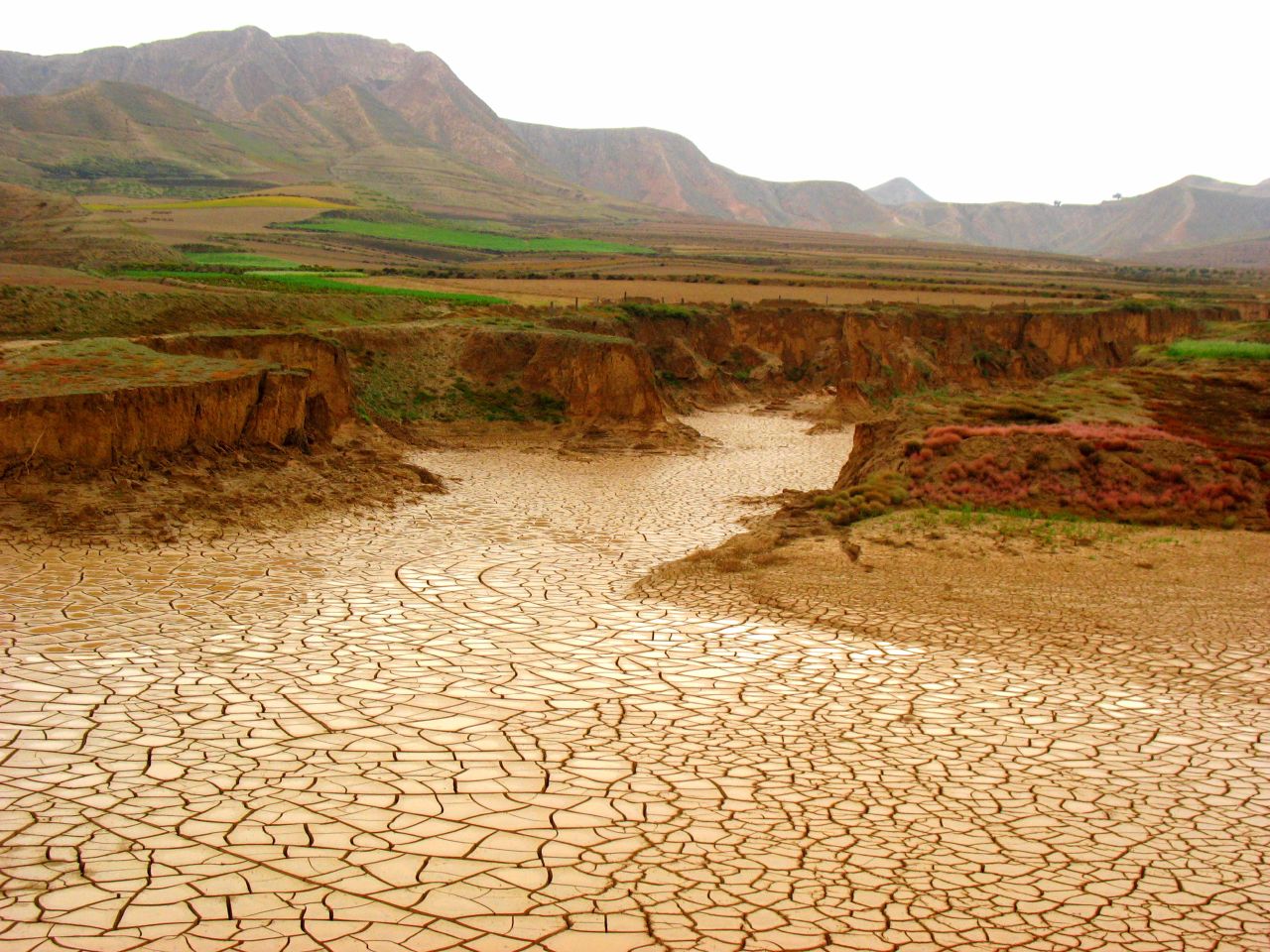
A report by the Eurasian Development Bank (EDB) says the main structural constraint for Central Asia’s nations is water scarcity.
The report entitled “Food Security and Agro-Industrial Potential of the Eurasian Region”, in particular, notes that in the future, the scarcity will intensify in countries with an arid climate, limiting the potential expansion of the agricultural land. The solution to the issue of food security is, therefore, strongly linked to improving the efficient management of the water and energy complex of Central Asia and the use of moisture-saving technologies.
The report says the economies of Central Asia are characterized by a high level of energy and water intensity of various economic sectors, primarily agriculture and manufacturing. The social and economic development of the Central Asian countries in the Aral Sea basin has reportedly been accompanied by depletion of water resources for a long time, and that factor determines the key vector of interstate relations among the countries. The water shortage in the region is largely attributable to poor management of water use in agriculture and manufacturing, the unsatisfactory state of water management facilities, and insufficient funding for their maintenance and development, the report says, noting that water withdrawal per capita has generally halved in Central Asia since the Soviet period, going down from 3,500 m3 to 1,540.7 m3 in 2018.
The Central Asian countries reportedly continue to experience water shortages, and, under the international classification, they fall in the category of “water stressed” countries, with a threshold of 1,000 to 1,700 m3 / person / year. The report notes that under the moderate scenario of developments in Central Asia, this trend will persist over the long term. In case of insufficient regional economic cooperation, including unsatisfactory water and energy integration, the Central Asian countries may approach a state of “water scarcity” by 2050 (1,296 m3 / person / year, while the threshold is 1,000 m3 / person / year).
Critical scarcity of water resources, their uneven distribution among the countries and mounting environmental problems in the region call for concerted efforts and economic integration on the basis of shared interests, the report underlines.
The Eurasian Development Bank is an international financial institution investing in Eurasia. For more than fifteen years, the Bank has worked to strengthen and expand economic ties and foster comprehensive development in its member countries – Armenia, Belarus, Kazakhstan, Kyrgyzstan, Russia, and Tajikistan. The EDB's charter capital totals US$7 billion. Its portfolio mainly consists of projects with an integration effect in transport infrastructure, digital systems, green energy, agriculture, manufacturing, and mechanical engineering. The Bank’s operations are guided by the UN Sustainable Development Goals and ESG principles. The Eurasian Development Bank has observer status in the UN General Assembly.