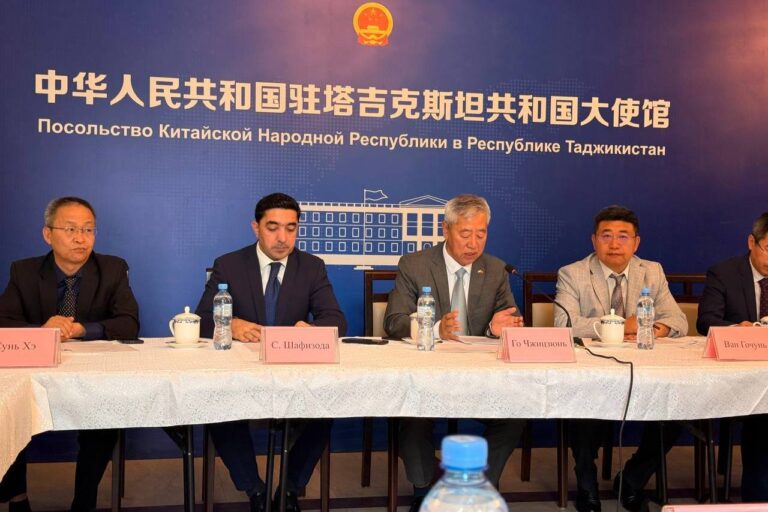
Media reports say the Council of Foreign Ministers began at the sea-side Taj Exotica resort in Goa's Benaulim on Friday as foreign ministers from all Shanghai Cooperation Organization (SCO) member nations reached Goa on Thursday. The ministers also participated in a gala dinner hosted by the external affairs ministry on Thursday night.
The meeting on Friday reportedly focused on 15 key points including issues of regional connectivity and common prosperity. These points will shape the agenda ahead of the summit in July.
Xinhua says participants at the meeting spoke highly of the contributions to regional security and development made by the SCO as a major regional cooperation platform.
The SCO members reportedly said they support Afghanistan in achieving national stability and reconstruction, back the SCO to strengthen cooperation with the United Nations and BRICS countries, defend the purposes and principles of the UN Charter, and uphold multilateralism.
They agreed to further strengthen security cooperation and jointly combat terrorism, separatism, drug production and trafficking, and cybercrimes.
They reportedly also pledged to enhance cooperation in such areas as transport, energy, finance, investment, free trade, digital economy and environmental protection so as to achieve common development.
In addition, they agreed to accelerate the building of the SCO secretariat and the regional anti-terrorism institutions, and advance the SCO membership expansion process in an orderly manner in order to promote the international influence of the SCO.
The ministerial meeting made full preparations for the SCO summit to be held in New Delhi this summer.
The Shanghai Cooperation Organization was founded at a Summit in Shanghai in 2001 by the presidents of Russia, China, Kyrgyzstan, Kazakhstan, Tajikistan and Uzbekistan. It was preceded by the Shanghai Five mechanism.
The Shanghai Cooperation Organization currently has eight full members — China, Kyrgyzstan, Pakistan, Russia, Tajikistan, India, Kazakhstan and Uzbekistan.
Iran (September 17, 2021) and Belarus (September 16, 2022) are acceding members.
Besides, Afghanistan, Belarus, Iran and Mongolia are four observer states.
SCO’s dialogue partners include Armenia, Azerbaijan, Cambodia, Egypt, Nepal, Qatar, Saudi Arabia, Sri Lanka and Turkiye.
Bahrain, Kuwait, Maldives, Myanmar and the United Arab Emirates (UAE) are upcoming dialogue partners.
ACEAN, CIS, Turkmenistan and the United Nations are guest attendances.
Initially focused on regional security, including border conflicts, terrorism and militant Islam, its activities have expanded to cover economics and trade, transport and law enforcement. Security and economic cooperation remain priorities. China and Russia are the dominant members. Russia regards Central Asia as its sphere of influence but Chinese economic sway is growing. At an informal level, the SCO is a diplomatic platform that helps address and contain potential friction.