Tajikistan calls on SCO member nations to establish ‘security belt’ around Afghanistan over drug smuggling

Radio Liberty’s Tajik Service, known locally as Radio Ozodi, reported on May 8 that Tajikistan has called on the Shanghai Cooperation Organization (SCO) member nations to establish an independent agency to combat drug trafficking from Afghanistan. Tajikistan Foreign Minister Sirojiddin Muhriddin reportedly told the SCO foreign ministers’ meeting in Goa, India last week that it […]

Radio Liberty’s Tajik Service, known locally as Radio Ozodi, reported on May 8 that Tajikistan has called on the Shanghai Cooperation Organization (SCO) member nations to establish an independent agency to combat drug trafficking from Afghanistan.

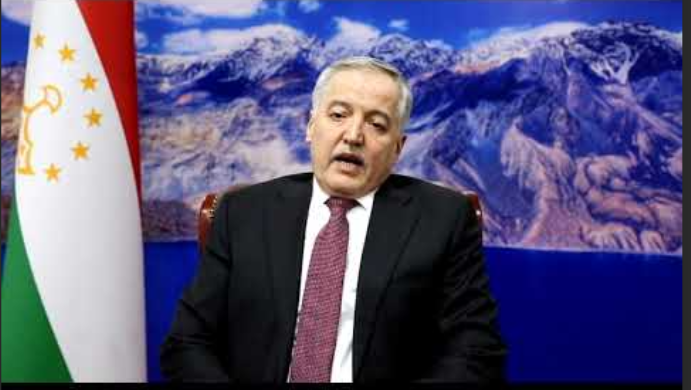
Tajikistan Foreign Minister Sirojiddin Muhriddin reportedly told the SCO foreign ministers’ meeting in Goa, India last week that it was important to establish a "safety belt" around Afghanistan.

The proposal comes days after a Tajik officer was killed in a clash between government forces and smugglers in the Gorno Badakhshan Autonomous Region (GBAO)’s Shugnan district on April 29. 

According to Radio Ozodi, the killed officer is the chief of the State Committee for National Security (SCNS)’s office in GBAO’s capital, Khorog, Komron Rajabzoda. 

It is to be noted that Tajikistan shares more than 1,300 kilometers of border with Afghanistan, a major producer of drugs. 

Media reports say the two-day meeting in Goa that ended on May 5 brought together foreign ministers from the SCO member nations. 

Some media outlets report that the meeting is one of many multinational meetings amongst the emerging markets (EMs) where the Western powers are not welcome and is designed to challenge the US-led “unipolar” hegemony by promoting its members' view of a “multipolar” world.

Top Russia diplomat Sergei Lavrov reportedly accused the US authorities of supporting terrorist organizations, including the Islamic State, the East Turkistan Islamic Movement and Al-Qaeda (all banned in Russia), in Afghanistan.  “There is strong evidence that the US leadership is supporting terrorist groups in Afghanistan that oppose the Taliban.  They also do not abandon attempts to introduce their military infrastructure around Afghanistan, in Central Asia,” he said.

SCO comprises eight members: China, India, Kazakhstan, Kyrgyzstan, Russia, Pakistan, Tajikistan and Uzbekistan; four Observer States and six “Dialogue Partners”.
Join us on social media!

Article translations:

Related Article

Tenisi
Оби зулол
Оби зулол

Most Read

Коммерсбонк Точикистон

Recent Articles

RZD announces the restoration of passenger services between Moscow and Dushanbe

Direct rail services between the capitals of Russia and Tajikistan were suspended in March 2020 due to the COVID-19 pandemic.

#AP30/Stories. “Selam! Heller nichek?” How Tatars live today in Sughd province

On the 30th anniversary of "Asia-Plus," we continue to publish reports that remain relevant even after years. This story was told in 2021, and since then, little has changed in the life of the Tatar community in Tajikistan.

15,000 cameras, drones, and robots: how technology monitors pilgrims in Mecca and Medina

During Hajj 2026, Mecca and Medina were under unprecedented digital control.

Another child in Dushanbe removed from family and sent to boarding school

The Ministry of Internal Affairs reports that the parents did not pay adequate attention to the child.

Emomali Rahmon instructs to address issues in seed production following criticism of the industry

Issues have been noted with certification, seed quality, and the material and technical base of the industry.

Water, climate, and a $130 billion deficit: seven key outcomes of the Water Conference in Dushanbe

At the forum, countries and international organizations discussed new mechanisms for cooperation, investments, and technologies that are essential for addressing the global water crisis.

Eskhata Bank introduces a new generation children’s wallet

"Eshkata Bank" has created a full-fledged digital platform that helps children aged 7 to 16 learn how to manage money.