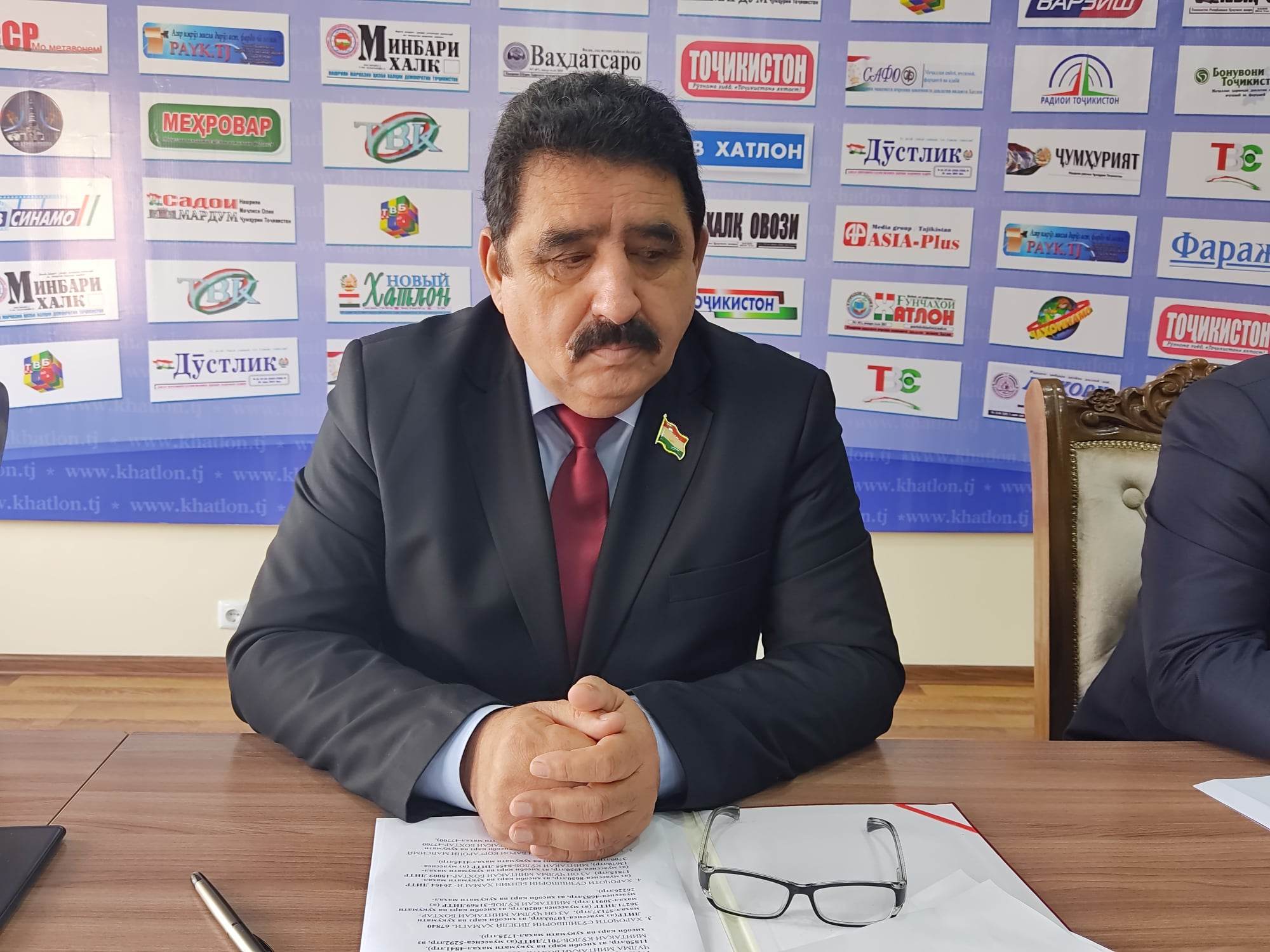
Prosecutor’s office in Kushoniyon district of Khatlon province has instituted criminal proceedings against Rajabali Davlatzoda, the head of the Khatlon Locust Control Center, over illegal allotment of lands.
Criminal proceedings were instituted against Davlatzoda on May 12 under the provisions of three articles of Tajikistan’s Penal Code: Article 338 — Unauthorized construction on the illegally occupied land; Article 340 – falsification of document and production or sale of forged documents; and Article 247 – fraud. An investigation is under way.
An official source within the Khatlon prosecutor’s office has told Asia-Plus that Rajabali Davlatzoda is suspected of illegal allotment of 1 ha of sports ground belonging to School No 64 in Kushoniyon district.
According to him, two employees of the Real Estate Registration Enterprise’s subsidiary in Kushoniyon district are also involved in this case.
It is to be noted that President Emomali Rahmon raised the issue of illegal allotment of lands in the province on April 27 during an address to a meeting of regional administrators in Kushoniyon district.
Tajik leader expressed concern about illegal seizure of lands, illegal allotment of lands and increase in the number of corruption crimes related to allotment of lands in Khatlon province.
According to him, by instruction of the ex-head of the Kushoniyon district 1 ha of land belonging to School No 64 in 2015 was allotted to Rajabali Davlatzoda, who, for his part, divided this land and allotted the land plots to local residents for housing.
Rahmon noted during the meeting that about 8,000 offenses in the field of land legislation were registered in Khatlon province in 2022 and about 4,000 people were brought to justice.
The president ordered the Prosecutor-General’s Office to verify the facts and monitor the implementation of land legislation.
In Tajikistan, laws ban the private sale of land. Agricultural land can only be leased from the state. People can also receive a plot of land — free of charge — from their local government to build a home.
Only people who don't have their own home are eligible for a land parcel in the district where they are registered as a permanent resident.
Applications for the parcels of land are made to the district governor and the governor either approves the request, sends it to local authorities in each area for a final decision, or rejects the request if the applicant is deemed ineligible.
The application must be accompanied by a lot of documentation, including a letter from the local authorities in the applicant's home village or town to verify the applicant's account of their personal circumstances and their genuine need for land.