



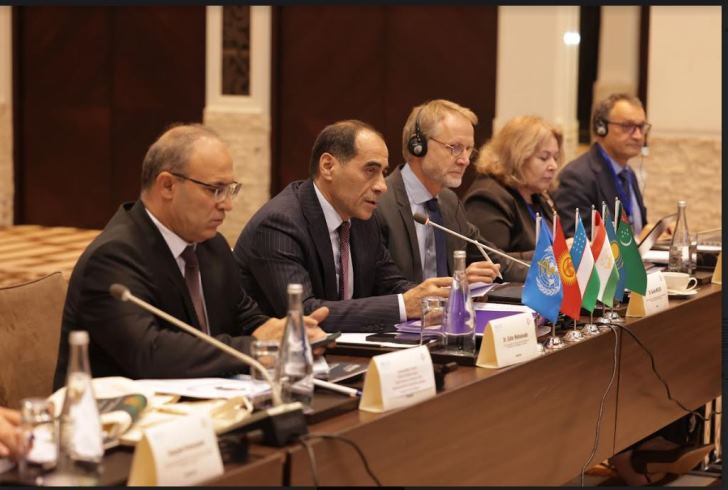
Representatives from Central Asian health ministries meet in Dushanbe to discuss cooperation

High-level focal points from Ministries of Health of Central Asian countries met in Dushanbe on June 27 to discuss how subregional collaboration and prioritized activities and investments can accelerate delivery on global, regional and national commitments for health and well-being, according to the World Health Organization (WHO) Office in Tajikistan. Organized by the WHO, the […]

High-level focal points from Ministries of Health of Central Asian countries met in Dushanbe on June 27 to discuss how subregional collaboration and prioritized activities and investments can accelerate delivery on global, regional and national commitments for health and well-being, according to the World Health Organization (WHO) Office in Tajikistan.

Organized by the WHO, the meeting reportedly paved the way for the five countries to take joint action and foster cooperation with partners to fill the gaps in health and well-being in Central Asia.
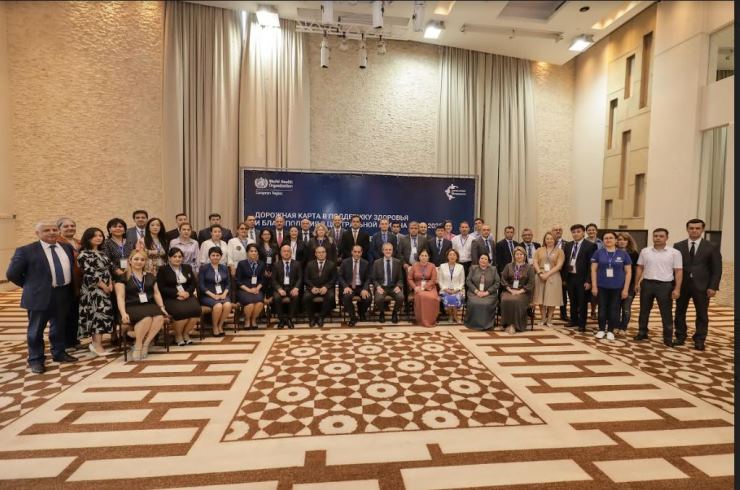
The Roadmap for health and well-being in Central Asia (2022 – 2025) was endorsed by Kazakhstan, Kyrgyzstan, Tajikistan, Turkmenistan, and Uzbekistan on September 11, 2022. The Roadmap is a cornerstone for health and well-being that will help Central Asian countries to cooperatively respond to the intersecting crises such as the COVID-19 pandemic and climate change. The Roadmap includes political, investment and technical objectives which will accelerate the Central Asian countries’ delivery on global, regional and national commitments for health and well-being.

The five countries have agreed to prioritize efforts and investments on four accelerators to trigger positive multiplier effects: keep health high atop the political agendas of Central Asian countries and partners; build a strategic alliance for health and well-being in Central Asia; synergistically mobilize resources and support for joint projects; and promote policy and action coherence for achievement of the sustainable development goals

Representatives from the Central Asian health ministries and the WHO officially kicked-off the first year of implementing the Roadmap in Central Asia in Dushanbe.  They reportedly spoke about how subregional collaboration and coordination will further accelerate the implementation of the Roadmap, and identified joint political, technical and investment activities to advance the health agenda in Central Asia. 

Join us on social media!

Article translations:

Related Article

Tenisi
Оби зулол
Оби зулол

Most Read

Коммерсбонк Точикистон

Recent Articles

RZD announces the restoration of passenger services between Moscow and Dushanbe

Direct rail services between the capitals of Russia and Tajikistan were suspended in March 2020 due to the COVID-19 pandemic.

#AP30/Stories. “Selam! Heller nichek?” How Tatars live today in Sughd province

On the 30th anniversary of "Asia-Plus," we continue to publish reports that remain relevant even after years. This story was told in 2021, and since then, little has changed in the life of the Tatar community in Tajikistan.

15,000 cameras, drones, and robots: how technology monitors pilgrims in Mecca and Medina

During Hajj 2026, Mecca and Medina were under unprecedented digital control.

Another child in Dushanbe removed from family and sent to boarding school

The Ministry of Internal Affairs reports that the parents did not pay adequate attention to the child.

Emomali Rahmon instructs to address issues in seed production following criticism of the industry

Issues have been noted with certification, seed quality, and the material and technical base of the industry.

Water, climate, and a $130 billion deficit: seven key outcomes of the Water Conference in Dushanbe

At the forum, countries and international organizations discussed new mechanisms for cooperation, investments, and technologies that are essential for addressing the global water crisis.

Eskhata Bank introduces a new generation children’s wallet

"Eshkata Bank" has created a full-fledged digital platform that helps children aged 7 to 16 learn how to manage money.






