President orders to provide the country’s population with high speed internet

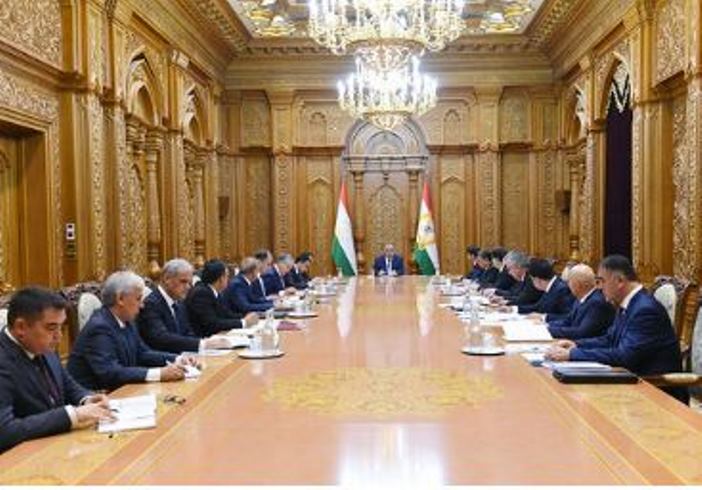
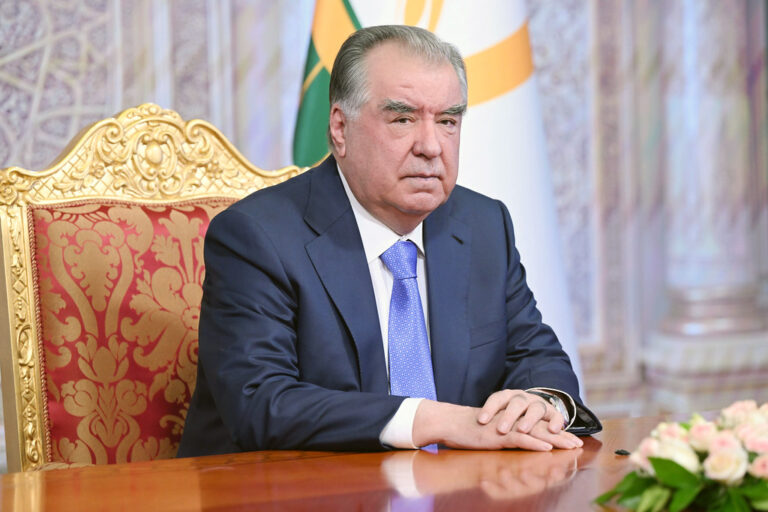
President Emomali Rahmon, who is also Head of the Government, held a meeting on July14 to discuss issues related to improvement of macroeconomic indices, formation of the national budget and measures  to expand the application of cashless payments. The Tajik president’s official website says the head of state gave instructions to officials responsible for developing […]

President Emomali Rahmon, who is also Head of the Government, held a meeting on July14 to discuss issues related to improvement of macroeconomic indices, formation of the national budget and measures  to expand the application of cashless payments.

The Tajik president’s official website says the head of state gave instructions to officials responsible for developing industrial production facilities, providing a high speed internet, availability of prices for development of the digital economy, and attracting investments, especially direct investments for implementation of priority projects.    

Emomali Rahmon reportedly emphasized the significance of timely implementation of the decree on measures to expand cashless payments.  

Recall, President Emomali Rahmon signed the decree on measures to expand cashless payments in Tajikistan on June 22.  In accordance with the decree, public services must be paid in non-cash form beginning on August 1, 2023. 

“Payment of taxes, state fees for issuing permits and licenses, other mandatory payments to the budget, fines, mandatory insurance fees, healthcare services, public utilities, other types of public services, as well as acceptance of money by ministries and agencies and state-run organizations are made in non-cash,” the decree says. 

The decree also notes that it is necessary to prohibit ministries, agencies, state-run organizations and financial institutions from accepting payment for paid services in cash. 

It is to be noted that there were 4.1 million internet users in Tajikistan as of January 1, 2023.  At the start of 2023, Tajikistan’s internet penetration rate stood at 40.8 percent of the total population 

Kepios analysis indicates that internet users in Tajikistan increased by 164,000 (+4.2 percent) between 2022 and 2023.

For perspective, these user figures reportedly reveal that 5.95 million people in Tajikistan did not use the internet at the start of 2023, suggesting that 59.2 percent of the population remained offline at the beginning of the year.
Join us on social media!

Article translations:

Related Article

Tenisi
Оби зулол
Оби зулол

Most Read

Коммерсбонк Точикистон

Recent Articles

RZD announces the restoration of passenger services between Moscow and Dushanbe

Direct rail services between the capitals of Russia and Tajikistan were suspended in March 2020 due to the COVID-19 pandemic.

#AP30/Stories. “Selam! Heller nichek?” How Tatars live today in Sughd province

On the 30th anniversary of "Asia-Plus," we continue to publish reports that remain relevant even after years. This story was told in 2021, and since then, little has changed in the life of the Tatar community in Tajikistan.

15,000 cameras, drones, and robots: how technology monitors pilgrims in Mecca and Medina

During Hajj 2026, Mecca and Medina were under unprecedented digital control.

Another child in Dushanbe removed from family and sent to boarding school

The Ministry of Internal Affairs reports that the parents did not pay adequate attention to the child.

Emomali Rahmon instructs to address issues in seed production following criticism of the industry

Issues have been noted with certification, seed quality, and the material and technical base of the industry.

Water, climate, and a $130 billion deficit: seven key outcomes of the Water Conference in Dushanbe

At the forum, countries and international organizations discussed new mechanisms for cooperation, investments, and technologies that are essential for addressing the global water crisis.

Eskhata Bank introduces a new generation children’s wallet

"Eshkata Bank" has created a full-fledged digital platform that helps children aged 7 to 16 learn how to manage money.