In a report released at a news conference in Dushanbe, the Minister of Transport of Tajikistan Azim Ibrohim noted on July 28 that battery recycling is the main problem regarding the use of electric vehicles (EV) in Tajikistan.
According to him, it is about establishing workshops with appropriate equipment for recycling lithium batteries.
“We will use the experience of advanced countries in this new direction for us,” the minister said.
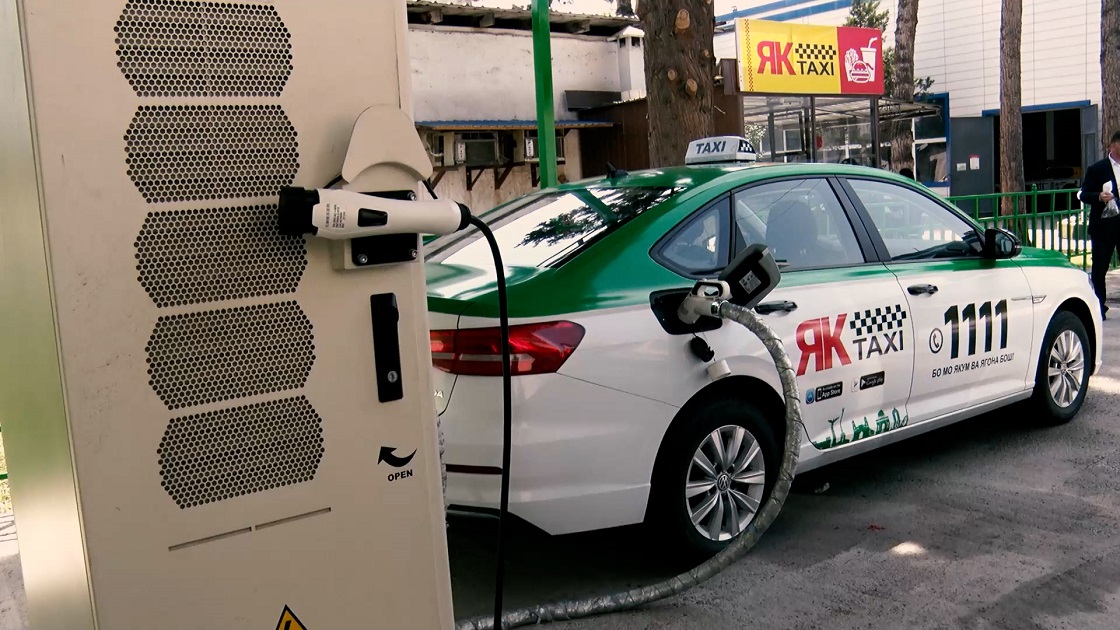
Mr. Ibrohim also pointed to the necessary of building EV maintenance and charging stations.
“Work has begun, funds are being allocated from the budget along with attracting direct investment,” Mr. Ibrohim noted.
He noted that it is planned to build EV maintenance and charging stations across the country. “To-date, 36 EV maintenance and charging stations have been built in Tajikistan,” the minister said.
He further added that about 1,600 electric vehicles have been registered in Tajikistan; 800 of them have been imported into the country over the first six months of this year.
Recall, the Government of Tajikistan in March this year instructed relevant ministries to speed up the process of the establishment of production of electric vehicles inside the country.
It is also instructed to take necessary measures to promote electrification of the country’s public transportation and launch an infrastructure for electric transport.
According to government’s regulation, the Ministry of Industry and New Technologies and the Ministry of Transport undertake to fulfill these instructions before the end of this year.
On October 31, 2022, the government adopted the program for development of electric transport in Tajikistan for 2023-2027.The program, in particular, provides for exempting the import of electric transport from payment of taxes and customs duties. It also provides for creating a wide necessary infrastructure in the country, including electric vehicle charging points. The program also says the electric transport market in the country is still at the stage of formation and its development is assessed as weak.
The estimated budget for implementation of the electric transport development program is about230 million somonis (equivalent to 21 million US dollars), including 1.4 million somonis of budgetary funds, 6.2 million somonis of development partners funds and more than 221 million somonis of the private sector.
An electric car or battery electric car is an automobile that is propelled by one or more electric motors, using energy stored in batteries. Compared to internal combustion engine (ICE) vehicles, electric cars are quieter, have no exhaust emissions, and lower emissions overall.