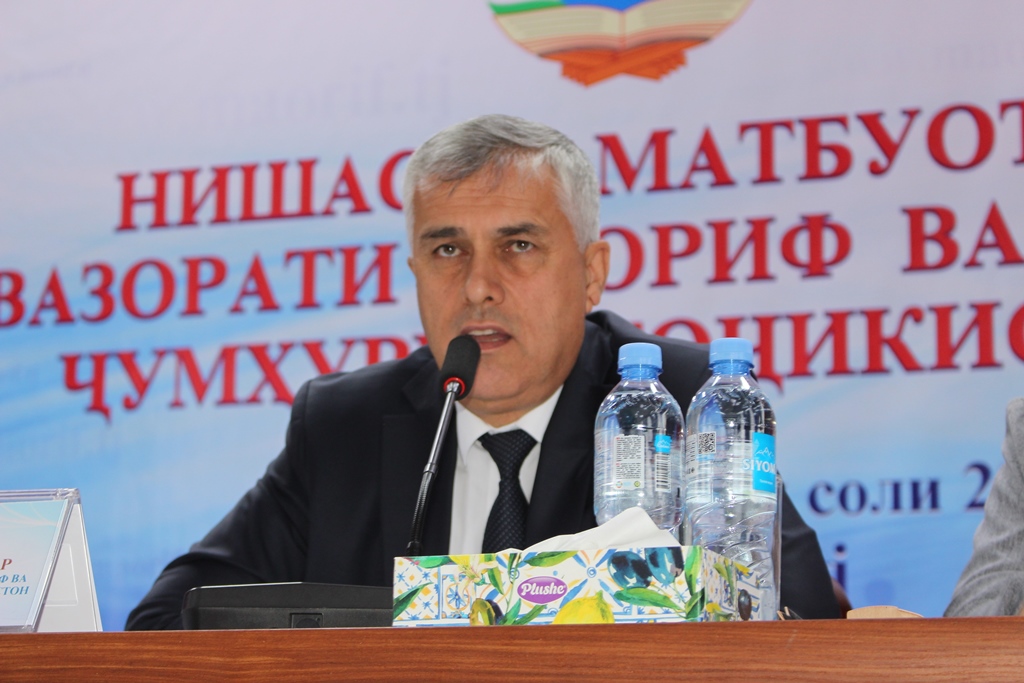
Senior Representatives of the Ministry of Education and Science of Tajikistan gave a news conference on the results of work carried out in the first half of this year on August 1.
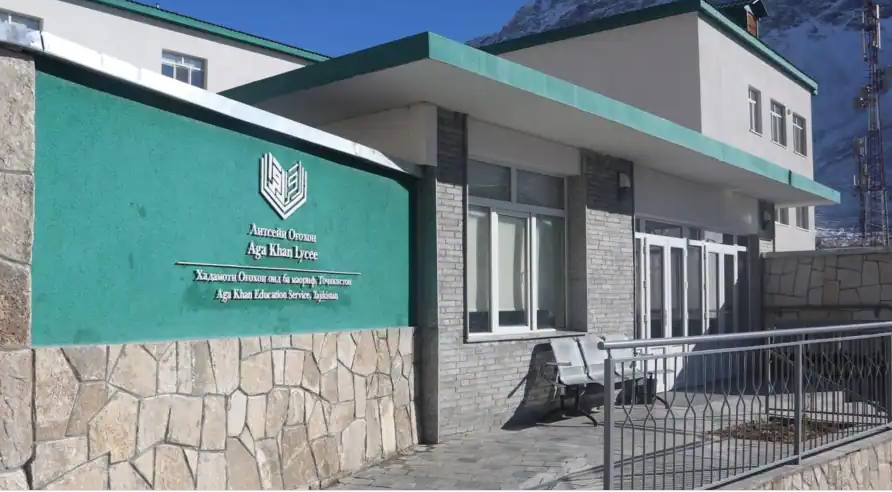
Asked about the reason for closure of the Aga Khan Lycée (AKL) in Khorog, the capital of the Gorno Badakhshan Autonomous Region (GBAO), the Deputy Minister of Education and Science of Tajikistan, Ziyodullo Abdullozoda, stated that the main reason for suspension of the license of the Aga Khan Lycée was the AKL management and teachers’ disregard for standards of Tajikistan’s educational system.
“The system of education of Tajikistan is defined and set by the state education standard, which must be observed by all educational institutions of the country. However, AKL teachers have ignored the indicators of this standard, deviating from the curriculum of Tajikistan’s schools,” the deputy minister noted.
Mr. Abdullozoda didn't say what standards he was talking about.
The deputy minister also noted that the state language had been taught less actively in the Lycée, and priority had been given to the study of foreign languages.
Mr. Abdullozoda noted that that among the graduates of this Lycée there were many who did not speak the state language, “which is unacceptable for an educational institution located in Tajikistan.”
Recall, the Tajik Government suspended the Aga Khan Lycée last month. June 30 was the last day of AKL’s operations and it was renamed the State Lycée for Gifted Students.
Established in 1998, the Aga Khan Lycée was the first privately operated school in the GBAO. The Lycée, part of part of the Aga Khan Education Services (AKES), was built on the premises of the former School #3 (named after Kirov), a school with a distinguished history in Gorno Badakhshan Autonomous Region.
Each year, the Lycée reportedly educated over 950 students from Grades 1 to 11 with a graduation rate above 90 percent. It aimed to provide students with high quality of education and prepare them for further studies at first-rate universities.
Students of Aga Khan schools were not expected to simply be “able to read and write”, they were encouraged to want to read and write, to understand why we read and write, and to view their own literacy skills as paths that can lead in many different directions, not just academic ones. They were encouraged to bring their own languages into the classroom, appreciate and share their own languages and cultures, utilize English as a lingua franca, but not forget who they are, and to understand that each and every language is a manifestation of the culture of those who express themselves in that language.
During the 2020-2021 academic year, the Aga Khan Lycée (AKL) in Khorog staff, and students were honored with a number of different awards during the 2020-2021 academic year.
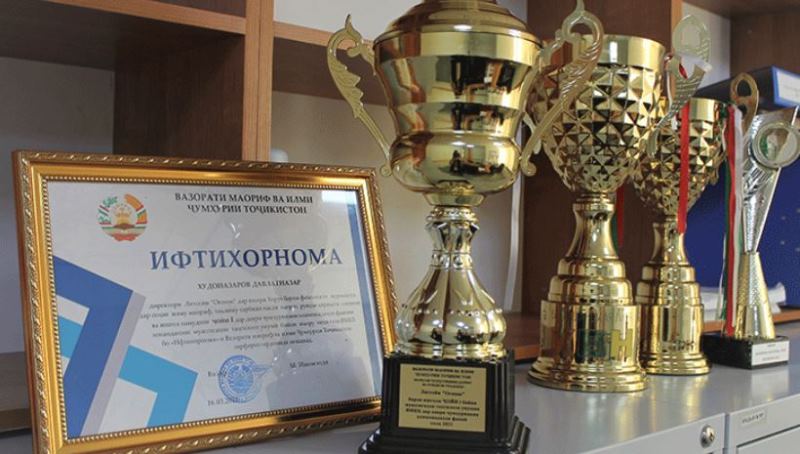
In June 2021, AKL was commended by the Ministry of Education and Science for achieving first place amongst all schools in the GBAO at the Olympiads of the Academic Year 2021.
In the same year, the government honored school principal Davlat Khudonazarov with a Certificate of Honor for the great efforts and achievements of the school.