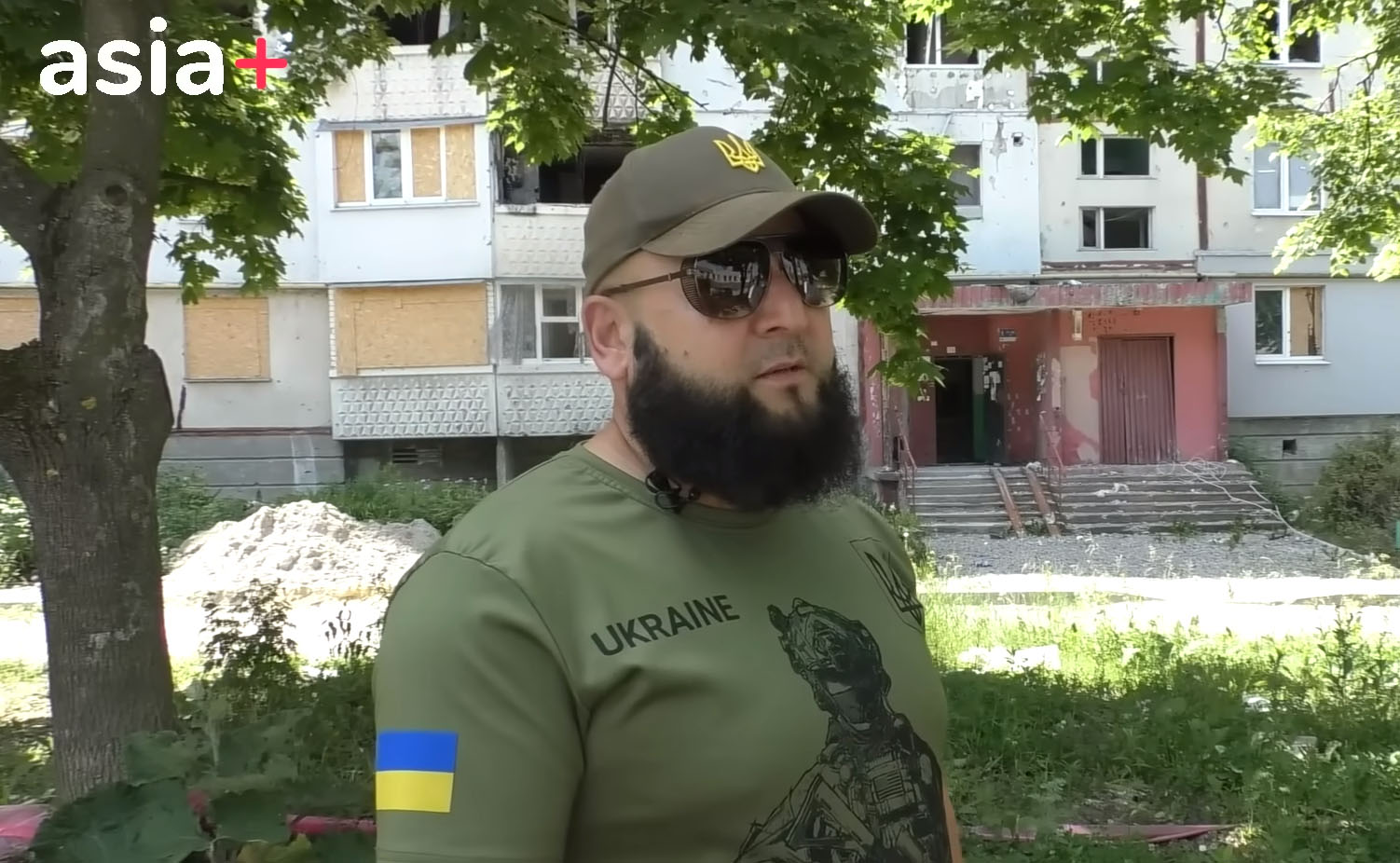
"One of our compatriots called me. His family remained in the house: his wife and three children, one of whom was still an infant. He tearfully asked me to help take them out. I couldn't refuse. There were children there," says our hero Tajik, who has been living in Ukraine for almost 30 years. In this evacuation, he was injured, and it was not the only one.
Boboi Shaikh – that's how a man from Vakhsh asks to be called. He arrived in Ukrainian Kharkiv in December 1996. There he graduated from the Automobile and Road University. And then he decided to stay and build a future life there. He took up entrepreneurship, often came to his homeland and visited his relatives.
To our question whether there were thoughts of leaving Ukraine after the outbreak of hostilities, Boboi Shaikh answered honestly: "Yes, there were, I will not hide it."
That time, indeed, a huge number of Ukrainians fled the country in fear, fearing for their safety and the lives of their relatives.
"But seeing how people who have nowhere to run are suffering, I just couldn't leave, my conscience wouldn't let me. Mostly, the elderly, single women and children turned out to be vulnerable. I myself survived the war and I know firsthand what it is," the man continues.
It should be noted that one of the most numerous Tajik diasporas operates in Kharkiv. Before the war, about 50 thousand Tajiks lived there.
Our compatriots did not stand aside during the difficult for Ukraine wartime and began to help people with all possible forces.
Boboi Shaikh was among the active volunteers.
“In one village where we arrived with help, people sat in the basement for several days without drinking water. There were elderly people and children among them," the man says.
“Every day we brought them as much water as we could. Then there were big problems with fuel. We were helped by Chechen guys who have also been living in Ukrainian for many years."
And then the Kharkiv Tajik diaspora initiated one good deed – it began to cook pilaf and distribute it to those in need.
Tajiks distributed hot meals to those areas that suffered the most. Among these is the Northern Saltovka.
Many Tajik families also lived there.

"In fact, there is a big difference when you hear about the war somewhere on TV or watch videos on the Internet, and when you see it with your own eyes. It's completely different emotions, it's scary. As long as I have enough strength, I will help and I will not go anywhere," says the Tajik volunteer.
And the man helped not only to feed people. When the shelling began in Northern Saltovka, he, risking his life, evacuated people from their homes.
Boboi Shaikh continues his volunteer work today. His day begins at 6 a.m. with the lighting of a bonfire. He understands that peaceful Ukrainians, who have become hostages of a monstrous war, are waiting for his delicious pilaf.
By noon, huge cauldrons are already exuding the aroma of the finished dish. Pilaf is taken and transported to places where people especially need help.
The distribution of pilaf takes place every day, except Friday, on average it is 70-100 kg.
Boboi Shaikh cooks himself, and the products are bought by caring people and businessmen.
"War is the same everywhere, it brings only devastation, famine and death. During the civil war in Tajikistan, we also hid in basements without food and water, we were afraid to go outside. Now it's like I'm reliving those terrible times again," the man sighs.