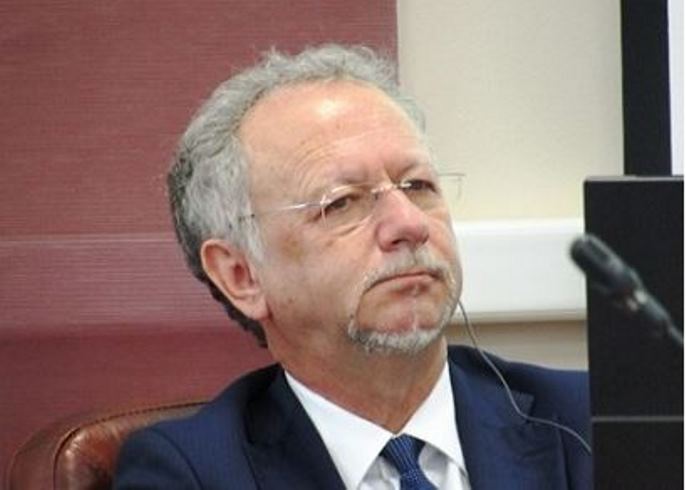
The UN Special Rapporteur on minority issues, Dr. Fernand de Varennes, is visiting Tajikistan from October 9 to October 20, according to Un OHCHR.
During his visit, the expert will examine legislation, policies and practices affecting people belonging to national or ethnic, religious and linguistic minorities, as well as their effective political participation, education, access to justice and the administration of criminal justice, including hate crimes and hate speech targeting minorities.
The Special Rapporteur will meet Tajik government officials and other stakeholders and will travel to Dushanbe and outside of the capital.
De Varennes will hold a press conference at the end of his visit to share his preliminary findings and recommendations on October 19 at the UN Headquarters in Dushanbe at 14:00 local time.
Dr. Fernand de Varennes, is Extraordinary Professor at the Faculty of Law of the University of Pretoria (South Africa), Adjunct Professor at the National University of Ireland-Galway (Ireland), and Cheng Yu Tung Visiting Professor at the Faculty of Law of the University of Hong Kong (China) and Visiting Professor, Université catholique de Lyon, Vytautas Magnus University, Kaunas, and National University of Ireland, Galway.
He was appointed United Nations Special Rapporteur on Minority Issues by the Human Rights Council and assumed his functions on August 1, 2017. His work and commitment focuses on the human rights of minorities, as well as the prevention of ethnic conflicts, the rights of migrants, the relationship between ethnicity, human rights and democracies, and the use of federalism and other forms of autonomy arrangements to balance competing cultural interests.
The United Nations Special Rapporteur on minority issues is a thematic Special Procedures mandate of the Human Rights Council, specifically required to focus attention on minority issues globally.
The mandate of the Special Rapporteur on minority issues was established by the Commission on Human Rights in resolution 2005/79, as an independent expert. The mandate was subsequently renewed by the Human Rights Council. The Resolution 52/5 renews the mandate under the same terms.
The mandate seeks to help States and other stakeholders to promote the implementation of the UN Declaration on the Rights of Persons Belonging to National or Ethnic, Religious and Linguistic Minorities, to find solutions to overcome existing obstacles to the full and effective realization of the rights of persons belonging to minorities, and to promote the equal and full protection and promotion of the human rights of minorities.
The Special Rapporteur is part of a system of so-called UN Special Procedures, made up of independent experts who regularly undertake country visits around the world to report on human rights issues.
Special Rapporteurs are part of what is known as the Special Procedures of the Human Rights Council. Special Procedures, the largest body of independent experts in the UN Human Rights system, is the general name of the Council’s independent fact-finding and monitoring mechanisms. Special Procedures mandate-holders are independent human rights experts appointed by the Human Rights Council to address either specific country situations or thematic issues in all parts of the world. They are not UN staff and are independent from any government or organization. They serve in their individual capacity and do not receive a salary for their work.