In accordance with an agreement reached at a meeting of topographical groups and working groups on legal issues of the Tajik-Kyrgyz joint commission for delimitation and demarcation of the state border, Tajikistan and Kyrgyzstan have defined another 43.32 kilometers along the disputed stretches of their common border.
Tajikistan’s state-run news agency Khovar reports the meeting took place in the Kyrgyz city of Batken on October 3-7. The meeting reportedly ended with signing of an appropriate protocol.
The parties will continue the work on delineation of the remaining disputed stretches of the border at the next meeting that will be held in Tajikistan.
Recall, Saimumin Yatimov, the chairman of the State Committee for National Security of Tajikistan (SCNS), met with his Kyrgyz counterpart Kamchybek Tashiyev on October 2 in Batken Kyrgyzstan to discuss the border delineation issues.
Yatimov and Tashiyev are co-chairmen of the Tajik-Kyrgyz joint commission for delimitation and demarcation of the state border.
Yatimov said the deal had been signed at the meeting.
"Conflicts are always less [important] than [historical ties]. That's why we have signed Protocol No. 44," said Yatimov. "We will diligently and constructively implement it step by step, aiming to reach a comprehensive and fundamental agreement in the shortest possible time."
Kyrgyzstan national security chief Kamchybek Tashiyev said in a statement that the protocol "provides a basis for resolving all border issues."
“God willing, we will soon decide to define the state borders. We have decided that our commissions will operate continuously [on this issue]. Our decision today will lead to peace and stability at the border, and our people will live in friendship and harmony,” he added.
The two Central Asian nations have been meeting for months in an effort to resolve border disputes that have led to deadly clashes between them in recent years.
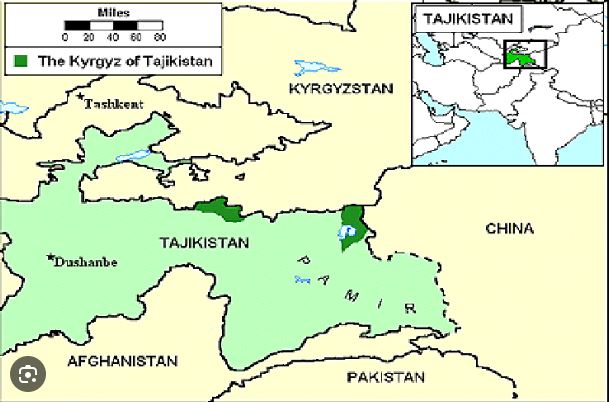
Tajikistan and Kyrgyzstan have not yet resolved the border delineation problem. Many border areas in Central Asia have been disputed since the collapse of the Soviet Union in 1991. The situation is particularly complicated near the numerous exclaves in the Fergana Valley, where the borders of Tajikistan, Uzbekistan, and Kyrgyzstan meet.
The border of Kyrgyzstan and Tajikistan has been the scene of unrest repeatedly since the collapse of the former Soviet Union. Border talks between Tajikistan and Kyrgyzstan began in 2002. The countries share 972 kilometers of border – of which only 664 kilometers have been properly delineated, leading to tensions for the past 30 years.
To-date, Tajikistan and Kyrgyzstan have reportedly held more than 170 meetings and negotiations on delimitation and demarcation of the common border.