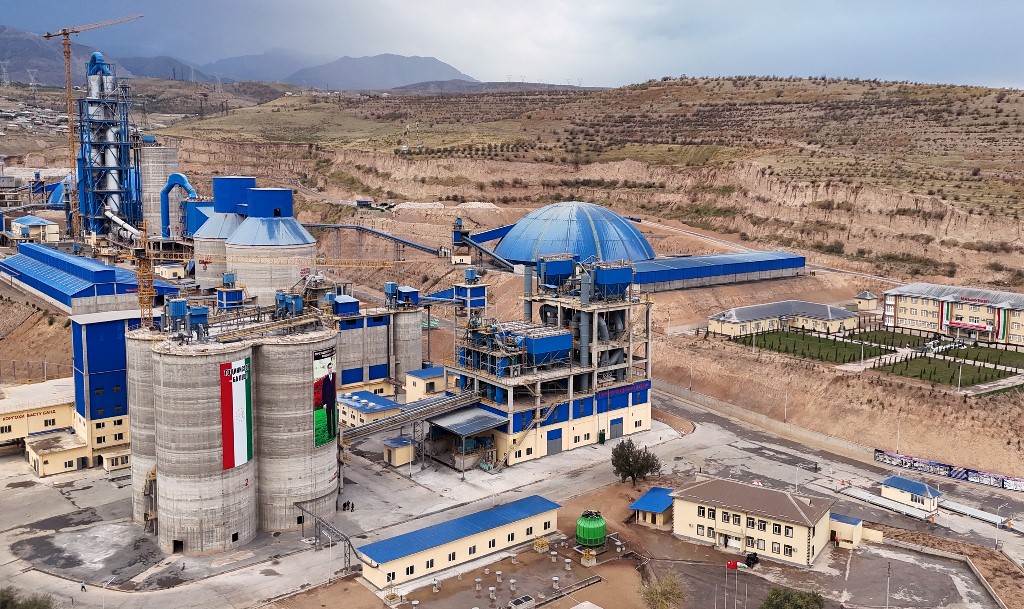
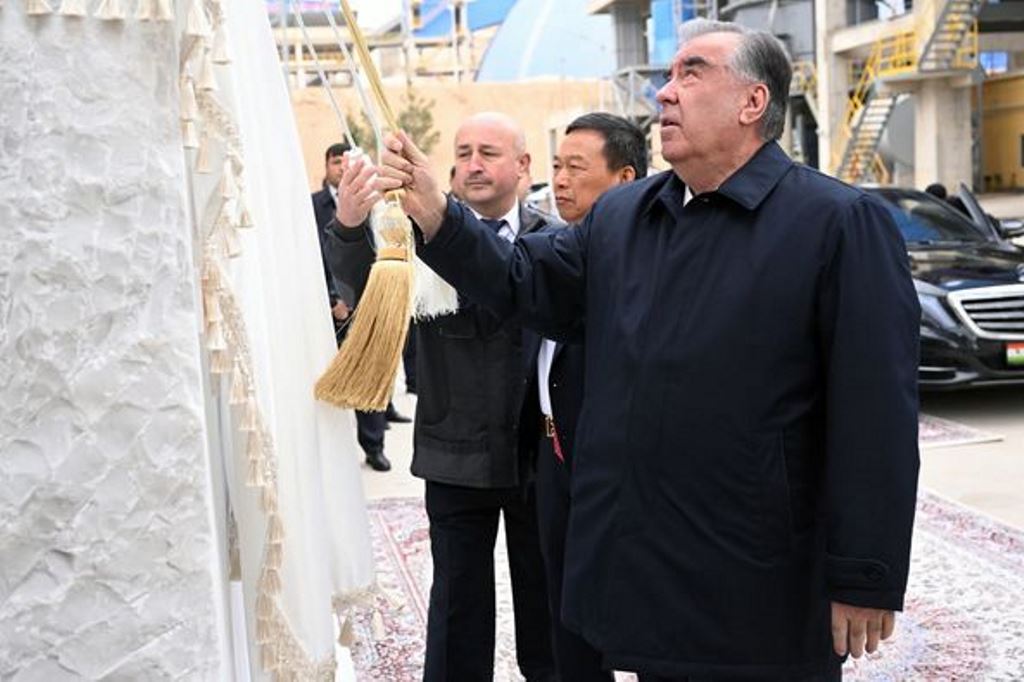
President Emomali Rahmon and Dushanbe Mayor Rustam Emomali yesterday attended an official opening of one more cement plant, Closed Joint-Stock-Company (CJSC) Tojikcement, in Tajikistan.
The Tajik president’s office says the plant with annual capacity of 1.2 million tons is located in Dushanbe’s Ismoili Somoni district on an area of 35 hectares, where production facilities and other necessary infrastructure, including an administrative building, a control center and a diagnostic center, warehouses, a canteen and two technical repair stations have been built.
Recall, Emomali Rahmon and Rustam Emomali attended a groundbreaking ceremony for the construction of this plant on September 17, 2019.
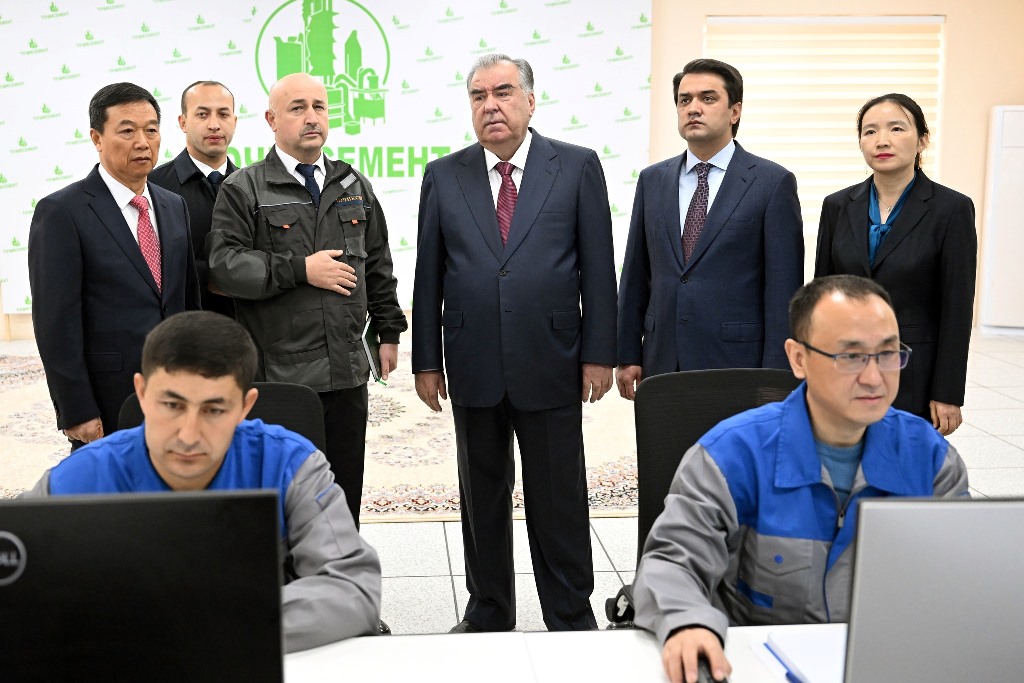
In the course of construction works, up to 1,200 specialists and employees were employed. More than 700 local specialists now work for CJSC Tojikcement at an average monthly wage of 5,100 somonis for workers and 7,500 somonis for technical and engineering specialists.
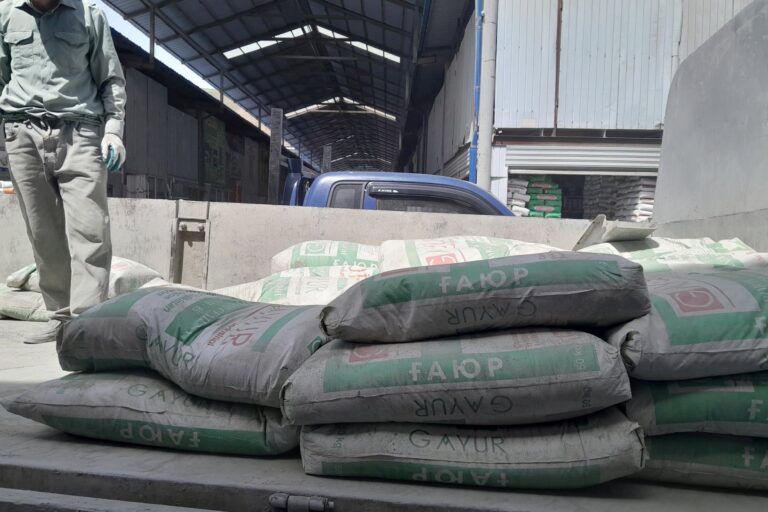
The plant reportedly produces sulfate cement, which is considered a strategic product for the country and is used for the construction of vital and special facilities, such as power plants, tunnels, roads and bridges, and other constructions.
The Tajik president’s official website notes that Tojikcement is environmentally friendly, does not emit dust or other harmful fumes into the atmosphere, and has more than 50 air cleaners or self-filters that collect cement dust that is used in product recycling.
Raw materials (soil, limestone, magnetite, white sand, quartzite sand, gypsum and coal) for production of cement at this plant are obtained from domestic natural resources, including the deposits of Kharangon gorge.
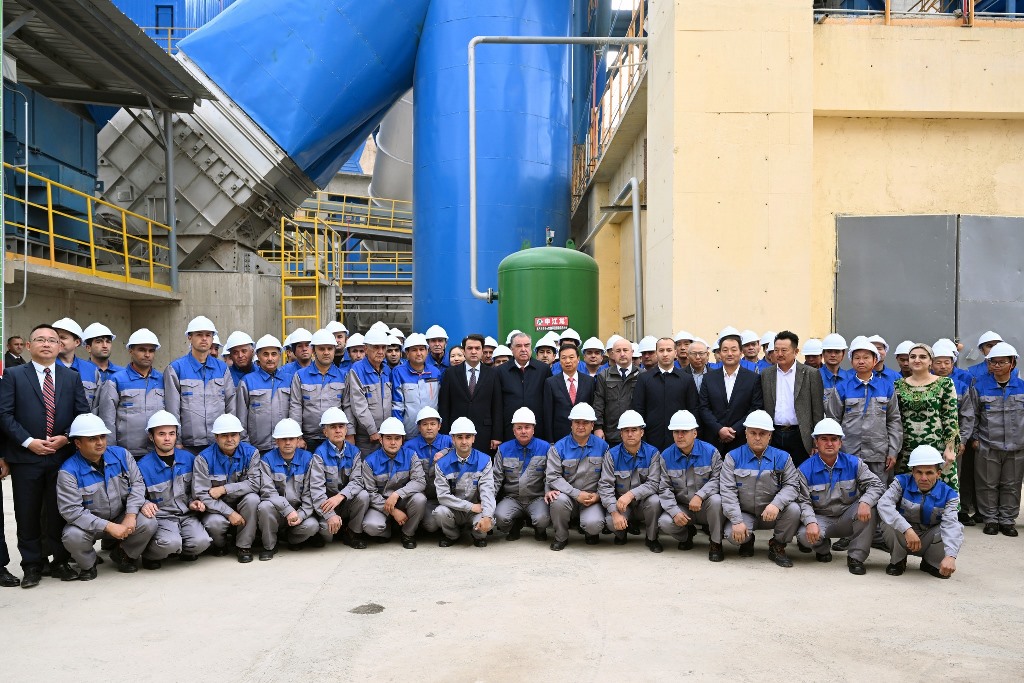
A three-story diagnostic building with more than 100 pieces of modern equipment operates at CJSC Tojikcement. Using modern devices and their experience, the employees of the diagnostic center thoroughly examine the company's products.
Construction work, purchase and import of machinery, devices and equipment and other products and accessories into the country was carried out by CJSC Tojikcement, and the design, supply and installation of equipment was carried out by the main contractor – Jiangsu Pengfei CO LTD and Linsen Company of the People's Republic of China.
Meanwhile, the Dushanbe cement plant, which has been operated since 1942 and, being worn out, affecting the city's environment and ecology, will be closed before the end of the year.
According to the Tajik president’s official website, there are 15 cement plants with a total capacity of 5.5 million tons operating in the country, including five located in Khatlon province, six located in Sughd province, three located in districts subordinate to the center, and one located in Dushanbe.
However, such achievements of Tajikistan’s industry evoke concern of ecologists, who consider that excessive increase in cement production may cause irreparable harm to the country’s environment.
According to them, more polluting plants in China are forced to shut down or pay the costs of environmental damage in the wake of new laws and a crackdown on pollution. Cement is one of the world’s most polluting industries, and therefore, Chinese producers have moved excess capacity offshore. The Chinese cement plants mainly use coal for their fuel. The companies reportedly claim that their plants are using advanced environmental and energy saving technology, without specifying exact standards.