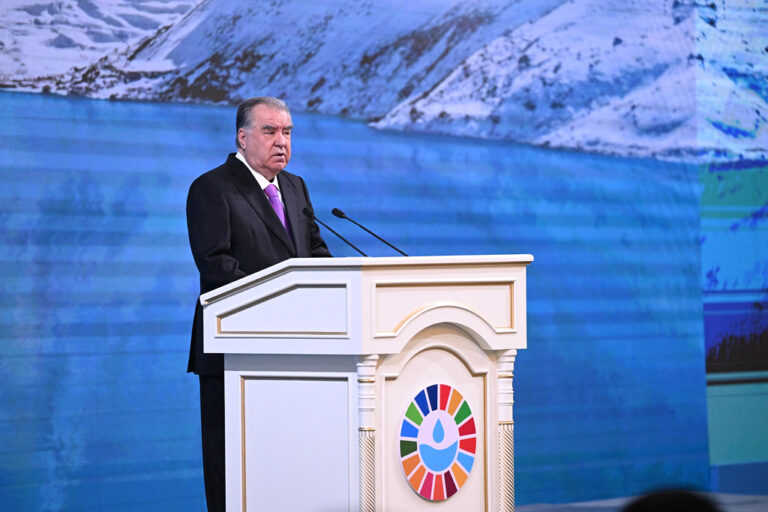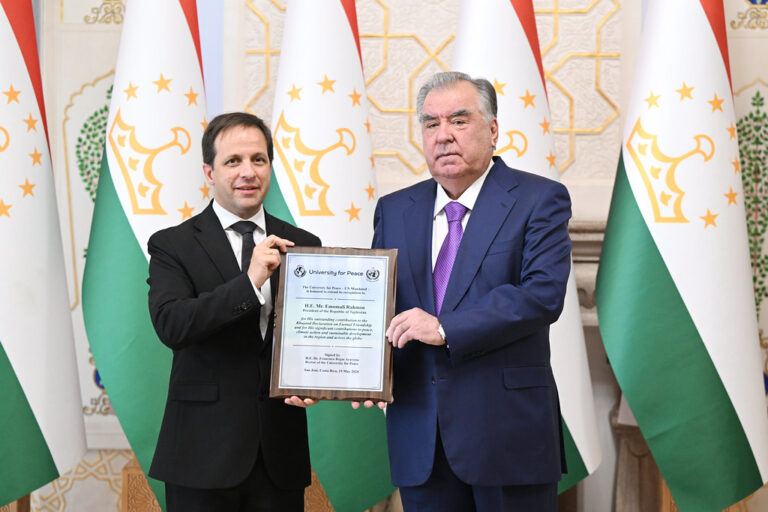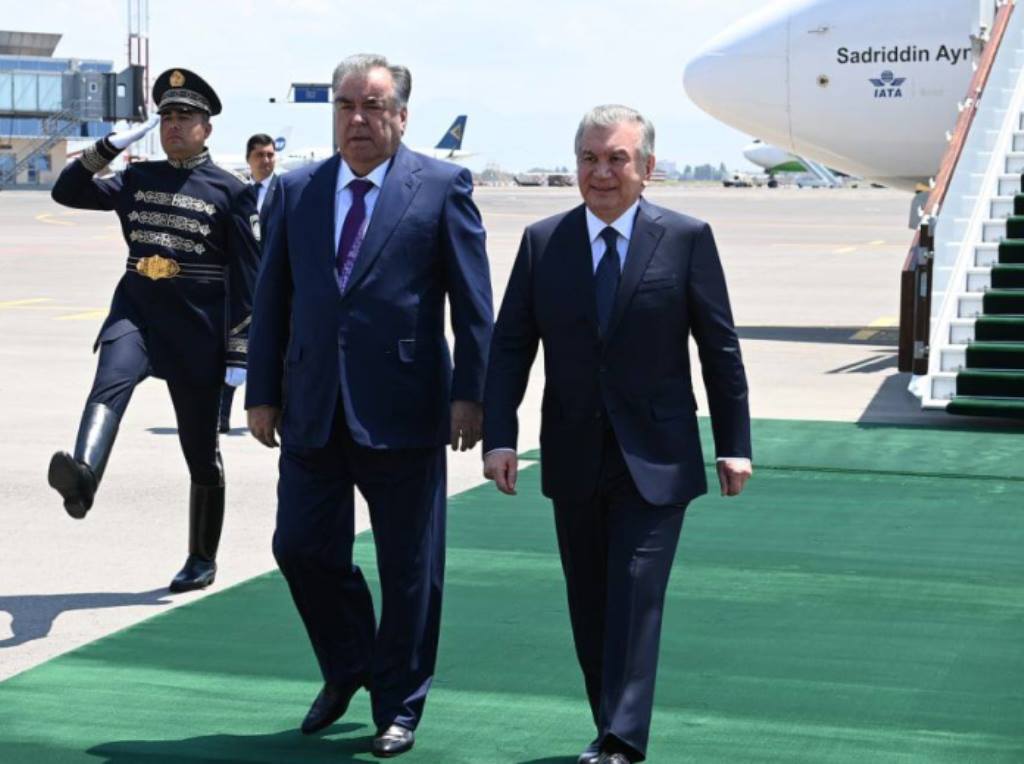
President Emomali Rahmon will depart for Uzbekistan’s capital, Tashkent, tomorrow (Thursday) to attend the Economic Cooperation Organization (ECO) summit, Abdufattoh Sharifzoda, a spokesman for the Tajik president, told Asia-Plus in an interview.
According to him, no bilateral meetings with heads of other states are expected within the framework of this visit.
“President Emomali Rahmon will return to Dushanbe Thursday evening,” the spokesman added.
Tashkent is hosting the sixteenth summit of the Economic Cooperation Organization (ECO) under the chairmanship of Uzbekistan’s President Shavkat Mirziyoyev on November 8-9.
Heads of state and government from Azerbaijan, Iran, Kazakhstan, Kyrgyzstan, Pakistan, Tajikistan, Turkmenistan, Turkiye and Uzbekistan are expected to participate in the meeting.
Discussions on various topics, such as enhancing the effectiveness of the Organization as well as improving trade, transportation networks, and connectivity among the ECO member nations, are reportedly planned.
Earlier this year in January, Tajik Foreign Minister Sirojiddin Muhriddin attended the 26th ECO Council of Ministers meeting in Tashkent.
The Economic Cooperation Organization or ECO is an Asian political and economic intergovernmental organization that was founded in 1985 in Tehran by the leaders of Iran, Pakistan, and Turkiye. It provides a platform to discuss ways to improve development and promote trade and investment opportunities. The ECO is an ad hoc organization under the United Nations Charter. The objective is to establish a single market for goods and services, much like the European Union. After the dissolution of the Soviet Union, the ECO expanded to include Afghanistan, Azerbaijan, Kazakhstan, Kyrgyzstan, Tajikistan, Turkmenistan, and Uzbekistan in 1992.
The current framework of the ECO expresses itself mostly in the form of bilateral agreements and arbitration mechanisms between individual and fully sovereign member states. That makes the ECO similar to ASEAN in that it is an organization that has its own offices and bureaucracy for implementation of trade amongst sovereign member states.
The coordination and monitoring of ECO activities is carried out by the secretariat, which is elected and appointed by the Council of Ministers of Foreign Affairs of ECO member States for a period of three years.