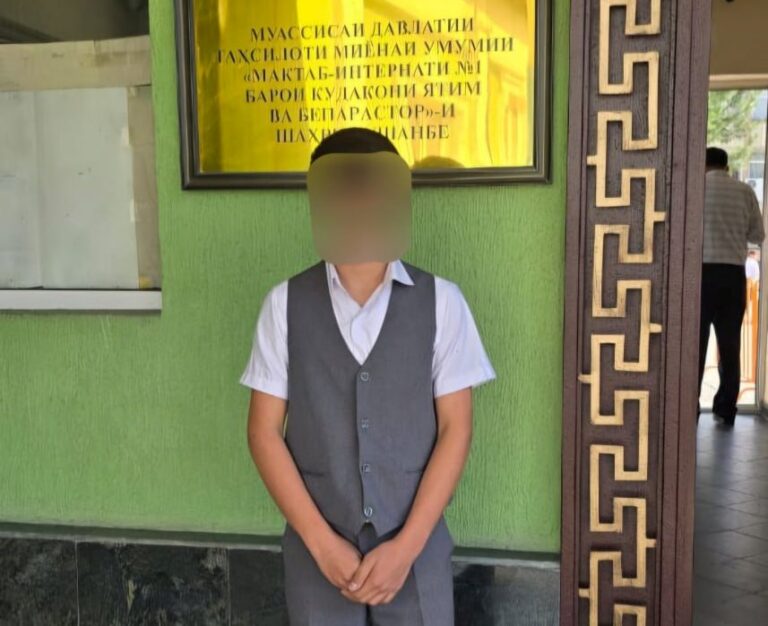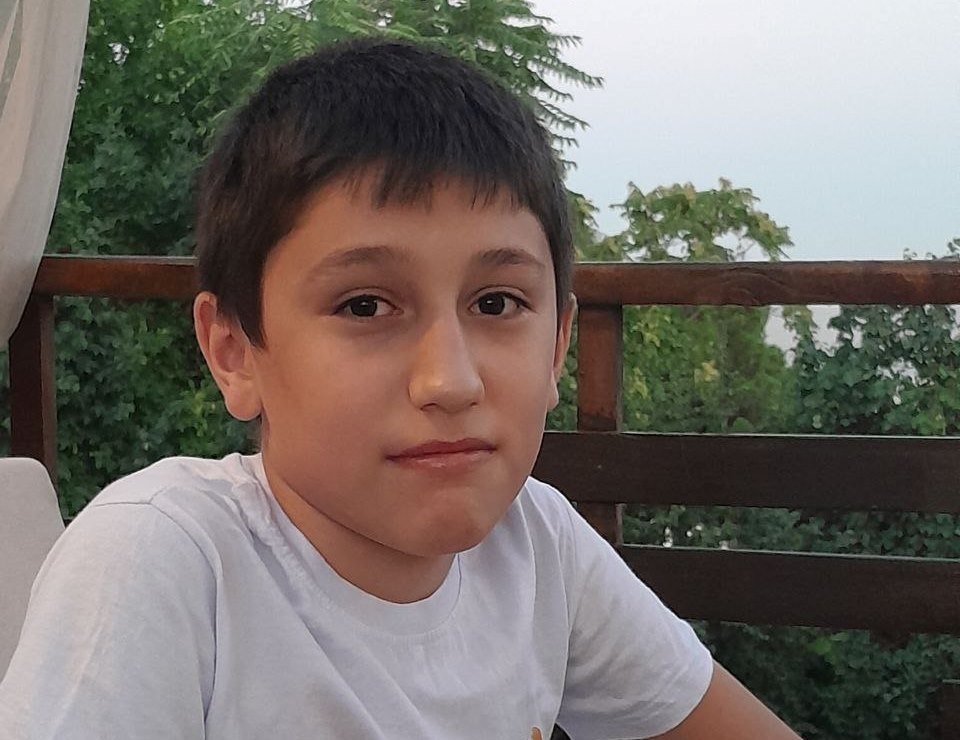
The sixth grade student from Tajikistan, Shokhrukh Firaidonov has won the International Neo Science Olympiad in the “coding” category.
The 12-year-old Shokhrukh Firaidonov is the sixth grade student at Hotam & PV Lyceum (Hisor branch). In addition, he has taken the robotics course in RobX Center since 2021.
“The aim of the “coding” category is in solving 30 problems in Python, JavaScript or Block faster than competitors through special platform in English,” Shokhrukh’s father, Qodirsho Firaidonov, told Asia-Plus Monday afternoon.
Taking into account Shokhrukh’s previous experience in programming course, Shorukh and his father decided that he would participate in the “coding” category.

“I would like to take this opportunity to express my gratitude to Hotam & PV Lyceum Principal Yusuf Hotamov, Sunnat from the RobX Center, and to Shokhrukh’s head teacher Saidakbar Aminov for the support they give my son,” Qodirsho Firaidonov added.
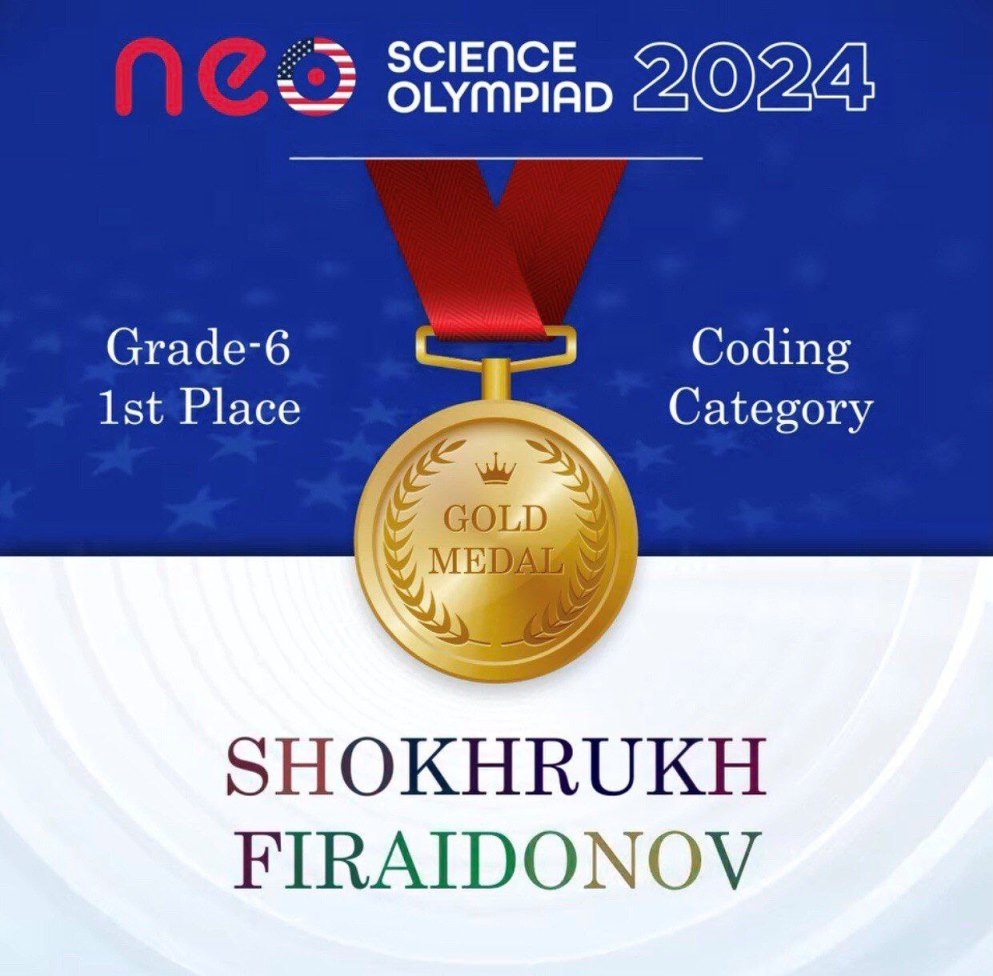
In the “coding” category, in which, Shokhrukh took the 1st place, the winner and two other best students receive exclusive discounts on participation in the Grand Final program that will take place in New York in June this year.
The International Neo Science Olympiad is conducted in the following categories: coding (grades 3-11); mathematics (grades 3-11); natural science (grades 3-8); physics (grades 9-11); chemistry (grades 9-11); and biology (grades 9-11).
The International Neo Science Olympiad is a prestigious global event dedicated to celebrating and advancing excellence in the fields of science and mathematics among students worldwide. It serves as a platform for students to engage in rigorous competition, showcase their problem-solving skills, and collaborate with peers from diverse backgrounds.
Beyond competition, it fosters a culture of intellectual curiosity, ethical conduct, and lifelong learning, inspiring the next generation of scientists, mathematicians, and innovators to make a positive impact on our world.
It's a global contest open to primary, secondary and high school students.
The International Neo Science Olympiad offers both online examinations and hosts a physical event known as the Grand Final program, which takes place during the summer season.
The foremost goal of the International Neo Science Olympiad is to encourage and celebrate excellence in the disciplines of science and mathematics. It strives to identify, acknowledge, and reward exceptional talent and aptitude among students in these subjects.
The Olympiad places a strong emphasis on problem-solving abilities and critical thinking. It presents participants with complex and thought-provoking problems that require innovative approaches and analytical reasoning.
The vision includes a commitment to inclusivity, ensuring that the International Neo Science Olympiad is accessible to students from various backgrounds, regardless of their socio-economic status, cultural heritage, or gender.